
Saudi Vision 2030 Annual Report 2025 | Non-Oil Growth & FDI Surge


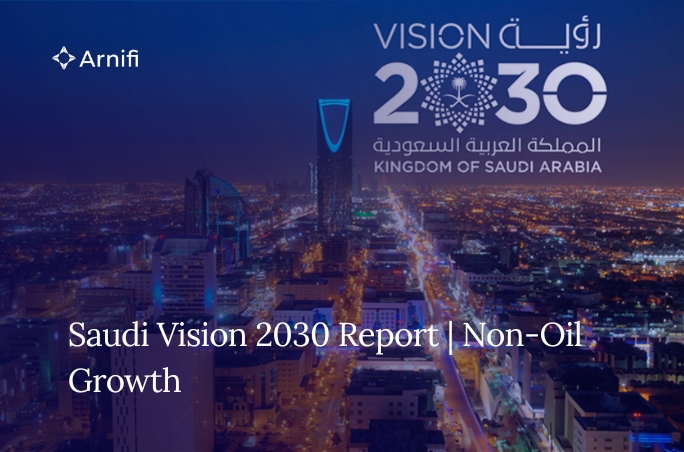
Saudi Arabia’s latest Vision 2030 annual report highlights a major shift in the country’s economic structure, with non-oil GDP, which is now contributing over half of the total output. Alongside this, foreign direct investment has surged by 119 per cent since 2017, which reflects growing global confidence. The report signals that diversification is no longer a long-term ambition but an active reality. This article breaks down what these numbers actually mean, where growth is coming from & how businesses can position themselves within this evolving market landscape without getting lost in policy headlines or surface-level analysis.
Table of contents
- Introduction
- What Does Crossing 50% Non-Oil GDP Actually Mean?
- Where is This Growth Actually Coming From?
- Why Has FDI Increased So Sharply Since 2017?
- How Does This Shift Affect Market Entry Strategy?
- Is This Growth Sustainable or Momentum-Driven?
- What Risks Remain Beneath the Surface?
- How Should Founders and Investors Respond Now?
- Where Arnifi Fits into This Transition
- Conclusion
- FAQs
Introduction
The Saudi Vision 2030 annual report is not just a scoreboard of targets met or missed. But it is a signal of structural change that has been building quietly for years.
The headline figure, non-oil GDP in Saudi Arabia crossing 50 per cent, matters because it marks a psychological and economic shift. For decades, oil defined the pace and direction of growth. That grip is loosening. At the same time, a 119 per cent rise in foreign direct investment since 2017 suggests that external capital is no longer hesitant. The question is no longer whether diversification will happen for founders, investors & operators. The real question is where the next opportunities sit within this transition.
What Does Crossing 50% Non-Oil GDP Actually Mean?
This milestone in the Saudi Vision 2030 annual report is easy to celebrate, but it’s harder to interpret correctly.
Non-oil GDP in Saudi Arabia is moving past the halfway mark, which signals that sectors like tourism, logistics, manufacturing, and technology are no longer supporting actors. They are becoming central to economic activity.
This also changes risk exposure. A more diversified economy tends to absorb global shocks better. Oil price volatility still matters, but it no longer dictates every outcome.
From a business standpoint, this shift opens space. Markets that were once dominated by state-linked oil flows now have room for private operators, service providers & international partnerships.
Where is This Growth Actually Coming From?
The Saudi Vision 2030 annual report points to several sectors driving the expansion.
Tourism stands out. Large-scale projects & relaxed visa policies have started to convert Saudi Arabia into a destination rather than just a transit or religious hub.
Logistics is another strong contributor. The country’s geographic position between Asia, Europe, and Africa is being actively leveraged through infrastructure investments.
Then there is manufacturing. Local production incentives are encouraging companies to build within the Kingdom rather than export into it.
Technology and digital services are also growing as they are supported by government-backed initiatives and a young, connected population.
None of this happened overnight. These sectors were identified early in Vision 2030 & now they are starting to show measurable output.
Why Has FDI Increased So Sharply Since 2017?
A 119 per cent increase in foreign direct investment is not accidental. The Saudi Vision 2030 annual report reflects years of regulatory and policy adjustments that are aimed at making the market more accessible.
Ownership rules have been relaxed in several sectors. Licensing processes have become clearer. There is more transparency in how businesses can enter and operate.
Equally important is perception. Global investors are seeing consistent execution & not just announcements. Large projects, partnerships & reforms have built a sense of momentum.
Non-oil GDP growth in Saudi Arabia reinforces this confidence. Investors tend to follow diversification because it suggests sustainability rather than dependency.
How Does This Shift Affect Market Entry Strategy?
Expansion into Saudi Arabia used to revolve around oil-linked demand or government contracts. That approach is becoming outdated.
The Saudi Vision 2030 annual report suggests a broader landscape. Market entry now requires sector-specific thinking.
Tourism businesses need to understand the regional demand patterns. Logistics firms must align with the infrastructure corridors. Tech companies should focus on local partnerships and regulatory alignment.
Timing also matters. Early entrants in emerging sectors often capture outsized advantages, but they also face more uncertainty. Later entrants benefit from the clarity but compete in a more crowded space.
A balanced approach involves entering where policy support and market demand intersect.
Is This Growth Sustainable or Momentum-Driven?
Sustainability depends on whether diversification continues beyond headline metrics.
The Saudi Vision 2030 annual report shows progress, but long-term stability will rely on the depth of the private sector. Government-led initiatives can start growth, but businesses need to carry it forward.
Non-oil GDP expansion in Saudi Arabia needs consistent productivity gains, not just investment inflows. That means building local capabilities, workforce development & competitive industries.
So far, the trajectory looks steady rather than speculative. The mix of policy reform, capital inflow & sector development creates a more grounded growth pattern.
What Risks Remain Beneath the Surface?
Even with strong numbers, some risks persist.
Execution risk is one. Large-scale projects require coordination, funding, and long timelines.
Regulatory evolution is another. While reforms have improved access, navigating compliance still requires local understanding.
There is also competition. As more investors enter, margins in certain sectors may tighten.
The Saudi Vision 2030 annual report reflects progress, but it does not eliminate the complexity. It simply shifts where that complexity sits.
How Should Founders and Investors Respond Now?
Waiting for complete clarity often means missing early opportunities.
The better approach is informed positioning. Identify the sectors that are aligned with diversification, assess regulatory pathways & build local partnerships early.
Non-oil GDP growth in Saudi Arabia signals where demand is forming. FDI trends indicate where confidence already exists.
The intersection of these two is where the strongest opportunities tend to emerge.
Where Arnifi Fits into This Transition
Entering a market like Saudi Arabia requires more than interest. It requires structure, compliance, and local alignment.
Arnifi works closely with businesses to simplify this process. From company formation to regulatory navigation, the focus stays on making expansion practical rather than overwhelming.
Whether the goal is testing the market or building a long-term presence, the right setup reduces friction and speeds up execution.
Conclusion
The Saudi Vision 2030 annual report is not just an update. But it marks a shift in how the Saudi economy functions.
Non-oil GDP in Saudi Arabia crossing 50 per cent is a turning point. FDI growth confirms that global investors are paying attention. Together, these signals point to a market that is opening up in real ways.
For businesses, this is a moment to act with clarity rather than hesitation. The landscape is changing, but it is not unclear. The signals are visible for those willing to read them properly.
Arnifi supports that journey by turning intent into execution. We help businesses move from interest to presence without unnecessary delays.
FAQs
What is the key takeaway from the report?
Non-oil GDP, Saudi Arabia now contributes over half of the total GDP.
Why is FDI growth important?
It reflects rising global confidence in Saudi Arabia’s economic direction.
Which sectors are growing fastest?
Tourism, logistics, manufacturing & technology.
Is market entry easier now?
Regulatory reforms have made entry clearer but still require planning.
What should businesses focus on first?
Sector alignment and compliance setup before expansion.
Top UAE Packages


Related Articles
Top UAE Packages
Get in Touch