
How to Open a Coffee Shop in Saudi Arabia | A Guide
by Rifa S Laskar Dec 27, 2025  7 MIN READ


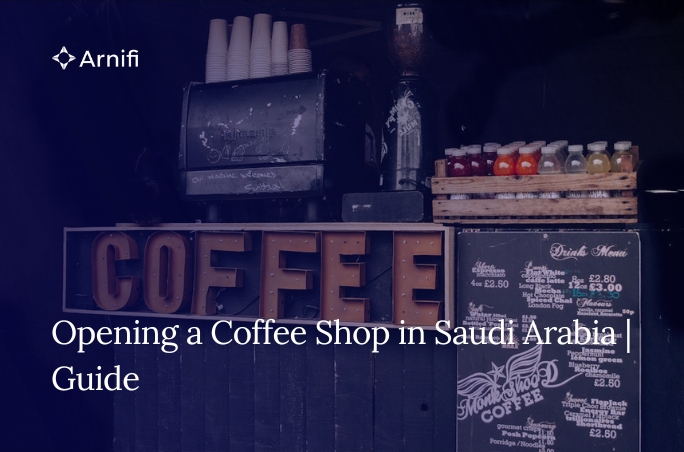
Opening a Coffee Shop in Saudi has become one of the most talked about opportunities in the Kingdom’s fast-growing food service market. Demand for specialty coffee continues to rise across cities like Riyadh and Jeddah, while regulators have gradually made market entry clearer for foreign founders and investors.
Table of contents
- 1. Introduction
- 2. Why the Saudi Coffee Market Is Expanding
- 3. Regulatory Authorities Founders Must Understand
- 4. Step by Step Process to Launch a Coffee Shop
- 5. Licenses and Legal Requirements
- 6. Venue Specifications and Operational Requirements
- 7. Competition in the Saudi Café Industry
- 8. Profitability and Long Term Sustainability
- 9. Arnifi | Supporting Founders Entering the Saudi Market
- 10. Conclusion
1. Introduction
Saudi Arabia’s café culture has changed dramatically over the past decade. Coffee is no longer just a traditional drink served in homes or gatherings. Specialty cafés, independent coffee brands, and international chains have reshaped how Saudis consume coffee in daily life.
For founders exploring the food service sector in the Kingdom, the idea of launching a Coffee Shop in Saudi naturally appears on the opportunity list. But enthusiasm alone does not build a successful café. Market understanding, licensing clarity, and operational discipline matter far more than aesthetic interiors or trendy menus.
Any serious founder entering this sector should begin with one simple step: treat the coffee business like a regulated venture, not just a lifestyle project. Once that mindset is in place, the process becomes far easier to navigate.
2. Why the Saudi Coffee Market Is Expanding
Saudi Arabia has one of the youngest populations in the Middle East, and urban consumers spend a large portion of their leisure time in cafés. Coffee shops function as meeting places, workspaces, and social hubs.
Several forces are pushing the market forward.
First, disposable income remains strong in major cities. Riyadh and Jeddah have seen steady growth in hospitality and lifestyle spending.
Second, the specialty coffee movement has taken root in the Kingdom. Local roasters, trained baristas, and global coffee competitions have raised expectations around coffee quality.
Third, Saudi Arabia’s economic diversification plans have encouraged entrepreneurship in retail and food service. For many founders, opening a Coffee Shop in Saudi offers both brand potential and long-term scalability.
However, growth also means competition. Strong concepts survive. Weak ones disappear quickly.
3. Regulatory Authorities Founders Must Understand
The café business in Saudi Arabia sits under multiple regulatory bodies. Ignoring these authorities often leads to delays during setup.
The most important institutions include:
Saudi Arabian General Investment Authority (SAGIA)
SAGIA regulates foreign investment in the Kingdom. Foreign founders usually interact with this authority when establishing legal entities or seeking investment licenses.
SAGIA’s role includes approving foreign ownership structures, facilitating investor documentation, and guiding international entrepreneurs entering the Saudi market.
Ministry of Municipal and Rural Affairs (MOMRA)
MOMRA supervises municipality licensing for restaurants and cafés. Premises approvals, health inspections, sanitation compliance, and operational permits all fall under this authority.
Without MOMRA approval, no Coffee Shop in Saudi can operate legally. The ministry ensures that restaurants meet public safety standards and municipal guidelines.
In addition, the Saudi Food and Drug Authority often becomes relevant for food safety compliance.
4. Step by Step Process to Launch a Coffee Shop
Launching a café involves far more than leasing a space and purchasing espresso machines. Founders normally move through a structured sequence of steps.
Market Research
Strong café businesses start with location intelligence. Demographics, foot traffic patterns, nearby competitors, and consumer spending habits influence profitability.
In Riyadh, for example, café density varies dramatically between districts.
Business Planning
A serious café concept requires a financial model, operational strategy, staffing plan, and brand positioning.
A well structured plan also becomes essential when seeking investors or partners.
Legal Setup
Entity formation must be completed before operations begin. Foreign founders often register companies through investment licenses before applying for municipal approvals.
This stage often determines how quickly a Coffee Shop in Saudi moves from concept to launch.
Location Selection
Foot traffic often defines success in the café industry. Busy commercial districts, mixed use developments, and lifestyle malls remain popular locations.
However, rental costs can dramatically affect margins.
Interior Design and Layout
Successful cafés balance aesthetics with efficiency. Bar flow, seating arrangement, and equipment placement determine how smoothly daily operations run.
Supplier Relationships
Reliable coffee bean suppliers and equipment distributors form the backbone of the business. Consistency in product quality builds long term customer loyalty.
Menu Development
Saudi consumers appreciate variety. Espresso drinks, specialty brews, desserts, and light meals often appear on successful café menus.
Unique signature drinks can also help differentiate the brand.
5. Licenses and Legal Requirements
No café operates without the correct permits.
Founders opening a Coffee Shop in Saudi usually need the following approvals:
Trade name registration
Commercial registration certificate
Municipality restaurant license
Health and food safety approvals
Civil defense safety clearance
Municipal inspectors carefully review kitchen areas, storage spaces, ventilation systems, and hygiene conditions.
Any issues discovered during inspection can delay opening dates, which is why many founders consult specialists during the licensing stage.
6. Venue Specifications and Operational Requirements
Physical requirements for cafés in Saudi Arabia follow clear municipal guidelines.
Key considerations include:
Adequate kitchen ventilation systems
Proper drainage and washing facilities
Separate food preparation areas
Electrical safety compliance
Approved waste disposal systems
Air conditioning also plays an important role due to the region’s climate. Comfortable indoor environments significantly affect customer retention in cafés.
Operational compliance ensures that a Coffee Shop in Saudi maintains both safety standards and operational continuity.
7. Competition in the Saudi Café Industry
Saudi Arabia’s café landscape includes global brands, regional chains, and independent specialty coffee houses.
Large international chains dominate major malls and airports. Local specialty cafés, however, often thrive in neighborhood districts where authenticity and community engagement matter.
Founders entering the industry must study local competitors carefully. Menu differentiation, service quality, and brand identity often decide which cafés build loyal customer bases.
The café market continues expanding, but competition grows equally fast.
8. Profitability and Long Term Sustainability
Cafés in Saudi Arabia can generate strong returns when location and operations align correctly.
Several factors influence profitability:
Rental costs
Daily foot traffic
Menu pricing strategy
Supply chain costs
Labor efficiency
Successful operators often focus on repeat customers rather than one time visitors. Loyalty programs, seasonal menus, and community events help maintain steady traffic.
With careful planning, a Coffee Shop in Saudi can evolve into a scalable brand with multiple branches across cities.
9. Arnifi | Supporting Founders Entering the Saudi Market
Many international founders struggle with regulatory navigation when entering Saudi Arabia.
Arnifi works as a digital first corporate services partner that helps businesses establish operations across the Middle East. The company assists entrepreneurs with company formation, regulatory compliance, licensing support, and market entry planning.
The team behind Arnifi includes professionals who have worked in large regional organizations and startups across the Gulf. This operational experience allows Arnifi to guide founders through the practical realities of launching businesses in Saudi Arabia and the UAE.
For founders considering a café venture, professional guidance during company setup can prevent regulatory delays and licensing complications.
10. Conclusion
Saudi Arabia’s café industry continues to evolve rapidly. Rising consumer demand, a young population, and an expanding hospitality sector have created strong opportunities for entrepreneurs.
However, the difference between a trendy café and a sustainable business lies in preparation. Market research, regulatory compliance, operational discipline, and brand positioning all play critical roles.
For founders serious about launching a Coffee Shop in Saudi, entering the market with proper structure and guidance makes a measurable difference. Navigating licensing, investment regulations, and municipal requirements becomes far easier with experienced partners.
Arnifi continues helping businesses establish operations across Saudi Arabia, offering founders a clearer path from idea to launch in one of the Middle East’s most dynamic markets.
Top Saudi Arab Packages


Related Articles

Top Saudi Arab Packages
Get in Touch