
BVI Company Structure 2026 | Types, Benefits, Setup & Compliance

Ishika Bhandari
Content Writer
Ishika Bhandari is a content writer with experience in creating SEO-focused content across diverse industries, including business, lifestyle, and jewellery. She specializes in turning… Read more

Tulika Saxena
AVP, Sales & Marketing | IIM Nagpur
Tulika Saxena specializes in business finance, sales strategy, and market positioning. Leads growth and partnerships, ensuring seamless business setup experiences and client success across… Read more


Key Facts: A BVI company structure can be used for international holding, investment, joint venture, and asset-holding arrangements. The BVI offers flexible corporate structures and a common-law framework, but companies must meet ongoing requirements for registered agents, financial records, beneficial ownership, and annual returns. The BVI does not impose corporate income or capital gains tax, but this does not automatically remove tax obligations in other countries.

Table of contents
- Introduction
- What Is a BVI Company Structure?
- What Types of BVI Company Structures Are Available?
- How Does a BVI Holding Company Structure Work?
- What Is a BVI SPV and When Is It Used?
- What Are the Main Benefits of a BVI Company Structure?
- What Are the Requirements for BVI Company Formation?
- How Do You Set Up a BVI Company?
- What Documents Are Required for a BVI Company?
- What Are the Costs of a BVI Company Structure?
- What Are the Tax Rules for a BVI Company?
- Does a BVI Company Have Economic Substance Requirements?
- What Are the BVI Beneficial Ownership Requirements in 2026?
- What Ongoing Compliance Does a BVI Company Need?
- BVI Company vs Other Offshore Structures
- What Are the Common BVI Company Structure Mistakes?
- When Should You Consider a BVI Company Structure?
- BVI Company Structure Checklist
- How Can Arnifi Help With BVI Company Setup?
- FAQs
Introduction
The British Virgin Islands (BVI) is a popular jurisdiction for international corporate and investment structures. Businesses and investors may use BVI companies to hold shares, investments, subsidiaries, or specific assets. However, choosing a BVI company is only one part of the structuring process. The ownership arrangement, business activity, tax residence, economic substance and ongoing compliance requirements also need to be considered. A BVI company should therefore not be viewed simply as a tax-free or anonymous entity. The BVI has introduced updated beneficial ownership requirements and continues to strengthen corporate reporting and transparency rules.
What Is a BVI Company Structure?
A BVI company structure describes how a BVI entity fits into a wider ownership or investment arrangement.
For example:
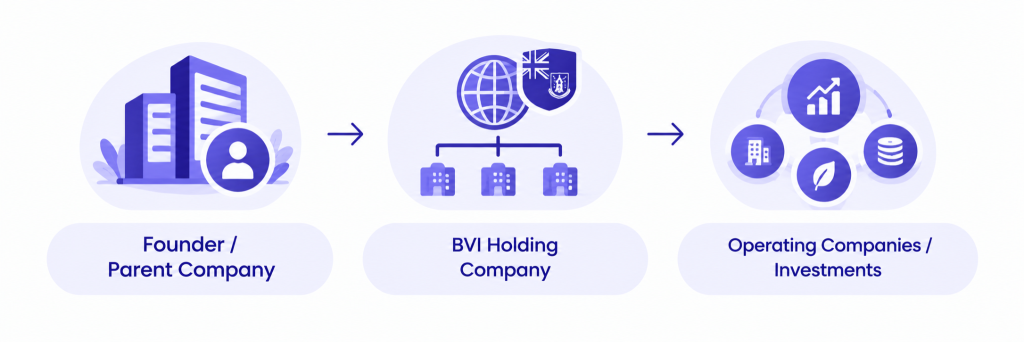
The BVI company may own shares in subsidiaries, hold investments or sit between the ultimate owner and operating businesses.
A structure can involve:
- Shareholders who own the company
- Directors responsible for management
- A registered agent
- Operating subsidiaries
- Investment or asset-holding entities
- Other companies or partnerships
The appropriate structure depends on the purpose of the business. A holding company, SPV and operating company can have different functions even when they are all incorporated in the BVI.
What Types of BVI Company Structures Are Available?
The BVI offers several legal structures for business and investment purposes. BVI Business Companies can be formed in different forms, while limited partnerships and other arrangements are also available.
| Structure | Common use |
| BVI Business Company | International business and holding structures |
| Holding Company | Holding shares, investments or subsidiaries |
| SPV | Specific transactions or assets |
| Segregated Portfolio Company | Separating assets and liabilities between portfolios |
| Limited Partnership | Investment and fund structures |
| Micro Business Company | Smaller eligible businesses |
A BVI Business Company has broad capacity to conduct business and enter into transactions, subject to applicable laws and licensing requirements.
How Does a BVI Holding Company Structure Work?
The BVI company may hold shares in subsidiaries while those operating companies conduct the underlying business. This arrangement can centralise ownership and separate the holding function from day-to-day operations. It can also make it easier to manage multiple investments under one structure. However, dividends, capital gains, financing and other payments must be reviewed under the tax laws of the relevant countries. The BVI incorporation itself does not determine the tax position of the wider group.
What Is a BVI SPV and When Is It Used?
A Special Purpose Vehicle (SPV) is generally established for a specific asset, investment or transaction.
A BVI SPV may be used for:
- Holding a specific investment
- Owning an asset
- Joint ventures
- Financing transactions
- Investment structures
- Mergers and acquisitions
- Corporate restructuring
An SPV is usually more focused than a general holding company. For example, an investment group may create a separate SPV for a particular asset instead of placing all investments under one entity.
What Are the Main Benefits of a BVI Company Structure?
Flexible Corporate Structuring
BVI company law provides flexibility for businesses to create different ownership and investment arrangements. A BVI Business Company can hold shares and enter into a wide range of transactions.
International Ownership
BVI companies can form part of structures involving international shareholders, subsidiaries and investors, subject to applicable KYC, AML and beneficial ownership requirements.
Common-Law Framework
The BVI operates under a common-law based legal framework, which can be familiar to international investors and businesses.
No BVI Corporate Income or Capital Gains Tax
The BVI does not impose corporate income or capital gains tax on companies. However, this does not mean that owners or businesses are free from tax obligations in other jurisdictions.
Established Corporate Services Ecosystem
The BVI has an established network of registered agents and professional service providers supporting incorporation and ongoing administration.
These benefits should not be confused with complete anonymity or global tax exemption. The BVI’s current framework includes beneficial ownership filing requirements.
Who Can Use a BVI Company Structure?
A BVI structure may be considered by:
- International entrepreneurs
- Holding companies
- Investment groups
- Family offices
- Private equity structures
- Joint ventures
- Multinational groups
- International investors
Suitability depends on the commercial purpose and the jurisdictions in which the owners and businesses operate.
What Are the Requirements for BVI Company Formation?
A BVI Business Company must have a registered agent in the BVI. Only registered agents are permitted to form BVI legal persons.
| Requirement | Details |
| Company name | Must meet BVI naming requirements |
| Registered agent | Required |
| Registered office | BVI registered office |
| Directors | Appointed according to the company structure |
| Shareholders | Ownership must be documented |
| Beneficial owners | Relevant information must be provided |
| Constitutional documents | Memorandum and Articles |
| Due diligence | KYC/AML information may be required |
The registered agent handles matters such as name reservation, beneficial-owner vetting, constitutional documents, director and officer appointments, licensing applications where applicable and government fees.
How Do You Set Up a BVI Company?
The typical process is:
Step 1: Choose the appropriate structure.
Step 2: Select and reserve the company name.
Step 3: Appoint a registered agent.
Step 4: Submit KYC and beneficial ownership information.
Step 5: Prepare the Memorandum and Articles.
Step 6: Appoint directors and shareholders.
Step 7: Pay applicable government and professional fees.
Step 8: Complete incorporation and receive company documents.
Step 9: Complete post-incorporation compliance.
Step 10: Open a bank or investment account where required.
The exact process and documentation can vary according to ownership, structure and business activity.
What Documents Are Required for a BVI Company?
Common documents can include:
- Passport or identification documents
- Proof of address
- Beneficial ownership information
- Shareholder information
- Director information
- Corporate documents for corporate shareholders
- Source of funds or wealth information where required
- Business plan or information about the proposed activity
Additional information may be requested as part of KYC and AML checks.
What Are the Costs of a BVI Company Structure?
There is no single cost that applies to every BVI company.
| Cost category | What it may include |
| Incorporation | Government and registration fees |
| Registered agent | Annual agent fees |
| Registered office | Annual office fees |
| Government fees | Incorporation and annual fees |
| Compliance | BO and other filings |
| Accounting | Where applicable |
| Professional services | Legal, tax or advisory support |
| Banking | Account opening and maintenance charges |
The total cost depends on the structure, registered agent, number of entities, activities and ongoing compliance requirements.
What Are the Tax Rules for a BVI Company?
The BVI does not impose corporate income or capital gains tax on companies. However, incorporation in the BVI does not automatically eliminate tax elsewhere.
The wider tax position can depend on:
- Where the owners are tax resident
- Where management and control takes place
- Where business activities are conducted
- Where subsidiaries and customers are located
- Withholding tax rules
- Tax treaty provisions
- Anti-avoidance rules
For example, an owner who is tax resident in another country may have reporting or tax obligations there even if the underlying company is incorporated in the BVI.
Does a BVI Company Have Economic Substance Requirements?
Economic substance requirements can apply to BVI legal entities carrying out relevant activities.
Depending on the activity, the analysis can involve:
- Direction and management
- Employees
- Premises
- Expenditure
- Core income-generating activities
- Reporting requirements
The BVI has a dedicated economic substance framework, so the company’s actual activities should be assessed rather than assuming that incorporation alone determines the requirements.
What Are the BVI Beneficial Ownership Requirements in 2026?
Beneficial ownership compliance is an important part of the current BVI company framework. BVI Business Companies and Limited Partnerships are required to file beneficial ownership information with the Registry of Corporate Affairs through the VIRRGIN system. The requirement took effect from 2 January 2025.
Companies therefore need to consider:
- Identifying beneficial owners
- Filing required information
- Keeping ownership information accurate
- Reporting relevant changes
- Applying applicable exemptions
- Working with the registered agent on filings
The BVI also issued further beneficial ownership amendments during 2025 and related guidance in 2026.
What Ongoing Compliance Does a BVI Company Need?
After incorporation, a company may need to maintain:
- A registered agent
- A registered office
- Corporate records
- Beneficial ownership information
- Financial and accounting records
- Annual returns
- Economic substance filings where applicable
- Regulatory filings based on its activities
BVI Business Companies generally need to file an annual return with their registered agent within nine months after the end of the relevant financial year, subject to statutory exceptions.
BVI Company vs Other Offshore Structures
| Factor | BVI | Cayman | Mauritius | UAE |
| Common use | Holding/investment | Investment/funds | Global business | Operating business |
| Legal framework | Common law | Common law | Mixed | UAE federal/free-zone |
| Substance | Activity-dependent | Activity-dependent | Relevant activities | UAE substance/compliance |
| BO requirements | Yes | Yes | Yes | Yes |
| Local operations | Limited suitability | Limited suitability | Possible | Stronger operating environment |
The right jurisdiction depends on the business purpose, ownership structure, tax position and regulatory requirements.
What Are the Common BVI Company Structure Mistakes?
Common mistakes include:
- Choosing a structure without defining the business purpose
- Assuming BVI incorporation means zero global tax
- Ignoring beneficial ownership requirements
- Failing to assess economic substance
- Using nominee arrangements without understanding disclosure requirements
- Poor ownership documentation
- Ignoring the tax residence of owners
- Treating a holding company as an operating company
When Should You Consider a BVI Company Structure?
| Situation | BVI structure may be suitable? |
| Holding international investments | Yes, subject to tax advice |
| Holding shares in subsidiaries | Often |
| International JV | Potentially |
| Family investment structure | Potentially |
| Running a local UAE business | Usually consider a local UAE structure first |
| BVI-regulated activity | Requires specific regulatory review |
The structure should be assessed based on the actual business model rather than selected only because of the jurisdiction’s tax treatment.
BVI Company Structure Checklist
Before setting up, consider:
- Define the business purpose
- Select the structure
- Identify shareholders
- Identify beneficial owners
- Assess tax residence
- Review economic substance
- Appoint a registered agent
- Prepare KYC documents
- Prepare constitutional documents
- Plan annual compliance
- Review banking requirements
How Can Arnifi Help With BVI Company Setup?
Arnifi can support businesses with:
- BVI company setup coordination
- Structure and jurisdiction assessment
- Documentation support
- Registered-agent coordination
- Banking assistance
- Accounting and compliance support
- Ongoing corporate requirements
Complex international tax planning, legal opinions and regulated activities should be handled by appropriately qualified professionals.
Conclusion
A BVI company structure can be useful for international holding, investment, joint venture and asset-holding arrangements. Its flexible corporate framework makes it relevant to a range of cross-border structures. However, incorporation alone does not determine the overall tax or legal position. Ownership, activities, tax residence, economic substance and ongoing reporting requirements all need to be considered. For businesses considering a BVI structure in 2026, the better approach is to start with the commercial purpose and then select the structure that fits the business, tax and compliance requirements.
FAQs
1. What is a BVI company structure?
It is an ownership or corporate arrangement using a BVI company to hold investments, subsidiaries, assets or conduct permitted activities.
2. What is a BVI Business Company?
It is a legal entity formed under BVI company legislation that can undertake a broad range of business activities and transactions.
3. What is a BVI holding company?
It is a BVI company primarily used to hold shares, investments or interests in other companies or assets.
4. Why use a BVI company for international business?
Its flexible structure, common-law framework and established corporate services ecosystem can support international arrangements.
5. Is a BVI company tax-free?
The BVI does not impose corporate income or capital gains tax, but other countries may tax the company or its owners.
6. Does a BVI company need a registered agent?
Yes. A BVI Business Company must maintain a registered agent and registered office in the BVI.
7. What documents are required for BVI company formation?
Common requirements include identification, proof of address, ownership information and KYC/AML documents.
8. How long does BVI company formation take?
The timeline depends on document preparation, due diligence, name availability and the registered agent’s process.
9. What does a BVI company cost?
Costs vary based on incorporation, government fees, registered-agent services, compliance and professional services.
10. Does a BVI company need economic substance?
It can, depending on the company’s activities and whether it carries out a relevant activity.
11. What are BVI beneficial ownership requirements?
Relevant BVI companies and partnerships must file beneficial ownership information through the BVI’s Registry framework.
12. Can foreigners own a BVI company?
Yes, subject to applicable ownership, KYC, AML and beneficial ownership requirements.
13. Can a BVI company own another company?
Yes. A BVI company can be used as a holding company for subsidiaries, subject to applicable requirements.
14. Is a BVI company suitable for a family office?
It can be suitable for certain family investment and holding structures, depending on the family’s objectives and tax position.
15. What are the annual compliance requirements for a BVI company?
These can include maintaining a registered agent and office, corporate records, beneficial ownership information, annual returns and applicable regulatory filings.
References:
Top UAE Packages
Related Articles


Top UAE Packages
Get in Touch
