
Investment Fund vs Fund Management Company | Key Differences

Anushka
Content Writer
Anushka Basu is a business content writer specialised in global business market insights. She aims to simplify complex regulatory, financial, and business concepts into… Read more

Tulika Saxena
AVP, Sales & Marketing | IIM Nagpur
Tulika Saxena specializes in business finance, sales strategy, and market positioning. Leads growth and partnerships, ensuring seamless business setup experiences and client success across… Read more


Key Fact: An investment fund holds and invests capital contributed by investors, while a fund management company manages investments and fund operations. They are generally separate entities with distinct responsibilities and financial arrangements.
Table of contents
- Should You Establish an Investment Fund or a Fund Management Company?
- What Is an Investment Fund?
- What Is a Fund Management Company?
- What Is the Difference Between an Investment Fund and a Fund Management Company?
- How Do an Investment Fund and Management Company Work Together?
- Who Owns the Investment Assets?
- How Do These Structures Earn Revenue?
- What Regulatory Requirements Apply?
- Should You Establish a Fund, a Management Company or Both?
- How Can Arnifi Help With Investment Fund and Management Company Setup?
- FAQs
- Conclusion
Should You Establish an Investment Fund or a Fund Management Company?
Imagine you have investors willing to contribute capital towards a real estate investment strategy. You have the business plan, potential investors and an investment opportunity. However, one question remains: should you establish an investment fund or a fund management company?
The answer depends on what you intend to do. An investment fund holds investor capital and investment assets. A fund management company manages those investments and earns fees for its services. Understanding this distinction helps you choose the right structure, plan your licensing requirements and organise your business properly.
What Is an Investment Fund?
An investment fund pools capital from investors and invests it according to a defined objective. Investors participate through shares, units or partnership interests, depending on the legal structure.
Common investment fund types include:
- Private equity funds
- Venture capital funds
- Hedge funds
- Mutual funds
- Real estate investment funds
- Exchange-traded funds
For example, if several investors contribute money towards purchasing commercial properties, a real estate investment fund could hold those investments and distribute returns according to its governing documents.
What Is a Fund Management Company?
A fund management company manages investment funds or their portfolios. It may research investment opportunities, execute investment strategies, monitor portfolio performance and oversee relevant operational activities.
Its revenue generally comes from management fees and, where permitted, performance-based fees.
A management company can manage several funds, subject to its authorisation and contractual arrangements.
What Is the Difference Between an Investment Fund and a Fund Management Company?
| Feature | Investment Fund | Fund Management Company |
| Purpose | Holds and invests capital | Manages investments |
| Capital | Investor contributions | Operating capital |
| Ownership | Fund investors hold interests | Company shareholders own it |
| Revenue | Investment returns | Management fees |
| Assets | Investment portfolio | Business assets |
| Responsibilities | Fund governance and investor obligations | Investment management and operations |
| Regulation | Fund-specific requirements | Manager authorisation and conduct rules |
The distinction matters because investor capital, management earnings and business liabilities may be treated differently under each structure.
How Do an Investment Fund and Management Company Work Together?
Consider a founder establishing a private equity fund.
- Investors contribute capital to the fund
- The fund issues participation interests
- An authorised management company is appointed
- The manager identifies investment opportunities and executes the strategy
- Investment assets are held for the fund under its legal structure
- Investors receive distributions according to the fund’s terms
- The management company receives agreed management fees
A custodian, trustee or fund administrator may also be involved depending on the jurisdiction and structure.
Who Owns the Investment Assets?
Suppose a fund invests $5 million in commercial property.
The investment assets belong to the fund or are held for it under the applicable legal arrangement. Investors hold interests in the fund. The management company has its own shareholders and operating assets.
This separation distinguishes investment performance from the management company’s financial performance.
How Do These Structures Earn Revenue?
| Revenue | Investment Fund | Management Company |
| Investment gains | Portfolio returns | Generally excluded from managed fund returns |
| Dividends | Portfolio income | Income from its own investments |
| Management fees | Expense paid to manager | Management revenue |
| Performance fees | Depends on fund terms | Earned where permitted |
For instance, a fund earning returns from property sales distributes or allocates those returns according to its governing documents. The manager earns its agreed fee for managing the investments.
What Regulatory Requirements Apply?
Both structures may have separate regulatory obligations.
Depending on the jurisdiction, requirements may include:
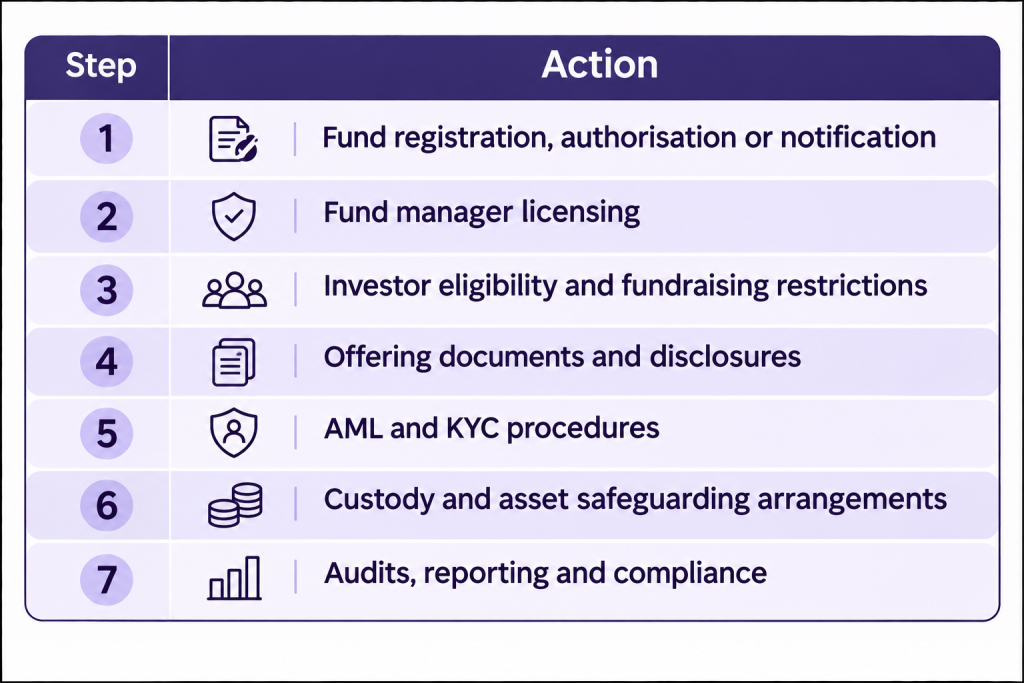
A retail fund may face different requirements than a private investment fund.
Should You Establish a Fund, a Management Company or Both?
An investment fund may suit you if you want to pool investor capital into a dedicated portfolio.
A fund management company may suit you if you intend to manage investments professionally or provide management services to multiple funds.
Both structures may be appropriate if you want to establish your own investment vehicle and manage its portfolio through a separate business.
Before deciding, assess your investment strategy, investor profile, jurisdiction, regulatory capital, licensing requirements and ongoing operating costs.
How Can Arnifi Help With Investment Fund and Management Company Setup?
Establishing an investment business requires careful planning around company formation, documentation and regulatory requirements. Arnifi supports founders with business establishment, administrative documentation and jurisdiction-specific registration guidance. Where specialised financial authorisation is involved, founders may also need support from appropriately qualified legal and regulatory professionals.
FAQs
Can one fund management company manage multiple funds?
Yes. A management company may manage multiple funds, subject to its regulatory permissions and contractual arrangements.
Who owns an investment fund’s assets?
The fund generally owns its investment assets or holds them through an applicable legal arrangement. Investors hold interests in the fund.
Does a fund management company require a licence?
Investment management activities commonly require regulatory authorisation. The applicable requirements depend on the jurisdiction, activities and fund category.
Can the same shareholders own both entities?
Yes. The same founders or corporate group may own both structures, subject to applicable legal and regulatory requirements.
Conclusion
Choosing between an investment fund and a fund management company starts with understanding your business objective. The fund provides the investment vehicle, while the management company operates the investment management business. Your investor profile, strategy and regulatory framework will determine whether one structure or both are appropriate.
Official References
- SEC – Investment Company Registration and Regulation
- Yale Law Journal – The Separation of Funds and Managers
- First Sentier MUFG – Fund Structures and Oversight
- Zerodha Varsity – Mutual Funds: Structure, AMC and Fund Managers
Top UAE Packages
Related Articles



Top UAE Packages
Planning Your Next Business Move?
