
Oil and Gas Industry in the UAE | How Hormuz Tensions Are Reshaping Energy Supply Chains
by Anushka Basu Mar 05, 2026  6 MIN READ


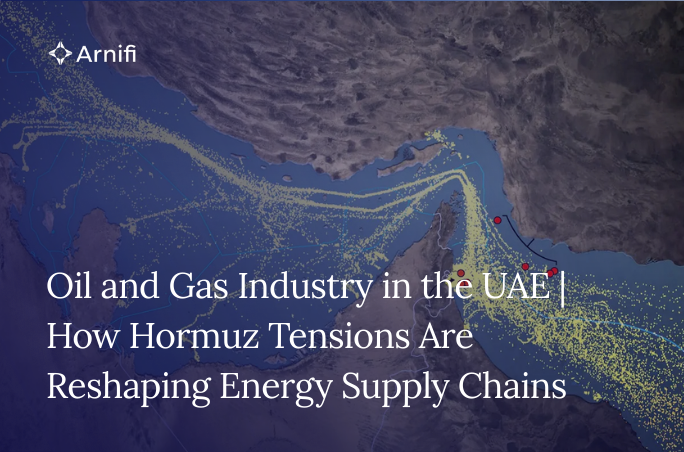
When shipping insurance costs rise, it may sound like a technical issue. In reality, it sends shockwaves through the oil and gas industry in the UAE and puts pressure on the supply chain in oil and gas industry operations. Here is what the Hormuz tensions truly mean.
Table of contents
- Introduction
- Why Does the Strait of Hormuz Matter?
- The Immediate Impact of Rising Marine Insurance
- Cost Breakdown | Where The Pressure is Building?
- How the Oil and Gas Industry in the UAE Is Responding
- The Broader Economic Context
- Impact on Downstream and Midstream Operations
- What Does This Mean for Investors?
- Strategic Outlook for 2026 and Beyond
- Resilience as a Competitive Advantage
- Conclusion
Introduction
The Strait of Hormuz has always been recognised with high regard. It is not just a mere narrow waterway, but a strategic artery that is resourceful for global energy markets. However, recent geopolitical tensions have caused marine insurance premiums and freight costs to surge through the roof.
This is placing direct pressure on the oil and gas industry in the UAE. Nearly one-fifth of the world’s oil passes through this corridor, and even the slightest instability can quickly impact the shipping of economies. And as a result, the supply chain in oil and gas industry operations across the UAE is facing an unignorable amount of stress.
Why Does the Strait of Hormuz Matter?
The Strait of Hormuz plays a crucial role in connecting the Arabian Gulf to various international markets. This holds extreme importance for the oil and gas industry in the UAE as it represents a primary export route.
Key facts:
- Around 20 per cent of the global oil supply passes through Hormuz
- LNG shipments from the region also rely heavily on this route
- UAE ports serve as critical loading hubs
- Energy exports form a major component of the UAE’s GDP
Therefore, when shipping risks increase, the supply chain and oil and gas industry logistics immediately feel the impact.
The Immediate Impact of Rising Marine Insurance
It has recently been noticed that war risk premiums for vessels that are currently entering Gulf waters have risen immensely. This brings to observation that insurance is often invisible when markets are calm, yet when the chances of risk increase, costs are seen surging at a very high rate.
This development directly affects the oil and gas industry in the UAE in several ways:
- Export cargo becomes more expensive to insure
- Charter rates rise due to perceived risk
- Shipping contracts require renegotiation
- Profit margins narrow
Cost Breakdown | Where The Pressure is Building?
To understand the broader impact, it helps to see where pressure accumulates.
| Area of Impact | What Is Changing | Resulting Effect |
| Marine Insurance | War risk premiums rising | Higher export costs |
| Freight Rates | Increased vessel risk pricing | Elevated shipping expenses |
| LNG Transport | Greater exposure in Hormuz | Reduced margin flexibility |
| Equipment Imports | Higher insurance on inbound goods | Costlier project execution |
| Contract Negotiations | Risk clauses tightening | Stricter commercial terms |
As illustrated above, different stages of the oil and gas supply chain remain closely interconnected. Therefore, even one cost component can create cascading effects.
How the Oil and Gas Industry in the UAE Is Responding
In the past, it has been observed that the oil and gas industry in the UAE has been quick to adapt to changes. So, rather than reacting impulsively, companies are actually trying to adopt structured mitigation strategies, which can help them in the long run.
These include:
- Expanding strategic storage capacity
- Diversifying export routes where possible
- Strengthening pipeline alternatives
- Locking in long-term shipping agreements
- Revisiting risk management frameworks
The Broader Economic Context
The situation and its short-term volatility may seem very alarming, but what is most important is to view developments within a much larger and broader context. The oil and gas industry in the UAE benefits from sovereign backing, urbanised port infrastructure, and a globally integrated refining capacity.
Additionally:
- The UAE maintains diversified export markets
- Infrastructure investment remains strong
- Energy policy continues to focus on stability
- Financial reserves provide cushioning
Therefore, even if the supply chain in the oil and gas industry networks faces disruption, any catastrophic systemic collapse is very unlikely.
Impact on Downstream and Midstream Operations
Not only exporters, but also downstream refiners and midstream logistics are facing operational adjustments.
For instance:
- Refineries must adjust procurement timelines
- Storage facilities may increase buffer capacity
- Traders may hedge more aggressively
- Shipping routes are monitored more closely
In light of these events, the supply chain in oil and gas industry operations becomes more data-driven and risk-sensitive, whilst the oil and gas industry in the UAE continues to balance energy security with commercial efficiency.
What Does This Mean for Investors?
Every investor tracking the oil and gas industry movements will usually recognise the fact that logistics risk is now part of the investment equation. While commodity prices will fluctuate based on demand for specific requirements globally, freight and insurance risks introduce an additional variable.
Nevertheless:
- Long-term demand fundamentals remain intact
- Infrastructure strength supports resilience
- Regional partnerships enhance stability
Hence, the supply chain and oil and gas industry frameworks face short-term stress, as strategic positioning remains strong.
Strategic Outlook for 2026 and Beyond
If thinking long-term, several shifts are likely to occur. First of all, companies and businesses may continue investing in a different pipeline infrastructure, which will, in turn, reduce reliance on very specific maritime routes. Second of all, insurance structures will for sure evolve, which means the incorporation of dynamic risk assessment models will be more.
Most importantly, the oil and gas industry in the UAE is going to deepen its focus on operational redundancy, which means every segment of the supply chain in oil and gas industry networks will be strengthened from upstream sourcing to final export.
Resilience as a Competitive Advantage
It is no secret that companies that have the capability of withstanding these fright spikes and insurance volatility will definitely outperform compared to the competitors who are not prepared for such an environment. As right now, resilience will directly result in more currency.
Consequently, the oil and gas industry in the UAE is moving towards:
- Greater integration of digital monitoring systems
- Enhanced maritime risk assessment tools
- Stronger regional collaboration
- More robust supply diversification
Conclusion
However, the rising tensions in the Strait of Hormuz are a reminder that the relationship between geopolitics and the logistics of energy supplies has not gone away. Marine insurance and freight rates, while subject to fluctuations, have yet to undermine the structural strength and forward thinking of the oil and gas sector in the UAE.
Cost pressures, however, are a short-term issue for the supply chain of the oil and gas sector, but the defining feature of the sector, nonetheless, is its long-term resilience of the sector. Through infrastructure development, route development, and risk management, the oil and gas sector in the UAE is not simply responding to the volatility of the market; it is adapting to it.
After all, in a world where uncertainty is a given, being prepared is a form of power, and the resilience of the supply chain in the oil and gas sector will be the key factor that determines the success of the sector in the years to come.
Top UAE Packages


Related Articles
Top UAE Packages
Get in Touch