
How to Start an Import-Export Business in Dubai in 2026?

Shethana P
SEO Content Writer
Shethana specialises in creating content that simplifies complex business, compliance, and regulatory topics for global business incorporation. She focuses on SEO strategy, content accuracy,… Read more


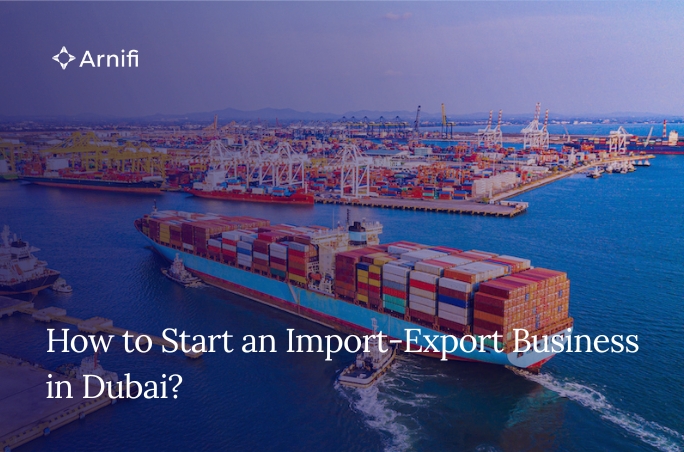
Dubai stands as one of the most active global trade hubs, connecting markets across Europe, Asia, and Africa. This blog breaks down how to start an import-export business in Dubai, covering licensing, costs, structures, and compliance requirements. It explains key decisions like choosing between mainland and free zone setups, understanding customs registration, and managing logistics. It also touches on financial planning and regulatory factors that impact profitability. The goal is simple: provide a clear, practical roadmap that helps founders move from idea to execution without confusion, while avoiding common mistakes that slow down international trade businesses in Dubai.
Table of contents
- Introduction
- Why Choose Dubai for an Import-Export Business?
- What is an Import-Export Business?
- What Are the Steps to Start an Import-Export Business in Dubai?
- Licensing and Registration in Detail
- What Are The Legal and Regulatory Requirements?
- What are the Financial Considerations?
- Logistics and Supply Chain Management
- Government and Private Support Services
- Where Does Arnifi Fit Into the Setup Journey?
- Conclusion
- FAQs
Introduction
Dubai does not reward hesitation. Trade moves fast here, and those who enter prepared tend to stay ahead. The idea of global trading may sound complex at first, but the structure in Dubai makes it surprisingly manageable when approached step by step. This guide unpacks how to start an import-export business in Dubai in a way that makes sense for serious founders. It focuses on decisions that actually matter, from licensing to logistics, without overcomplicating the process. Read this like a working blueprint, not theory, and treat each section as a practical move toward execution.
Why Choose Dubai for an Import-Export Business?
As discussed Dubai’s location and connectivity to different countries make it the best spot to establish import export business.
These days transfer of goods around the world has become one of the biggest challenge.
Therefore setting a unique business structure can make you stand out from the competitors and generate good revenue.
With the help of world-class infrastructure and the support system for these operations, this emirate can be the right choice for import-export business.
The presence of two gains ports i.e., Jebel Ali Port & Al Maktoum International Airport with huge cargo capacities and streamlined logistics is an advantage.
Along with these, there are other hubs and free zones – namely Dubai South and the Dubai Airport Freezone (DAFZA) provide end-to-end supply chain support.
Dubai’s government implements policies that help businesses grow and develop, giving the owners the freedom to retain profits through low-tax policies.
Easy, smooth, and digitalized process for company registrations. Also, Entrepreneurs get full foreign ownership in almost all free zones and 100% repatriation of profits.
What is an Import-Export Business?
In general, the import-export business involves, buying & selling goods across the countries.
Importing refers to bringing in products from others, and exporting refers to selling domestic products to international markets.
This process is commonly known as trading. In Dubai, these activities are centralized and have a thriving role as a global facilitator.
The majority of the goods are based on electronics, textiles, food products, and automotive components. Under these categories, there comes machinery, luxury products, and country-specific food products.
Not only importing but Dubai also stands out in producing domestic products “Made in Dubai” products to export to other countries.
There is also another concept called ‘re-export’. Here the goods reach Dubai and are again exported without any modification due to the advanced logistics and customs support.
Among all these processes, the most common trade structure is direct trading. Here the business owner buys & sells goods to customers directly without any middleman.
The other structure is through distribution, where products are supplied to retailers or wholesalers to different customers.
This model offers different advantages depending on the target market, product type, and logistical strategy.
What Are the Steps to Start an Import-Export Business in Dubai?
Step 01 – Decide on Products and Markets
Conduct in-depth market research, analyze the gaps, and try to fit in the gaps with your business idea. It could be solving the logistic problem, getting the products, labor problems, etc.
Choose the product industry type, select which products you want to trade, and what are the high-demand products. By supplying these you have the opportunity to generate huge profits.
Step 02 – Choose Business Jurisdiction
The trade business can happen in both the mainland and the free zone. The businesses in the Mainland are licensed by DET – Department of Economy and Tourism, allowing them to trade freely within UAE and internationally. Free zones like – JAFZA, DAFZA, or Dubai South are most preferred to start an import-export business. The free zones offer 100% ownership, tax exemptions, and more simplified procedures. However, the free zone companies have restrictions to enter mainland business.
Step 03 – Choose a Business Structure
The commonly used business structures for import-export businesses in Dubai:
- Limited Liability Company (LLC): The business is under partnership, while this structure protects its owners from personal liability for the company’s debts and obligations. Best suited for the mainland, offers flexibility, and allows for local trade.
- Sole Proprietorship: Only a single person is responsible for the company, even for the company’s liabilities and debts. General for individuals in professional services, new for trading.
- Branch Office: For foreign companies expanding to Dubai.
Step 04 – Reserve Trade Name & Initial Approvals
Remember to abide by the nomenclature rules for naming the business in Dubai. Choose a trade name that suits your business activity. The rules include —no offensive or religious terms, also certain words may require additional approval. Followed by submitting the request to the DET (for the mainland) or the relevant free zone authority.
Once the approval is done, the UAE government will have no objection you to starting your business.
Step 05 – Prepare Legal Documents and Lease Office
After the business name approval, you’ll have to prepare a few documents:
- Memorandum of Association (MOA): Briefing shareholder roles and responsibilities.
- Local Service Agent (LSA) Agreement: This applies to mainland businesses.
- Tenancy Contract: A physical office address is required, and some activities may need specific types of office space.
The tenancy contract is applicable for the mainland, while ree zones typically offer flexible office options, and flexi-desks to warehouses. Therefore mainland businesses must lease office space and file lease agreement (Ejari) which is mandated for trade license issuance.
Step 06 – Apply for Trade License
Once you’re done with the above steps, submit your application to get a commercial trade license. Similar to the other documents in the mainland the trade license is applied through DET. In the case of free zones, the process is carried out through the relevant free zone authority. During the application submit all your initial approval, trade name reservation, legal documents, and lease agreement. A few business structures may require you to submit a business plan or NOC (No Objection Certificate).
The cost may vary depending on the location, license type, and office size. On average, a start-up may require AED 15,000 to AED 50,000. Once all the documents are approved, you’ll receive your business license—officially allowing you to trade.
Step 07 – Register with Dubai Customs
Import-export business requires registration from another department i.e., Dubai customs other than the DET or free zone authority. This enables businesses to move goods through UAE ports and apply for customs clearance. Steps include:
- Creating an account on the Dubai Trade portal.
- Submitting your trade license, passport copies, and other corporate documents.
- Paying the registration fee.
- After registration, you’ll receive a Customs Client Code.
Additionally, apply for an Import-Export Code (IEC), often required for customs documentation and international shipping. Registration is usually quick and can be done online.
Step 08 – Open a Corporate Bank Account
The Last step is to open a corporate bank account in a UAE-based bank. All the above-mentioned documents that are approved are required to open an account.
The trade license, shareholder documents, MOA, and office lease everything. Talk local advisor or business consulting firm and choose a bank experienced with international trade for smoother currency transfers.
Licensing and Registration in Detail
One of the major requirements to start an import-export business in Dubai is the get licensing based on the business type and the jurisdiction you wish to operate.
This license is either issued by the DET for the mainland or by any free zone authorities. This license should specify your import-export activities and product categories.
This is to verify that the goods are like pharmaceuticals, food, or chemicals. Along with this, there might be additional approvals from relevant ministries (e.g., Ministry of Health, Dubai Municipality) may be required.
As mentioned in the procedure a customs registration from Dubai customs is mandatory for all companies engaged in international trade.
After obtaining your trade license, you must register with Dubai Customs via the Dubai Trade portal to receive a Customs Client Code. This is used for all import/export documentation and customs clearance procedures.
There is another component named Harmonized System (HS) codes. These are globally recognized codes used to classify traded goods.
This is used to accurately process smooth customs processing, proper duty payments, and compliance with UAE regulations. Misclassification can lead to delays in shipment and fines.
In some cases, the business owners need to submit special import permits or certificates of conformity. Especially for products like electronics, cosmetics, or food.
Always verify the requirements for your chosen product category.
What Are The Legal and Regulatory Requirements?
Get to know the legal and regulatory landscape of Dubai! This is important to successfully run an import-export business.
Customs duties in the UAE is 5% for most goods, while there are a few exemptions applied for items traded within GCC countries or free zones for re-export.
Certain goods like food products, clinically tested medicines, and educational materials have reduced tax rates or zero duty.
There are some restricted or prohibited products, including weapons, narcotics, and items that conflict with Islamic values or national security.
If the officials find you trading these, then the license will be terminated and you’ll be blacklisted and imposed serve punishments.
Proper and complete trade documentation is essential for customs clearance. Core documents include a commercial invoice, packing list, bill of lading (or airway bill), certificate of origin, and any relevant import permits.
What are the Financial Considerations?
Starting an import-export business in Dubai is not just about getting a license. The real financial picture includes setup costs, operational expenses, and working capital required to keep trade cycles running smoothly.
The initial setup cost typically ranges between AED 15,000 to AED 50,000. This depends on whether the business is set up in a mainland jurisdiction or a free zone, along with the type of office space chosen.
However, licensing is only one part of the equation. A trading business requires liquidity to handle supplier payments, shipping charges, customs duties, and inventory holding before revenue starts coming in. Without proper cash flow planning, even a well-structured business can face early pressure.
Dubai’s banking system supports trading businesses with financial tools like letters of credit, invoice financing, and export credit insurance. These are not just add-ons but practical tools that help manage risk, ensure payment security, and maintain working capital.
Logistics and Supply Chain Management
Efficient logistics are critical to a successful import-export business. Partnering with a reliable logistics provider or freight forwarder can streamline shipping, customs clearance, and last-mile delivery.
These professionals help manage documentation, track shipments, and coordinate with carriers.
Dubai offers advanced logistics infrastructure, including major ports like Jebel Ali Port one of the world’s largest and most efficient and Port Rashid.
You can also leverage warehousing solutions in free zones or logistics parks like Dubai South for storage, distribution, and value-added services.
A well-managed supply chain reduces costs, ensures timely delivery, and boosts customer satisfaction.
Government and Private Support Services
Dubai offers a range of support services to help import-export businesses succeed. The Dubai Chamber of Commerce provides valuable resources, including market reports, trade data, and access to international business networks.
They also issue Certificates of Origin and facilitate trade missions. Business setup consultants can assist with licensing, legal paperwork, and navigating regulations—especially useful for first-time entrepreneurs. These experts streamline the setup process and ensure compliance.
Additionally, networking events, trade fairs, and B2B platforms like Gulfood or Gitex create opportunities to connect with suppliers, buyers, and partners—essential for growing your global trade footprint.
Where Does Arnifi Fit Into the Setup Journey?
Setting up a trading business involves multiple moving parts, and that is where structured guidance becomes valuable.
Arnifi supports founders through licensing, documentation, and jurisdiction decisions. The process becomes faster when handled with clarity rather than trial and error.
Instead of navigating multiple authorities independently, a guided setup reduces friction and avoids rework.
This is especially useful for first-time entrants into Dubai’s trade ecosystem.
Conclusion
Starting a trading business in Dubai is not complicated, but it demands clarity and discipline. Each step builds on the previous one, from choosing the right product to handling customs correctly.
Those who approach it with a clear plan tend to scale faster.
For founders looking to move without delays, Arnifi provides the support needed to set up, stay compliant, and focus on growth. The difference often comes down to execution, and having the right guidance makes that execution sharper.
FAQs
What is the minimum cost to start an import-export business in Dubai?
Around AED 15,000 for a basic setup, excluding working capital.
Is a customs license mandatory for trading?
Yes, a Customs Client Code is required for import and export activities.
Can a free zone company trade within mainland UAE?
Not directly, a local distributor or additional setup is required.
What are the common goods traded in Dubai?
Electronics, textiles, food products, and machinery dominate the market.
How long does the setup process take?
Usually a few days to a few weeks depending on approvals and structure.
Top UAE Packages
Related Articles



Top UAE Packages
Get in Touch
