
Do You Have to Visit Dubai Every 6 Months to Keep Your UAE Residence Visa Valid?

Anushka
Content Writer
Anushka Basu is a business content writer specialised in global business market insights. She aims to simplify complex regulatory, financial, and business concepts into… Read more



The UAE 6-month rule generally expects most residence visa holders to come back to the UAE within 180 consecutive days after leaving the country. Suppose an individual stays away longer than that; they may have to apply for a re-entry permit before travelling back, as long as they meet the eligibility requirements. Some visa categories are exempt from the usual six-month limit, like eligible Golden, Green, and Blue Residence holders, but only while those visas are still valid.
Table of contents
- Introduction
- What is the UAE 6-month rule?
- Who does the UAE 6-month rule apply to?
- What happens if someone stays outside the UAE for more than six months?
- How can residents return after exceeding the six-month limit?
- Are there penalties under the UAE 6-month rule?
- How can residents avoid problems with the UAE 6-month rule?
- How can Arnifi help?
- FAQs
- Conclusion
Introduction
Spending a few months outside the UAE is pretty normal for holidays, family gatherings, overseas assignments, or medical treatment. But staying abroad for “too long” can make it harder to come back, despite the residence visa not having expired yet.
That’s where the UAE 6-month rule kicks in, and it matters to understand how it works and what exceptions might apply, so you don’t get hit with surprise immigration problems later and end up losing residency status.
What is the UAE 6-month rule?
The UAE rolled out this rule so residence visas stay linked with people who actually keep maintaining their residency in the country.
For most employment visas, family-sponsored visas, and dependent residence visas, being outside the UAE for more than 180 straight days can impact re-entry validity. And this applies even if the residence visa itself hasn’t reached its expiry date yet.
A lot of people still assume that if the visa is valid, re-entry is automatically guaranteed. In real life, though, the amount of time you spend outside the UAE counts a lot.
Who does the UAE 6-month rule apply to?
This rule can affect a lot of UAE residents, such as
- Employment visa holders
- Family-sponsored residents
- Dependent visa holders
- Domestic worker residence visas
- Investor and partner visas, where allowed under current regulations
But it’s not always identical treatment for everyone.
Some groups, like eligible Golden Visa, Green Residence, and Blue Residence holders, are exempt from the normal six-month requirement. That means they can stay outside for longer periods while their residency stays valid. Also, residents sponsored under Dubai should confirm the exact process through the relevant Dubai immigration authority, because the practical steps can vary.
What happens if someone stays outside the UAE for more than six months?
Going past the 180-day line doesn’t always mean everything resets from zero, though it can feel like it in practice.
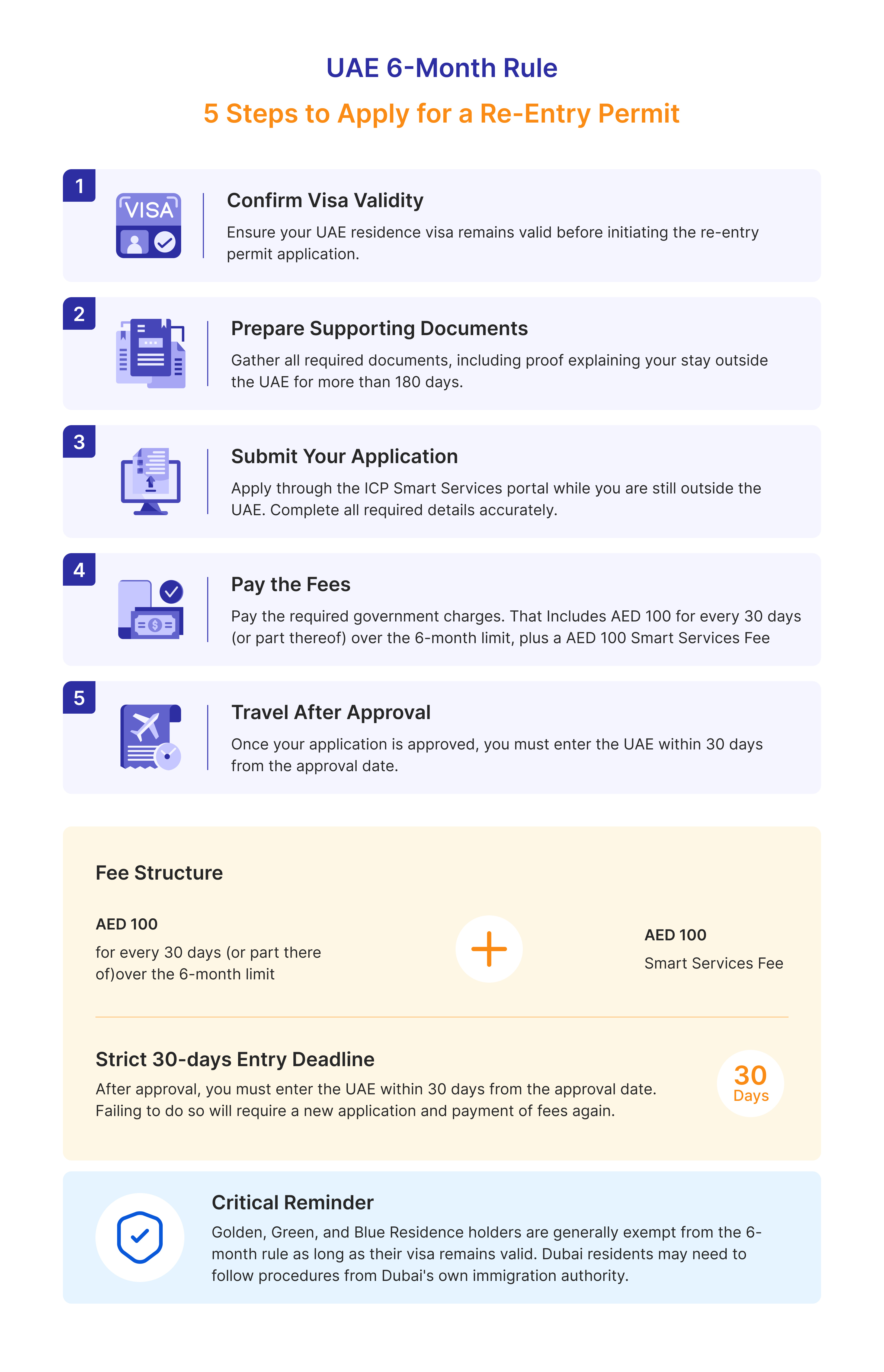
In many cases, eligible residents can apply for a UAE Re-entry Permit while still outside the country. The application usually needs a clear reason for the extended absence plus supporting documents. If it’s approved, the resident typically has to enter the UAE within 30 days of the approval date.
| Situation | What Usually Happens |
| Outside UAE for less than 180 days | Residence visa generally stays valid for re-entry |
| Outside UAE for more than 180 days | Re-entry permit might be required |
| Golden/Green/Blue Residence holders | Exemptions can apply, as long as the visa remains valid |
How can residents return after exceeding the six-month limit?
The process is typically completed online through the ICP for residents who are outside Dubai.
Step 1: Confirm visa validity
Make sure the residence visa still has enough time left before applying.
Step 2: Prepare supporting documents
Applicants should submit documents that explain why they were outside the UAE for more than 180 days.
Step 3: Submit the application
Applications are submitted through the ICP Smart Services portal while the applicant is outside the UAE.
Step 4: Pay the applicable fees
You pay government fees and any delay charges before the process moves forward.
Step 5: Travel after approval
After approval, the entry to the UAE normally should happen within 30 days of the approval date.
Are there penalties under the UAE 6-month rule?
Yes, sometimes there are government charges. Residents who apply for a re-entry permit after remaining outside the UAE for more than six months may need to pay additional fees. As per the ICP, the service can currently include:
- AED 100 for every 30 days (or part of that period) after six months
- AED 100 Smart Services fee
Other conditions might also show up depending on your residency category and your personal situation. Since fees can change, it’s smart to check the latest official schedule before you submit.
How can residents avoid problems with the UAE 6-month rule?
Most issues can be reduced with early planning, rather than trying to fix everything at the last moment. Residents who expect a longer stay abroad should
- Track the number of consecutive days outside the UAE
- Confirm if their visa category qualifies for an exemption
- Keep residency documents up to date
- Apply for a re-entry permit early, if eligible
- Keep watching for updates from the ICP or the relevant immigration authority
How can Arnifi help?
Residency regulations can be different depending on visa type, the sponsoring authority, and the individual circumstances. Arnifi supports businesses, investors, and residents to understand UAE immigration requirements, residency compliance, company formation, and visa-related procedures. Whether you are starting a business or managing long-term residency, Arnifi gives practical guidance so regulatory processes feel less complicated, and you can move forward with more confidence.
FAQs
What is the UAE 6-month rule?
For most residents, it means you are usually expected to return within 180 straight days in order to keep re-entry eligibility.
Does the UAE 6-month rule apply to Golden Visa holders?
Golden, Green, and Blue residence holders who are eligible are normally exempt from the usual six-month requirement as long as their residency stays active.
Can I return after being outside the UAE for more than six months?
Yes, eligible residents can request a re-entry permit, but they need to satisfy ICP conditions first.
Is the rule the same for Dubai residents?
Not always. Dubai residents may need to follow the procedures issued by Dubai’s own immigration authority rather than the ICP service.
Can I apply for the permit while I’m inside the UAE?
No, usually the application has to be submitted while the resident is outside the UAE.
Conclusion
By now we know that the UAE 6-month rule is one of those core residency regulations people rely on when they plan to stay abroad for a while. When you know when it applies, what exemptions might exist, and you act fast if the 180-day limit is crossed, it can prevent any disruptions.
For businesses, investors, and individuals seeking support with UAE residency, company formation, or immigration compliance, Arnifi can help you handle these requirements with more confidence.
Top UAE Packages


Related Articles


Top UAE Packages
Get in Touch