
Tax Laws in ADGM 2026 | Corporate Tax, VAT, Compliance & Rules

Shethana P
SEO Content Writer
Shethana specialises in creating content that simplifies complex business, compliance, and regulatory topics for global business incorporation. She focuses on SEO strategy, content accuracy,… Read more

Tulika Saxena
AVP, Sales & Marketing | IIM Nagpur
Tulika Saxena specializes in business finance, sales strategy, and market positioning. Leads growth and partnerships, ensuring seamless business setup experiences and client success across… Read more


Key Fact: ADGM companies are subject to UAE federal tax laws, including Corporate Tax and VAT where applicable. A Qualifying Free Zone Person may benefit from a 0% Corporate Tax rate on qualifying income, while other taxable income can be subject to the standard 9% rate. Tax registration, transfer pricing, record-keeping, and other compliance requirements depend on the company’s activities and structure.
Table of contents
- Introduction
- What Are the Tax Laws in ADGM?
- Does Corporate Tax Apply to ADGM Companies?
- What Is a Qualifying Free Zone Person in ADGM?
- Which ADGM Activities Can Qualify for 0% Corporate Tax?
- Which ADGM Income May Be Taxed at 9%?
- How Do Mainland Transactions Affect ADGM Tax Treatment?
- How Does VAT Work in ADGM?
- What Are the Transfer Pricing Rules for ADGM Companies?
- Do Economic Substance Rules Apply to ADGM Companies?
- What Tax Compliance Does an ADGM Company Need?
- What Records Should ADGM Businesses Maintain?
- What Are the Tax Benefits of Setting Up in ADGM?
- Are ADGM SPVs and Holding Companies Tax-Free?
- How Can ADGM Businesses Prepare for Tax Compliance?
- What Are the Common Tax Mistakes in ADGM?
- ADGM Tax Rules vs Other UAE Free Zones
- How Can Arnifi Help With ADGM Tax Compliance?
- Conclusion
- FAQs
Introduction
Understanding the tax laws in ADGM is important before setting up a company or restructuring an existing business in the financial centre. ADGM is a financial free zone with its own commercial and regulatory framework, but tax is largely governed by UAE federal legislation.
This means an ADGM company should not assume that being registered in a free zone automatically makes its income tax-free. The actual tax position depends on the company’s activities, income, transactions, ownership structure and whether it meets the conditions for specific tax treatments.
ADGM also provides access to the UAE’s wider tax framework, including its network of double tax treaties. ADGM confirms that its registered entities can apply for a UAE Tax Residency Certificate, subject to meeting the Federal Tax Authority’s requirements.
What Are the Tax Laws in ADGM?
The main tax rules relevant to ADGM businesses come from UAE federal legislation rather than a separate ADGM corporate tax system.
These can include:
- UAE Corporate Tax
- Value Added Tax
- Transfer pricing
- Tax registration and filing
- Tax record keeping
- Applicable tax residency requirements
- Other regulatory and compliance obligations based on the business activity
ADGM’s own rules continue to apply to company formation, licensing, financial services and other activities within the jurisdiction. Therefore, businesses may need to consider both ADGM regulatory requirements and UAE federal tax requirements.
Does Corporate Tax Apply to ADGM Companies?
Yes. ADGM companies can fall within the UAE Corporate Tax regime. For businesses subject to the standard Corporate Tax rates, taxable income up to AED 375,000 is subject to 0% Corporate Tax, while taxable income above AED 375,000 is subject to 9%.
Free zone companies have an additional possibility. A company that meets the conditions to be a Qualifying Free Zone Person (QFZP) can benefit from a 0% rate on its Qualifying Income. Income that does not qualify can be subject to the standard Corporate Tax rules.
An ADGM company must also assess whether it needs to register for Corporate Tax with the FTA. Registration is separate from VAT registration, and being registered for VAT does not automatically satisfy Corporate Tax registration requirements.
What Is a Qualifying Free Zone Person in ADGM?
A Qualifying Free Zone Person is a Free Zone Person that satisfies the conditions prescribed under the UAE Corporate Tax rules.
The main requirements include:
- Deriving Qualifying Income
- Maintaining adequate substance in the UAE
- Conducting qualifying activities
- Complying with transfer pricing requirements
- Preparing audited financial statements where required
- Meeting the applicable de-minimis requirements
- Satisfying other conditions under the Corporate Tax legislation
The rules for qualifying and excluded activities were updated through Ministerial Decision No. 229 of 2025. Therefore, businesses should assess their activities against the current rules rather than relying on older descriptions of the free zone tax regime.
Which ADGM Activities Can Qualify for 0% Corporate Tax?
Certain activities can qualify for the free zone Corporate Tax regime when the relevant conditions are satisfied.
| Qualifying activity | Examples |
| Holding of shares and securities | Holding companies and investment structures |
| Headquarters services | Group management and support services |
| Treasury and financing | Certain intra-group financing activities |
| Fund management | Investment and asset management |
| Other prescribed activities | Subject to current Corporate Tax rules |
The exact tax treatment depends on the activity, income and other conditions. Simply carrying out an activity from ADGM does not automatically guarantee a 0% Corporate Tax rate.
Which ADGM Income May Be Taxed at 9%?
Income may fall outside the 0% QFZP treatment where it is not Qualifying Income or where the company does not meet the conditions for the regime.
This can include:
- Income from excluded activities
- Certain transactions with natural persons
- Income connected with a permanent establishment
- Certain income from immovable property
- Other non-qualifying income under the applicable rules
The de-minimis rules can allow limited non-qualifying revenue without immediately losing QFZP treatment, subject to the prescribed conditions. The current framework uses the lower of 5% of total revenue or AED 5 million for the relevant calculation. If a Free Zone Person fails to meet the QFZP conditions, it can lose the preferential regime and become subject to the standard Corporate Tax treatment for the applicable period.
How Do Mainland Transactions Affect ADGM Tax Treatment?
An ADGM company may deal with customers, suppliers, shareholders or group companies located elsewhere in the UAE or overseas. A mainland transaction does not automatically mean that all of the company’s income becomes taxable at 9%. The tax treatment depends on the nature of the transaction, the parties involved, the activity generating the income and the applicable Corporate Tax rules. Permanent establishments also need to be considered where an ADGM company has business operations outside the free zone. For this reason, companies should review contracts, revenue streams and operating arrangements before assuming that a particular transaction qualifies for the 0% rate.
How Does VAT Work in ADGM?
ADGM businesses can be subject to the UAE’s federal VAT system. The standard UAE VAT rate is 5%, although certain supplies can be zero-rated, exempt or subject to specific rules. VAT treatment depends on the type of supply rather than simply the location of the company’s registered office.
Businesses should consider:
- Taxable supplies
- Zero-rated supplies
- Exempt supplies
- Imports
- Reverse-charge transactions
- VAT registration thresholds
- VAT return and record-keeping requirements
ADGM should also not be treated as a VAT Designated Zone simply because it is a free zone. The special VAT treatment for Designated Zones applies only to zones specifically recognised under the UAE VAT framework.
What Are the Transfer Pricing Rules for ADGM Companies?
Transfer pricing rules apply to UAE businesses that conduct transactions with Related Parties or Connected Persons. The basic principle is that these transactions should be carried out on an arm’s-length basis, meaning the terms should broadly reflect those that would have applied between independent parties. The rules can apply to both domestic and cross-border transactions.
ADGM companies may therefore need to maintain documentation for:
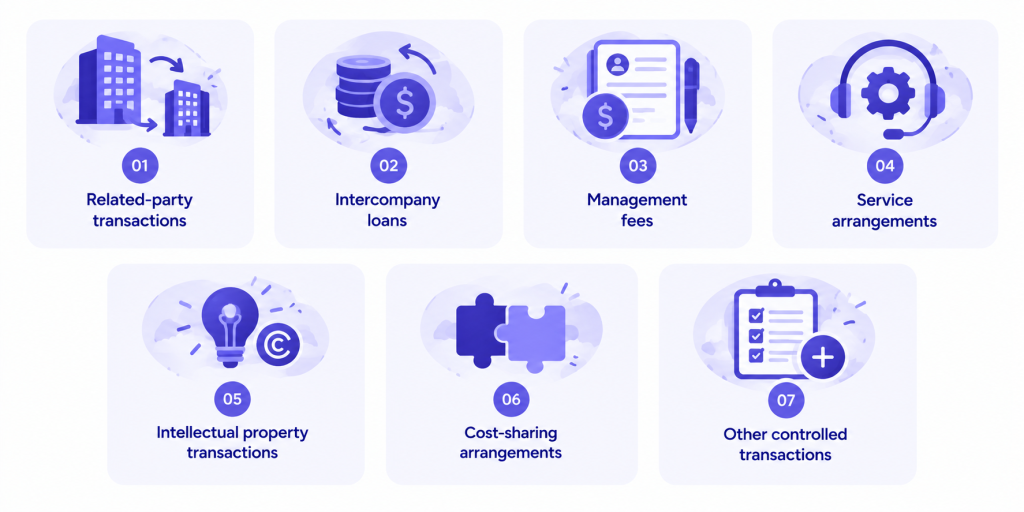
Depending on the business and applicable thresholds, master files, local files and other supporting documentation may be required.
Do Economic Substance Rules Apply to ADGM Companies?
This area needs particular attention because the UAE Economic Substance Regulations have changed. The UAE Ministry of Finance issued Cabinet Decision No. 98 of 2024, under which the current economic substance requirements cease to apply for financial years ending after 31 December 2022. However, entities may still need to meet filing and reporting requirements for historical periods between 1 January 2019 and 31 December 2022. Therefore, businesses should not automatically include ongoing ESR compliance as a current 2026 requirement. Historical obligations should still be checked where relevant.
What Tax Compliance Does an ADGM Company Need?
The exact obligations depend on the company’s activities and tax position.
| Compliance area | What businesses should consider |
| Corporate Tax | Registration, return and payment |
| QFZP | Qualifying income and eligibility conditions |
| VAT | Registration, returns and records |
| Transfer Pricing | Related-party documentation |
| Financial Statements | Accounting and applicable audit requirements |
| Historical ESR | Requirements for relevant periods up to 2022 |
| AML/KYC | Applicable ADGM and sector requirements |
Corporate Tax returns and payments are generally due within nine months from the end of the relevant Tax Period, subject to the applicable rules. The FTA also requires taxable persons to maintain records supporting information reported in their tax returns.
What Records Should ADGM Businesses Maintain?
Businesses should maintain records that support their tax position and reported transactions.
These can include:
- Financial statements
- Contracts
- Invoices
- Bank records
- Intercompany agreements
- Transfer pricing documentation
- Corporate Tax records
- VAT records
- Board minutes and resolutions
- Ownership records
- Evidence supporting the company’s activities and tax treatment
The FTA has specifically emphasised the need for taxable persons to retain records supporting their Corporate Tax returns, including transaction, asset, liability and share records.
What Are the Tax Benefits of Setting Up in ADGM?
ADGM can offer several tax and structuring advantages, but these should be viewed as potential benefits rather than automatic exemptions.
These can include:
- Potential 0% Corporate Tax on qualifying income for eligible QFZPs
- 0% UAE withholding tax framework
- Access to the UAE’s double tax treaty network, subject to the relevant conditions
- Potential participation exemption treatment where the applicable requirements are met
- Structuring options for holding companies, investment vehicles and financial businesses
- A well-established legal and regulatory environment
ADGM itself describes its environment as tax-friendly and highlights access to the UAE’s double tax treaty network.
Are ADGM SPVs and Holding Companies Tax-Free?
No. An ADGM SPV or holding company should not be described as automatically tax-free.
The tax treatment depends on factors such as:
- The company’s activities
- Nature of its income
- QFZP eligibility
- Applicable exemptions
- Related-party transactions
- Tax residency
- Substance and management arrangements
ADGM SPVs can apply for a UAE Tax Residency Certificate, subject to FTA requirements. ADGM also provides a specific SPV framework for holding assets and investments. Therefore, incorporation in ADGM should be considered as part of the overall structure rather than as a standalone tax exemption.
How Can ADGM Businesses Prepare for Tax Compliance?
Businesses can use the following checklist:
- Identify the entity and business activity
- Determine the company’s Corporate Tax position
- Assess whether QFZP treatment is available
- Map qualifying and non-qualifying income
- Review mainland and cross-border transactions
- Register for applicable taxes
- Maintain proper accounting records
- Review related-party transactions
- Maintain supporting documentation for the tax position
- Track filing and payment deadlines
Businesses should also review their position whenever there is a significant change in ownership, activities, revenue streams or group structure.
What Are the Common Tax Mistakes in ADGM?
Some common mistakes include:
- Assuming ADGM automatically means zero tax
- Treating all ADGM income as qualifying income
- Ignoring Corporate Tax registration
- Mixing qualifying and non-qualifying revenue without proper analysis
- Failing to document related-party transactions
- Assuming old ESR requirements still apply to current financial years
- Ignoring VAT obligations
- Missing Corporate Tax filing deadlines
- Assuming an SPV is automatically tax-exempt
- Relying on outdated free zone tax information
ADGM Tax Rules vs Other UAE Free Zones
| Area | ADGM | Other UAE Free Zones |
| Corporate Tax | UAE federal rules | UAE federal rules |
| QFZP treatment | Available if conditions are met | Available if conditions are met |
| VAT | Federal VAT rules | Depends on the applicable VAT rules |
| Regulatory environment | ADGM-specific | Free-zone specific |
| Financial activities | FSRA-regulated where applicable | Depends on jurisdiction and activity |
The key point is that the UAE Corporate Tax framework is federal, while each free zone has its own commercial and regulatory environment.
How Can Arnifi Help With ADGM Tax Compliance?
Tax planning should be considered alongside the company’s structure and business activity.
Arnifi can support businesses with:
- ADGM company setup
- Entity and licence selection
- Corporate Tax registration
- Accounting and bookkeeping
- VAT support
- Tax compliance coordination
- Ongoing corporate requirements
Technical tax opinions, regulated tax advice and specialist tax assessments should be handled by appropriately qualified professionals. ADGM itself regulates the provision of tax services as a controlled activity when provided commercially to third parties.
Conclusion
ADGM can offer a tax-efficient environment for companies involved in holding, investment, financial and other permitted activities. However, the benefit does not come simply from having an ADGM registration. The company’s activities, income, QFZP eligibility, transactions, documentation and compliance position all matter. Businesses should therefore assess their tax structure before setup and continue reviewing it as their operations change.
FAQs
1. What are the tax laws in ADGM?
ADGM companies are generally subject to UAE federal tax laws, including Corporate Tax and VAT where applicable.
2. Does ADGM have Corporate Tax?
Yes. ADGM entities can fall under the UAE federal Corporate Tax regime.
3. Is ADGM Corporate Tax 0%?
Not automatically. Eligible QFZPs can receive 0% on qualifying income, subject to the applicable conditions.
4. What is the ADGM QFZP regime?
It is the UAE free zone Corporate Tax regime that can provide 0% tax on qualifying income when the required conditions are met.
5. What income qualifies for 0% Corporate Tax?
Qualifying income depends on the prescribed activities, transactions and conditions under the UAE Corporate Tax rules.
6. What income is taxed at 9%?
Non-qualifying taxable income can be subject to the standard 9% Corporate Tax rate above the AED 375,000 threshold.
7. Do ADGM companies need Corporate Tax registration?
Taxable ADGM companies generally need to register with the FTA and obtain a Corporate Tax Registration Number.
8. Does VAT apply in ADGM?
Yes, where the business makes supplies that fall within the UAE VAT regime.
9. Is ADGM a VAT Designated Zone?
ADGM should not be treated as a VAT Designated Zone merely because it is a free zone. Designated Zone treatment depends on the federal VAT rules.
10. Do ADGM companies need audited accounts?
Audit requirements depend on the applicable ADGM and tax rules. QFZPs should also consider the specific financial statement requirements applicable to their status.
11. Do transfer pricing rules apply in ADGM?
Yes. UAE transfer pricing rules can apply to transactions between Related Parties and Connected Persons.
12. Do ESR rules apply to ADGM companies?
Current ESR requirements do not apply to financial years ending after 31 December 2022, but historical ESR obligations may still need to be addressed.
13. Are ADGM SPVs tax-free?
No. An SPV is not automatically tax-free. Its tax treatment depends on its activities, income and applicable UAE tax rules.
14. Can ADGM companies claim tax treaty benefits?
Potentially. ADGM entities can apply for a UAE Tax Residency Certificate if they meet the FTA’s requirements and may then access treaty benefits subject to the relevant treaty.
15. What happens if an ADGM company loses QFZP status?
The company can lose access to the preferential free zone Corporate Tax regime and may become subject to the standard Corporate Tax treatment under the applicable rules.
References:
Top UAE Packages
Related Articles



Top UAE Packages
Get in Touch
