
Why Dubai Logistics City is the Right Choice for Your Business?

Anushka
Content Writer
Anushka Basu is a business content writer specialised in global business market insights. She aims to simplify complex regulatory, financial, and business concepts into… Read more

Tulika Saxena
AVP, Sales & Marketing | IIM Nagpur
Tulika Saxena specializes in business finance, sales strategy, and market positioning. Leads growth and partnerships, ensuring seamless business setup experiences and client success across… Read more


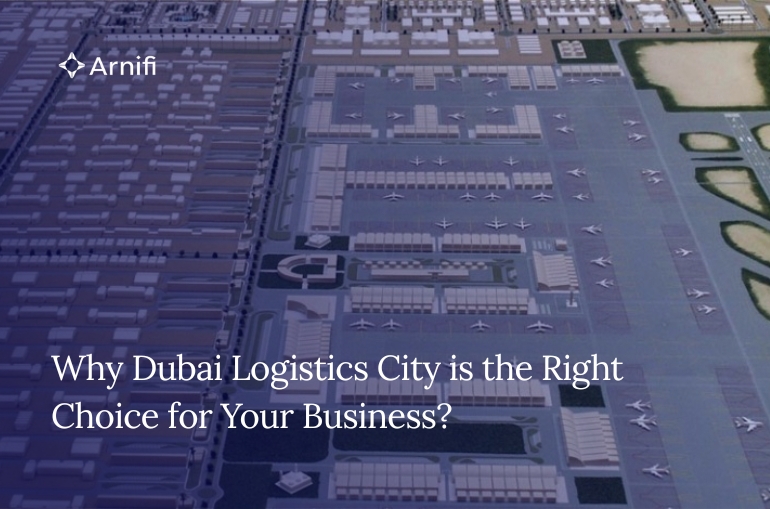
Key fact: Dubai Logistics City’s main value lies in the combination of specialised logistics infrastructure and air, sea and road connectivity – not simply its status as a free-zone location.
Table of contents
- Introduction
- What is Dubai Logistics City?
- Why is Dubai Logistics City important for businesses?
- How does Dubai Logistics City connect air, sea and land transport?
- What types of businesses can benefit from Dubai Logistics City?
- Why is Dubai Logistics City relevant for e-commerce and fulfilment?
- How can Dubai Logistics City support international trade?
- What makes Dubai Logistics City different from a regular business location?
- What infrastructure is available for logistics businesses?
- How can a business set up in Dubai Logistics City?
- What should you consider before choosing Dubai Logistics City?
- Dubai Logistics City vs other logistics locations in Dubai: what should you compare?
- Can Dubai Logistics City support business growth?
- What challenges should businesses consider?
- How can Arnifi help with Dubai Logistics City setup?
- FAQs
- Conclusion
Introduction
Dubai Logistics City is a dedicated logistics district within Dubai South, built around businesses that move, store and distribute goods.
For these companies, choosing a location is about more than having a Dubai address. Access to airports, ports, roads, warehouses and logistics infrastructure can directly affect day-to-day operations.
Dubai Logistics City brings these elements together, with its location close to Al Maktoum International Airport and connected to the Jebel Ali Port corridor and wider road network.
What is Dubai Logistics City?
Dubai Logistics City is the logistics-focused district of Dubai South. It forms part of a wider development that brings together logistics, aviation, commercial and supporting business activities.
The Logistics District is designed for businesses involved in:
| Business need | What Dubai Logistics City offers |
| Freight | Facilities and infrastructure for freight operators |
| Warehousing | Storage and distribution facilities |
| Fulfilment | Infrastructure for e-commerce and fulfilment operations |
| Distribution | Access to regional road networks |
| Air cargo | Proximity to Al Maktoum International Airport |
| Sea freight | Connectivity towards Jebel Ali Port |
| Supply chain | An integrated logistics ecosystem |
Dubai South describes its Logistics District as providing warehousing and freight infrastructure adjacent to Al Maktoum International Airport.
Why is Dubai Logistics City important for businesses?
The strongest reason to consider the location is simple: logistics businesses have different infrastructure needs from ordinary service businesses.
A consultancy may primarily need an office. A logistics company could need:
- Warehouse space
- Storage and inventory facilities
- Freight infrastructure
- Cargo-handling capabilities
- Distribution space
- Road access
- Air or sea freight connectivity
This creates a straightforward value proposition:
| What the business needs | Why the location matters |
| Move goods quickly | Access to major transport networks |
| Store inventory | Dedicated warehousing infrastructure |
| Handle international cargo | Air and sea connectivity |
| Serve regional markets | Road links for distribution |
| Expand operations | Access to a wider logistics ecosystem |
So, the key advantage is not just “being in Dubai.” It is being inside an environment designed around logistics.
How does Dubai Logistics City connect air, sea and land transport?
One of the biggest strengths of the location is its multimodal connectivity.
Air cargo
Dubai Logistics City is located adjacent to Al Maktoum International Airport, giving logistics operators proximity to major air-cargo infrastructure.
Sea freight
The Logistics District is connected to Jebel Ali Port through a logistics corridor, giving businesses an important link to maritime freight.
Road transport
Road connections link logistics facilities with other parts of Dubai, the UAE and regional markets.
For businesses using multiple transportation modes, having these connections within the same wider ecosystem can be particularly useful.
What types of businesses can benefit from Dubai Logistics City?
The location is particularly relevant to businesses that depend on physical goods and supply-chain movement.
| Business type | Why Dubai Logistics City can be relevant |
| Freight forwarders | Access to air, sea and road networks |
| 3PL providers | Warehousing, handling and distribution infrastructure |
| Warehousing companies | Dedicated storage facilities |
| E-commerce businesses | Fulfilment and distribution requirements |
| Cargo companies | Proximity to air-cargo infrastructure |
| Importers and exporters | Access to international trade routes |
| Distribution companies | Regional road connectivity |
| Supply-chain businesses | Integrated logistics environment |
Dubai South has developed logistics facilities for freight forwarders, e-commerce companies, traders and third-party logistics operators.
The exact suitability will still depend on the company’s activity and operational requirements.
Why is Dubai Logistics City relevant for e-commerce and fulfilment?
E-commerce businesses have to manage more than simply selling products online. Behind every order is a physical supply chain.
A fulfilment operation may involve:
- Receiving goods
- Inventory storage
- Order processing
- Packing
- Goods handling
- Distribution
- Returns management
Dubai South includes EZDubai, a dedicated e-commerce zone, alongside logistics infrastructure supporting fulfilment and warehousing activities.
This makes the wider Dubai South ecosystem relevant to e-commerce businesses that need to connect international supply chains with regional distribution.
How can Dubai Logistics City support international trade?
For import, export and distribution businesses, transport connectivity is a major consideration.
Dubai Logistics City brings together access to:
| Transport channel | Business relevance |
| Air | Time-sensitive and international cargo |
| Sea | Maritime imports and exports |
| Road | UAE and regional distribution |
| Warehousing | Storage before onward movement |
| Distribution | Movement into target markets |
This combination can be useful for companies using Dubai as a regional distribution base.
However, businesses should assess the actual route their goods take rather than assuming that every logistics operation will benefit equally from every transport connection.
What makes Dubai Logistics City different from a regular business location?
The difference becomes clearer when the two are compared.
| Requirement | Conventional business location | Dubai Logistics City |
| Standard office | Applicable | Applicable |
| Logistics infrastructure | Limited/depends on location | Applicable |
| Warehousing ecosystem | May be limited | Applicable |
| Air-cargo access | Depends on location | Strong focus |
| Port connectivity | Depends on location | Connected to Jebel Ali corridor |
| Freight operations | Not the primary focus | Core focus |
| E-commerce fulfilment | Possible | Dedicated ecosystem |
| Supply-chain operations | Depends on premises | Purpose-built environment |
A logistics company does not necessarily benefit from choosing a location designed primarily for office-based businesses.
That is where Dubai Logistics City’s specialised environment becomes important.
What infrastructure is available for logistics businesses?
Dubai South provides different types of logistics facilities depending on the nature of the operation.
Businesses may require:
- Office space
- Warehouses
- Storage facilities
- Freight facilities
- Fulfilment space
- Distribution infrastructure
- More specialised operational facilities
Dubai South has highlighted facilities for freight forwarding, contract logistics, e-commerce and other logistics activities within the Logistics District.
The right facility depends on the company’s actual operating model.
How can a business set up in Dubai Logistics City?
This is not simply about selecting a licence and moving into an office. Logistics businesses should determine their operational requirements first. A simplified setup roadmap is:

Dubai South states that businesses operating in the DWC Free Zone require a physical presence and can establish as a new DWC-LLC or as a branch of an existing entity.
The specific premises and requirements depend on the business activity.
What should you consider before choosing Dubai Logistics City?
Before committing to the location, businesses should answer a few practical questions:
Operational requirements
- Do you need a warehouse?
- Is office space enough?
- Will you handle physical cargo?
- Do you need fulfilment facilities?
- Will your inventory be stored locally?
Supply-chain requirements
- Where are your suppliers?
- Where are your customers?
- Do you primarily use air or sea freight?
- Will goods move across the UAE by road?
- Do you need more than one transport mode?
Growth requirements
- Could your storage needs increase?
- Might you need larger facilities later?
- Will fulfilment become part of the operation?
- Could the business expand into regional distribution?
The key principle is straightforward: choose the location based on operational requirements first, rather than choosing it simply because it is a Dubai free zone.
Dubai Logistics City vs other logistics locations in Dubai: what should you compare?
Dubai has several logistics and trade locations. Instead of comparing them only by name, businesses can assess them using the factors below.
| Factor | Question to ask |
| Airport access | How important is air cargo to the business? |
| Port access | Does the company rely on sea freight? |
| Warehousing | How much storage is required? |
| Industrial needs | Are specialised facilities necessary? |
| Distribution | Where are the main customers? |
| Trade | Is the business importing, exporting or redistributing goods? |
| Growth | Can the location support future operational needs? |
Dubai Logistics City is particularly relevant when air cargo and integrated logistics infrastructure are central to the business model.
Can Dubai Logistics City support business growth?
Scalability matters in logistics because operational requirements can change quickly as a business grows.
A company might move through stages such as:
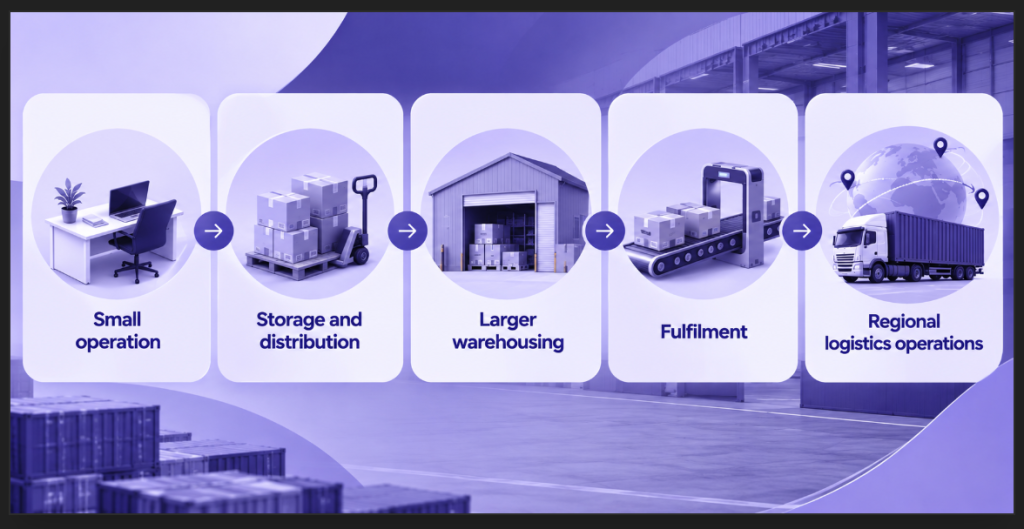
Dubai South’s wider ecosystem includes logistics, aviation, commercial and e-commerce-focused developments, allowing businesses to operate within a broader connected environment as their requirements evolve.
This does not mean every business will automatically scale within the same facility. Rather, having a developed logistics ecosystem can give companies more options as their operational needs change.
What challenges should businesses consider?
Dubai Logistics City can be a strong fit, but it is not automatically the right choice for every business.
| Consideration | Why it matters |
| Physical premises | Logistics operations may require more than an office |
| Warehouse needs | Storage requirements can affect facility selection |
| Activity | The licensed activity must match the actual business |
| Infrastructure | Specialised operations may require specific facilities |
| Supply chain | Transport connections should match actual routes |
| Future growth | Premises should be assessed with expansion in mind |
The location only creates value when its infrastructure matches the company’s supply-chain model.
How can Arnifi help with Dubai Logistics City setup?
Arnifi can help businesses assess the location before moving into the setup process.
Support can include:
- Reviewing the proposed business model
- Identifying the appropriate activity
- Comparing company structure options
- Supporting Dubai South company formation
- Assisting with documentation
- Helping assess office or warehouse requirements
- Supporting visas and banking
- Assisting with post-incorporation requirements
The objective is to create a setup plan around the business’s actual logistics requirements rather than treating company formation as a standalone exercise.
FAQs
What is Dubai Logistics City?
Dubai Logistics City is the logistics-focused district within Dubai South, designed for freight, warehousing, distribution and supply-chain activities.
Why should a logistics company choose Dubai Logistics City?
Its main advantage is the combination of specialised logistics infrastructure with connectivity to air, sea and road transportation networks.
What businesses can operate in Dubai Logistics City?
It is particularly relevant to freight forwarders, logistics providers, warehousing businesses, e-commerce and fulfilment companies, cargo operators, traders and distribution businesses.
Is Dubai Logistics City suitable for e-commerce and fulfilment businesses?
Yes. Dubai South includes EZDubai and logistics infrastructure supporting e-commerce, fulfilment and warehousing activities.
Does a business need a warehouse in Dubai Logistics City?
Not necessarily. The requirement depends on the business activity and operating model. Some companies may need office space, while others may require storage, warehousing or specialised logistics facilities.
How is Dubai Logistics City different from other logistics hubs in Dubai?
Its key distinction is its integration with Dubai South’s wider aviation and logistics ecosystem, particularly its proximity to Al Maktoum International Airport and connection to Jebel Ali Port and road networks.
Conclusion
Dubai Logistics City is designed for businesses where logistics is part of the core operation, not an afterthought. Its combination of air, sea and road connectivity, warehousing infrastructure and wider logistics ecosystem makes it particularly relevant to freight, fulfilment, distribution and international trade businesses. The right choice ultimately depends on the company’s activity, supply-chain model and infrastructure requirements.
Official references
Top UAE Packages


Related Articles

Top UAE Packages
Get in Touch