
UAE Property Markets Expand at Pace Despite Oil Sector Slowdown
by Rifa S Laskar Feb 14, 2026  7 MIN READ


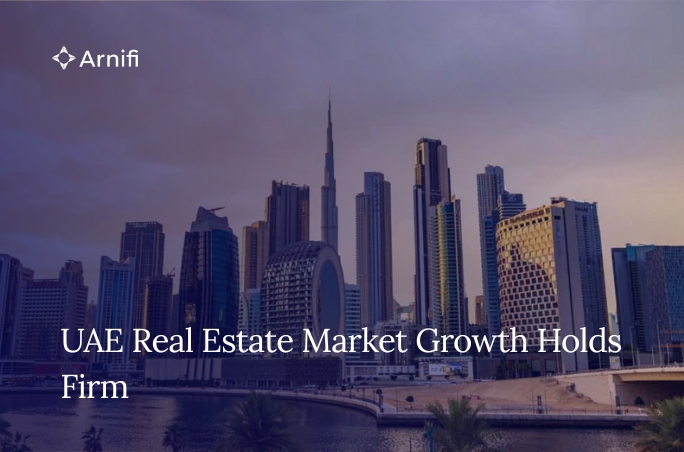
The UAE real estate market continues to expand across offices, homes, retail, hospitality, and industrial assets even as oil-related pressures weigh on parts of the wider economy. Fresh data from CBRE’s latest quarterly review shows demand holding firm, new supply being absorbed, and investor appetite staying active. The numbers tell a clear story diversification is no longer a plan on paper. It is visible in cranes, leases & transaction volumes.
Table of contents
- 1. Introduction
- 2. Office Market: Tight Supply in Prime Locations
- 3. Residential: Population Growth Feeds Momentum
- 4. Retail: Footfall and Experience Matter
- 5. Hospitality: Tourism Supports Asset Performance
- 6. Industrial and Logistics: Quiet Strength
- 7. Oil Headwinds but Broader Stability
- 8. Investment Outlook: Cautious but Confident
- 9. Arnifi Insight
- 10. FAQs
- 11. Conclusion
1. Introduction
While oil-linked sectors face softer momentum, property markets across the Emirates are moving in a different direction. The recent quarterly review by CBRE highlights steady expansion across offices, residential developments, retail destinations, hospitality assets & industrial facilities.
Oil prices may fluctuate and global conditions may shift, yet the UAE real estate market continues to post growth backed by population inflows, business formation & long-term capital commitments. It reflects a structural shift in how the UAE economy is being built.
2. Office Market: Tight Supply in Prime Locations
Prime office space, particularly in Dubai and Abu Dhabi, remains in high demand. Grade A stock is limited, and occupancy levels in established business districts continue to rise. In areas such as the Dubai International Financial Centre, available space is scarce and rents have edged upward as companies compete for quality addresses.
The UAE real estate market in the office segment is being driven by financial services firms, technology companies, consultancies, and regional headquarters relocations. Many global groups are expanding teams in the Emirates to serve Middle East, Africa & South Asia operations. That growth translates directly into lease commitments.
In Abu Dhabi, business clusters tied to energy transition, sovereign investment, and government-linked entities are also supporting absorption. Even with oil sector moderation, the commercial property base remains resilient.
3. Residential: Population Growth Feeds Momentum
The residential side of the UAE real estate market continues to benefit from net population growth. New residents, long-term visa reforms & increased investor confidence have translated into steady transaction volumes.
In Dubai, villa communities have seen particular interest from end users rather than purely speculative buyers. Apartment sales in established neighbourhoods and other emerging districts are also moving readily. Also, price growth has moderated compared to previous peaks, but values remain firm in prime and well-connected areas.
Abu Dhabi’s residential market is showing a similar pattern. Demand is the strongest for modern developments that offer community amenities & lifestyle integration. Rental rates in selected districts have increased due to limited ready supply, while new launches are being absorbed at a measured pace.
The broader takeaway is simple that the UAE real estate market is supported by real demand, not just capital rotation.
4. Retail: Footfall and Experience Matter
Retail property has also shown stability. Malls and high-street locations that offer strong tenant mixes & entertainment elements continue to attract the crowd. The performance gap between prime & secondary retail has widened, but core assets remain solid.
Tourism flows and domestic consumption have supported this segment. Major destinations such as The Dubai Mall continue to anchor retail activity. Meanwhile, community retail centres tied to new residential clusters are filling up as new households move in.
The UAE real estate market in retail is no longer defined by sheer square footage. It is defined by relevance, accessibility & curated tenant strategy. That shift has helped quality retail assets maintain occupancy levels despite global retail challenges.
5. Hospitality: Tourism Supports Asset Performance
Hospitality remains one of the clearest examples of diversification. Hotel occupancy & average daily rates have been supported by international tourism, regional travel, & other major events.
Dubai continues to position itself as a global destination, while Abu Dhabi has expanded its cultural and entertainment offerings. Developments around Yas Island & cultural attractions such as the Louvre Abu Dhabi are reinforcing that positioning.
For the UAE real estate market, strong hospitality performance supports mixed-use projects & encourages continued development of branded residences and integrated communities. Investors view hospitality-linked assets as part of a broader lifestyle & tourism ecosystem rather than standalone hotels.
6. Industrial and Logistics: Quiet Strength
Industrial and logistics assets have become one of the most consistent performers within the UAE real estate market. E-commerce growth, regional trade flows & supply chain diversification have driven demand for warehousing & also distribution facilities.
Key zones such as Jebel Ali Free Zone remain central to this expansion. Limited supply of modern facilities has pushed the rents up in selected submarkets.
Unlike more cyclical segments, industrial property benefits from structural trends. As companies use the UAE as a distribution base that links Asia, Africa & Europe, logistics demand supports steady leasing activity. This provides another layer of resilience to the UAE real estate market.
7. Oil Headwinds but Broader Stability
Oil still matters as it shapes fiscal policy, public spending, and investor sentiment across the region. Yet the latest data shows that the UAE real estate market is no longer directly tethered to short-term oil price cycles.
Government policy has focused on economic diversification for years. Business-friendly regulation, long-term residency pathways, and capital market development have expanded the non-oil base. Property markets are reflecting that evolution.
The expansion across office, residential, retail, hospitality & industrial sectors suggests balanced growth. It also indicates that capital sees long-term opportunity rather than temporary upside.
8. Investment Outlook: Cautious but Confident
Buyers are more selective, yet the transactions also remain steady. Due diligence standards have tightened also, the developers are pacing launches carefully to avoid oversupply.
This disciplined approach strengthens the credibility of the UAE real estate market. Rather than chasing rapid spikes, the focus appears to be on sustainable absorption and realistic pricing.
Institutional capital, regional family offices, and international investors continue to allocate to UAE property. That confidence is not built on headlines alone. It is built on data, regulatory clarity & the country’s position as a regional hub.
9. Arnifi Insight
For businesses entering or expanding within the UAE real estate market, regulatory structure and licensing strategy matter as much as location. Company formation choices influence tax positioning, operational flexibility & asset structuring.
Arnifi supports market entry, corporate structuring, and compliance setup across mainland and free zone jurisdictions. From selecting the right license to aligning corporate frameworks with real estate holdings, Arnifi ensures that expansion plans match regulatory requirements.
In a property cycle where fundamentals matter a disciplined setup creates long-term advantage.
10. FAQs
Is the UAE real estate market still growing despite oil slowdown?
Yes, multiple sectors continue to record expansion.
Which segment is strongest in the UAE real estate market?
Industrial and prime office assets show particularly strong demand.
Are residential prices rising across the UAE real estate market?
Prime areas remain firm while growth has moderated overall.
How is retail performing in the UAE real estate market?
Prime malls and community retail centres maintain stable occupancy.
Does oil price volatility directly impact the UAE real estate market?
The market is increasingly diversified and less directly linked to oil cycles.
11. Conclusion
The latest review confirms a clear direction. The UAE real estate market is expanding across diversified asset classes even as oil-related sectors face softer momentum. Offices are filling, homes are being absorbed, retail is adapting, hospitality is thriving & logistics facilities are in demand.
This is not accidental growth. It reflects policy choices, demographic shifts & sustained investor interest. For companies and investors assessing regional strategy, the UAE real estate market presents depth rather than hype.
Arnifi stands positioned to guide businesses through this landscape with clarity and precision. In a market defined by structural expansion, informed setup & strategic alignment are essential.
Top UAE Packages


Related Articles

Top UAE Packages
Get in Touch