
UAE Lets Free Zone Companies Operate in Mainland: What Changed and Why It Matters
by Rifa S Laskar Jan 13, 2026  7 MIN READ


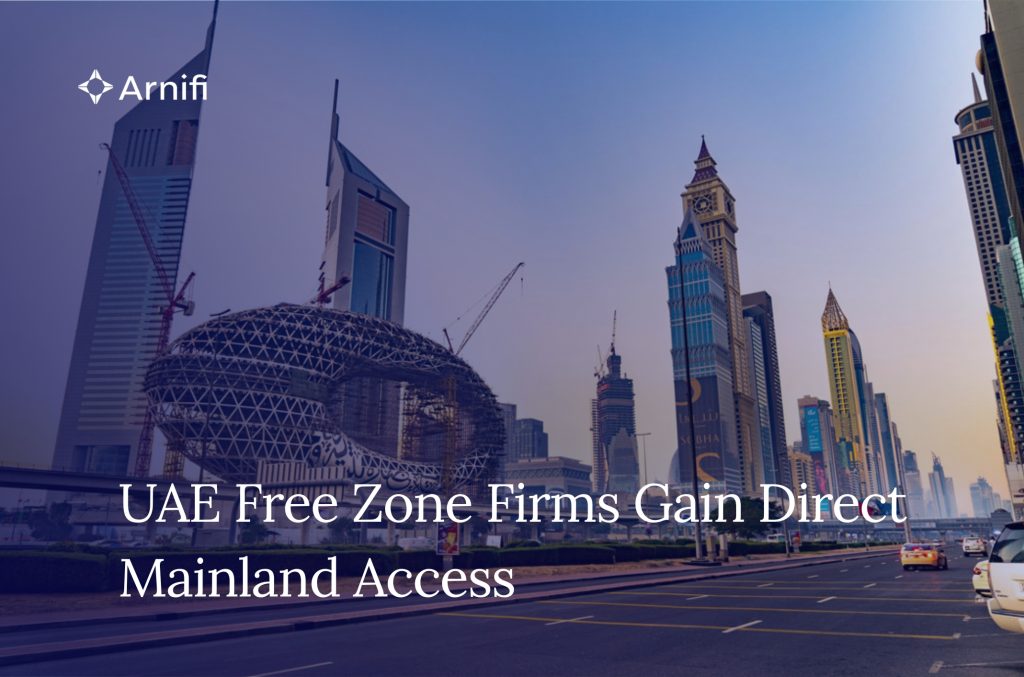
In a major shift for business in the UAE free zone companies can now enter the domestic market directly without forming a separate mainland entity. This change removes a structural barrier that for years limited growth, while promising stronger investment, more competition, and broader economic participation.
Table of contents
1. Introduction
For decades, free zone companies in the United Arab Emirates could sell internationally and operate within their designated zones, but not in the UAE’s vast domestic market. To win local business or bid on government and private contracts, companies had to create a separate mainland entity or appoint a local distributor. That barrier constrained growth and left significant opportunities untapped.
Today that boundary has been redrawn. Under new regulations issued by the Dubai Executive Council, free zone firms can operate in the mainland directly, provided they secure the appropriate licenses or permits from the Dubai Department of Economy and Tourism. This isn’t a minor tweak. It is a structural change that reshapes how the UAE’s business market functions and opens the door to deeper integration across its economy.
2. What Changed
Until recently, a free zone licence was effectively a geographic boundary. Companies inside a zone could serve clients abroad or in their zone. To access the broader UAE market – the mainland – they had to either set up a separate onshore company with local sponsorship (often costly and complex) or work through local distributors.
The new policy changes that. Under Executive Council Resolution No. 11 of 2025, free zone companies may:
- Apply for a mainland branch licence to operate directly in the UAE mainland.
- Obtain temporary permits for specific onshore activities lasting up to six months (renewable).
- Maintain their existing free zone structure while working on mainland projects.
Licences and permits are issued through the Dubai Department of Economy and Tourism and come with clear rules on compliance and operation.
This effectively dissolves the old limitation where a company had to shut down or duplicate itself just to work with local customers. Now a single legal entity can serve both international and local markets without unnecessary restructuring.
3. Why This Matters
This reform is significant because it removes a structural obstacle that discouraged many companies from expanding their presence in the UAE. Free zone companies have long been attractive for global trade, technology, logistics, and professional services thanks to benefits like full foreign ownership and simplified setup. But, when it came to local contracts and mainland customers, many were held back. With this change, the dynamic shifts:
- Market access expands: Companies that once had to avoid local bids or client deals can now participate directly in the UAE’s domestic economy.
- Cost efficiency improves: There’s no need to replicate legal entities or build redundant offices just to serve mainland customers.
- Competition rises: Mainland firms will face more competition from dynamic free zone players, and customers gain more choice.
- Growth incentives strengthen: Clear pathways reduce guesswork, encourage investment decisions, and make the business environment more predictable.
Ahead of this reform, many free zone companies focused mainly on cross-border business and international markets out of necessity. These changes give them a second major runway: the domestic market.
4. Economic Impact
Opening mainland access to free zone firms is expected to ripple through the UAE’s economy in several ways:
- More registrations: Companies that once sat on the sidelines may now register in greater numbers.
- Higher foreign direct investment (FDI): International companies using the UAE as a regional base can expand local operations without legal duplication.
- Job creation: With expanded operations come more demand for talent across sectors.
- Sectoral growth: Industries such as logistics, technology, consulting, manufacturing, and professional services stand to gain significantly from wider market participation.
Experts suggest that reforms like this could contribute to meaningful growth in key sectors over time. By unifying market access, the UAE solidifies its position as a global hub where business is not just set up, but actively grown.
5. Who Benefits Most
This new policy touches many parts of the business ecosystem:
- Startups and small businesses in free zones can now tap into mainland opportunities without excessive cost.
- International corporations using the UAE as a launchpad for regional operations can scale local engagement more seamlessly.
- Service sectors, including tech, consulting, and professional services, which often operate with flexible models and remote teams.
- Trade and logistics companies that can move goods and services more fluidly across borders and within the UAE.
It’s worth noting that not all free zone entities are affected equally; for example, companies in financial hubs like the Dubai International Financial Centre (DIFC) still operate under specialised rules. But for most free zones, this reform is a major step toward integration.
6. Regulatory Safeguards
While the move eliminates a structural barrier, compliance remains central. Companies must:
- Secure the correct mainland licence or permit before operating onshore.
- Follow federal and emirate-level laws applicable to their business activities.
- Maintain separate financial records for free zone and mainland operations.
- Meet all tax reporting and regulatory obligations.
This approach balances openness with accountability, ensuring that growth does not come at the expense of compliance.
7. How This Fits the Bigger Picture
This reform aligns with broader economic goals in the UAE. Former reforms like 100 percent foreign ownership and corporate citizenship for businesses have already made the market more welcoming to global players. Reducing barriers between free zones and the mainland is another step in building one integrated national market that supports both scale and competitiveness.
It reflects a move away from segmented business landscapes toward something more unified, where companies can choose where they compete based on market demand and strategy rather than legal constraint.
8. Arnifi Business Support | Expert Help for Market Entry
For businesses navigating these changes, understanding licensing, compliance, and strategic planning can be complex. Arnifi is a specialist who helps companies evaluate the best route for mainland access, review licence options, and understand tax and reporting implications in the UAE.
Arnifi offers tailored support from initial assessment to final execution, making the transition from free zone operations to mainland engagement smooth and clear. Whether assessing whether to apply for a branch licence or temporary permit, Arnifi can provide actionable guidance and practical assistance aligned with the new regulatory framework.
9. FAQs
How is a free zone company allowed to operate in the mainland now?
By taking a mainland branch licence or short-term activity permit without closing the free zone entity.
What licences or permits are needed for free zone firms to enter the UAE domestic market?
A Dubai DET mainland licence or a renewable temporary onshore permit.
Does this reform change tax obligations for free zone companies?
No, mainland revenue still falls under UAE corporate tax and VAT rules.
Are there limitations on what activities a free zone firm can do in the mainland?
Yes, only activities approved under the mainland licence or permit are allowed.
How does this policy affect hiring or existing staff under free zone contracts?
Staff can work on mainland projects as long as visa and labour rules are followed
10. Conclusion
The UAE’s move to allow free zone companies direct access to the mainland is not just regulatory housekeeping. It is a strategic shift that broadens market access, deepens economic integration, and encourages businesses of all sizes to scale with clarity and confidence.
By removing a long-standing structural barrier and creating clear pathways for expansion, the UAE reinforces its reputation as a place where business can grow with fewer legal seams and more opportunity. Organizations that understand and plan for these changes today are likely to be the ones best positioned for growth tomorrow.
Top UAE Packages


Related Articles


Top UAE Packages
Get in Touch