
Nafis Support And What It Really Means For a Bank Loan in UAE
by Rifa S Laskar Dec 12, 2025  6 MIN READ


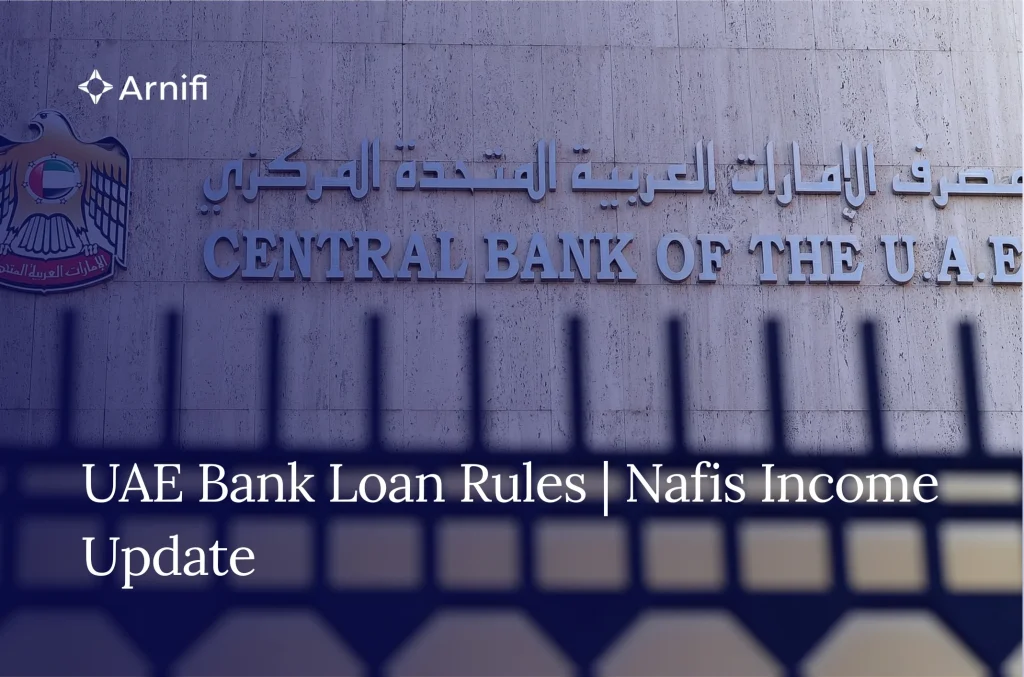
The Central Bank of Dubai, UAE has made a firm call on how Nafis income should be treated when assessing a bank loan in UAE. Many Emiratis in the private sector hoped that Nafis support would strengthen eligibility, but banks have been told to treat it carefully. This guidance is now shaping how lenders calculate debt limits, assess long-term income, and approve financing.
Table of contents
- 1. Introduction
- 2. What Triggered This Clarification?
- 2. Why Banks View Nafis Differently
- 3. The Debt-Burden Ratio Challenge
- 4. What the Minister Explained
- 5. How the Federal National Council Responded
- 6. Proposed Solutions to Improve Loan Access
- 7. What This Means for Anyone Planning to Apply for a Bank Loan in UAE
- 8. Arnifi Makes Compliance and Setup Easier
- 9. Conclusion
1. Introduction
The conversation around Nafis support and its role in securing a bank loan in UAE has grown louder across business circles. The Central Bank of Dubai, UAE recently stepped in to clear the air, and this clarification shifts how lenders interpret income, stability, and long-term creditworthiness. Business owners, salaried professionals, and financial planners have been waiting for a clear direction. Study the updated rules deeply, and adjust financial strategies with an intention.
2. What Triggered This Clarification?
Concerns had been rising as many Emiratis enrolled in the Nafis program struggled to access a bank loan in UAE. The issue wasn’t employment or performance but it was the simple fact that Nafis incentives are not considered in long-term guaranteed income. Banks operate within a strict personal-loan framework, and Nafis support doesn’t fit neatly into the category of consistent, future-proof earnings.
The personal loan rulebook has been in place since 2011, reinforcing transparency, clean lending practices, and realistic repayment capacity. Banks are obligated to treat income as regular only when it is stable and expected to continue through the full loan term. Nafis, by design, is temporary.
2. Why Banks View Nafis Differently
The updated guidance emphasises that the Nafis benefit is a government-backed push to encourage private-sector roles, not an alternative to a permanent salary. For a bank loan in UAE, the stability of income is everything. Salary from a registered employer can be forecasted. Nafis support cannot.
This is why banks often split an applicant’s income into two parts:
- Verified private-sector salary
- Temporary Nafis support
Only one of them qualifies as dependable repayment capacity. That distinction has caused many applications to fall short of bank criteria.
3. The Debt-Burden Ratio Challenge
A major barrier for applicants has been the 50 percent debt-burden ratio. This rule sets a strict cap on how much monthly income can go toward repaying loans. When Nafis support gets excluded, many private-sector Emiratis find themselves below the threshold to qualify for a bank loan in UAE.
For the government employees, salaries often meet the needed levels. But for private-sector Emiratis relying partly on Nafis incentives, the picture changes quickly.
4. What the Minister Explained
Mohamed bin Hadi Al Hussaini confirmed that Nafis incentives simply do not meet the legal test of continuity. The Central Bank’s obligation is to ensure responsible lending & not just increased lending.
Banks are not banned from factoring Nafis support into broader assessments. They can, but only carefully and only if it does not conflict with regulations around:
- Debt-burden ratios
- Verified, reliable income
- Loan tenure and repayment expectations
This means lenders can review Nafis income, but cannot depend on it.
5. How the Federal National Council Responded
FNC member Sheikha Saeed Al Kaabi raised a critical point that private-sector Emiratis are working toward career stability, yet still face constraints when applying for a bank loan in UAE. The issue is not capability but classification.
Al Kaabi outlined that:
- Nafis support is temporary
- Banks exclude it
- Private-sector salaries alone may not meet loan thresholds
This mismatch is limiting access to financing, business growth opportunities, and long-term economic development.
6. Proposed Solutions to Improve Loan Access
Several ideas were put forward to balance fairness with financial safety:
1. Treat Nafis support as sustainable income for the eligibility period
Banks could weigh Nafis support proportionally for the span during which the individual qualifies for it.
2. Introduce clearer classification mechanisms
Formal guidelines could help banks categorise Nafis support as verifiable income.
3. Adjust debt-burden ratios for supported categories
Some flexibility could help create a more inclusive lending system.
4. Launch a loan-guarantee program for Nafis beneficiaries
A structured guarantee could help lenders feel secure and broaden access.
These options aim to keep the financial system responsible while still supporting talent, growth, and Emiratisation goals.
7. What This Means for Anyone Planning to Apply for a Bank Loan in UAE
A bank loan in UAE cannot rely on income that is short-term, conditional, or not guaranteed to last through the repayment period. Private-sector salaries remain the primary driver of eligibility.
Nafis support can help improve stability, but it cannot replace the foundation required for long-term financial commitments. Professionals planning to leverage bank financing will need to structure income, expenses, and liabilities with more precision.
8. Arnifi Makes Compliance and Setup Easier
This entire regulatory environment places a heavy need on proper financial planning, structured employment setups, and accurate compliance. Arnifi’s role becomes valuable here.
Arnifi helps businesses and professionals navigate hiring rules, payroll planning, compliance checks, banking documentation, and WPS alignment. When lenders evaluate documents for a bank loan in UAE, precision matters, and Arnifi ensures that the employment and payroll structure stands in line with UAE standards.
Whether it’s setting up workforce frameworks, supporting private-sector transitions, or keeping records clean for easier bank interactions, Arnifi helps reduce the pressure of navigating these rules alone.
9. Conclusion
The message from the Central Bank of Dubai, UAE is clear that Nafis support is helpful, but it is not guaranteed income for a bank loan in UAE. Private-sector Emiratis still have pathways to financing, but approvals rest on stable salary, clean documentation, and accurate financial structure.
Arnifi steps in as a support partner at this exact moment. Better compliance, a stronger workforce setup, and precise payroll structures create smoother interactions with banks. With the right framework, applicants stand a stronger chance of meeting lender expectations without stress.
The rules are set & the expectations are clear so, now the goal is to align income, documentation, and compliance in a way that it keeps every opportunity open. And, Arnifi helps make that easier.
Top UAE Packages


Related Articles



Top UAE Packages
Get in Touch