
How Startup Incubators Help You Launch a Business in Dubai
by Rifa S Laskar Mar 07, 2026  6 MIN READ


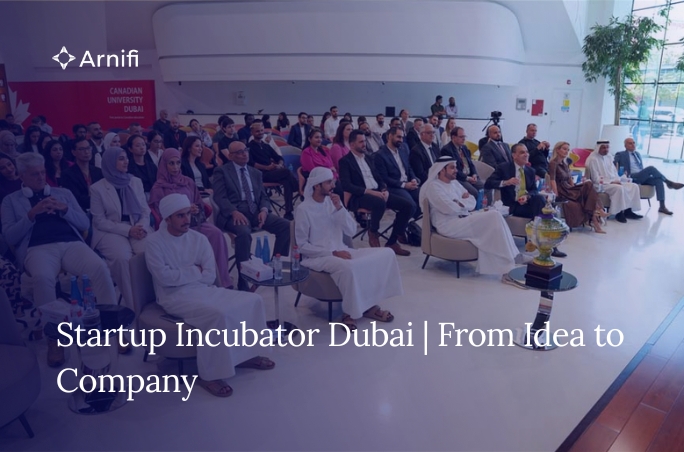
A Startup incubator Dubai founders rely on does far more than provide desks and networking events. It becomes the testing ground where ideas are challenged, refined, and shaped into businesses that can actually survive the market.
Table of contents
- Introduction
- Why Dubai Became a Hub for Startup Incubators
- Mentorship That Challenges the Business Model
- Investor Access Changes the Growth Timeline
- Workspace That Builds a Startup Community
- Regulatory Support That Reduces Early Mistakes
- Understanding Licensing Pathways Before Company Formation
- Where Arnifi Enters the Journey
- Conclusion
Introduction
Look closely at how most successful startups begin in Dubai and a pattern appears. Very few start with a trade license. The journey often begins inside an ecosystem where founders are pushed to validate the idea before committing capital. A Startup incubator Dubai founders join early becomes that environment.
Many founders rush into company registration. A trade license gets issued. A bank account becomes the next step. Then reality hits. The product is still evolving, customers are unclear, and investors ask questions the business cannot answer yet.
Incubators exist to slow this process down in a productive way. They force structure around an idea before the legal and financial commitments begin. Mentors challenge assumptions. Investors test the pitch. Regulators explain compliance expectations long before paperwork starts.
What happens inside that environment often determines whether the business will survive once it formally enters the market.
Why Dubai Became a Hub for Startup Incubators
Dubai has built an ecosystem designed for founders from across the world. Government initiatives, venture capital networks, and international founders have created a strong pipeline of early-stage companies.
Incubators became the natural bridge between ideas and actual companies.
Several factors explain their growth:
First, Dubai attracts founders from different markets. Many arrive with ideas but limited knowledge of local regulations or industry connections. Incubators reduce that gap.
Second, investors in the region prefer structured startups. Businesses coming through incubator programs often show clearer models and stronger governance.
Third, regulators actively support innovation zones. Programs connected to technology hubs or free zones allow founders to experiment before committing to a full corporate structure.
A Startup incubator Dubai ecosystem therefore acts as the early stage infrastructure of the startup economy.
Mentorship That Challenges the Business Model
One of the most underestimated advantages of incubators is access to experienced mentors.
Many founders begin with a product idea but not necessarily a full business model. Mentors push founders to answer difficult questions.
Where does revenue actually come from?
Who is the real customer?
What makes the business different from existing solutions?
Mentors often include former founders, venture investors, and industry specialists. Their role is not motivational speaking. Their role is correction.
Inside a Startup incubator Dubai program, weekly reviews and feedback sessions become routine. Pitch decks are rewritten. Pricing strategies change. Target markets sometimes shift entirely.
That pressure helps remove weak assumptions before investors see the company.
Investor Access Changes the Growth Timeline
Funding is another major reason founders join incubators.
Early stage investors rarely fund businesses without validation. Incubators help build that credibility. Demo days, pitch sessions, and investor introductions allow startups to present structured ideas rather than raw concepts.
Investors also trust incubators because screening already happens during program selection. When a startup reaches the final stage of a program, investors assume a certain level of preparation.
Inside many programs, founders also learn how investors think. Valuations, cap tables, and dilution are explained long before negotiations begin.
This exposure changes how founders structure the company from day one.
Workspace That Builds a Startup Community
Physical workspace may seem like a small benefit, but it plays an important role.
Startups rarely grow in isolation. Shared environments create daily interactions between founders building different products. Conversations during coffee breaks often turn into partnerships, client introductions, or early hires.
Incubators design these spaces intentionally. Meeting rooms, pitch areas, and collaborative zones make it easy for founders to test ideas with others in the program.
Within a Startup incubator Dubai environment, community becomes one of the most valuable assets. Knowledge spreads quickly because dozens of founders are solving similar problems at the same time.
Regulatory Support That Reduces Early Mistakes
Dubai’s regulatory environment is business friendly, but it still requires proper navigation.
Licensing structures differ between mainland companies and free zone entities. Visa rules, shareholder structures, and compliance requirements can confuse early stage founders.
Incubators often partner with legal advisors and government representatives who guide startups through these early questions.
Rather than discovering regulatory obstacles after launching, founders receive clarity before company registration even begins.
This support saves time and prevents expensive restructuring later.
Understanding Licensing Pathways Before Company Formation
Another overlooked benefit is exposure to licensing pathways.
Dubai offers multiple company structures depending on the industry and business model. Technology companies may operate differently from consulting firms or financial platforms.
During the later stages of a Startup incubator Dubai program, founders usually start preparing for formal company formation. Discussions begin around whether a free zone license or mainland license fits the business.
Ownership structure, visa requirements, and operational costs are mapped out carefully.
By the time the startup is ready to register, the structure is already clear.
Where Arnifi Enters the Journey
Incubators help validate the business. The next step is turning that validated idea into a legal company.
This stage often creates confusion for founders who are new to the region.
Company formation involves choosing the correct jurisdiction, structuring ownership, securing visas, and completing government approvals. Each decision affects banking, taxation, and long-term expansion.
This is where Arnifi becomes relevant.
Once the incubator stage confirms product demand and investor interest, the focus shifts toward execution. Arnifi helps founders convert that validated startup into a registered business in Dubai.
The process includes selecting the right license, structuring the company correctly, and handling regulatory filings. Instead of navigating multiple authorities separately, founders move through a guided process that simplifies company registration.
The incubator validates the idea. Arnifi turns that idea into a company.
Conclusion
Dubai’s startup ecosystem continues to grow because the city supports founders at every stage. Incubators provide the early environment where ideas are tested under pressure rather than launched blindly.
Mentors challenge assumptions. Investors evaluate potential. Communities form around shared ambition. Regulatory experts help founders understand how the market works before legal commitments begin.
A Startup incubator Dubai program therefore acts as the first proving ground for many startups entering the region.
Once the concept survives that stage, the focus shifts from validation to execution.
That is where company formation becomes the next milestone. With the right structure and licensing pathway, a validated startup finally becomes a functioning business.
Arnifi supports that transition. After the incubator phase proves the business model, the platform helps founders register the company and enter the Dubai market with clarity and proper structure.
Top UAE Packages


Related Articles
Top UAE Packages
Get in Touch