
New Business Setup in Dubai | New Business Formation in UAE
by Rifa S Laskar May 05, 2026  8 MIN READ


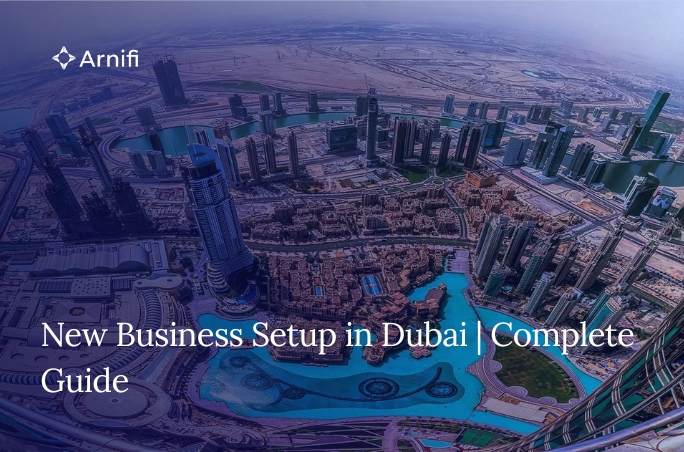
Dubai continues to attract founders looking for clarity, speed, and access to global markets. This blog breaks down the real process behind a new business setup in Dubai, from choosing the right jurisdiction to handling licenses, visas, and compliance. It explains the differences between mainland, free zone, and offshore structures, along with practical steps that matter during registration. Legal structures, cost considerations, and common mistakes are also covered. This guide will provide you with detailed information on how to proceed with a new business setup in Dubai. Read more to find out.
Table of contents
- Introduction
- Why Start a New Business in Dubai?
- What Are the Jurisdiction Options, and How Do They Actually Differ?
- Which Legal Structure Makes Sense for Long-Term Growth?
- Step-by-Step Guide to Setting Up a New Business in Dubai
- What Are The Real Costs Involved?
- What Mistakes Slow Down New Businesses The Most?
- Where Does Arnifi Fit Into the Process?
- Conclusion
- FAQs
Introduction
Starting in Dubai sounds straightforward on paper, but the real difference comes from how decisions are made early on. The structure, jurisdiction, and licensing approach shape everything that follows. Think through the setup carefully, because small choices at the start tend to decide how smoothly things run later.
Why Start a New Business in Dubai?
Dubai offers a range of benefits, from standing out as a prime location to offering business-friendly regulations. Below is a list of reasons why one can consider having a new business setup in Dubai.
1. Strategic Location and Global Connectivity
Strategically located at the crossroads of Europe, Asia, and Africa, Dubai is known to provide unparalleled access to multiple international markets.
This city boasts of air which is globally world-class and has extensive sea connectivity, therefore making it an attractive destination for conducting trade and commerce.
2. Business-Friendly Regulations and Government Support
The government in the UAE has implemented business policies in favour of Dubai, which includes streamlined administrative processes followed by multiple incentives to attract foreign investors.
It goes without saying that with such policies into the picture, entrepreneurs benefit from simplified company setup procedures and minimal bureaucratic hurdles.
3. Tax Benefits and Financial Advantages
Dubai is known to have a tax-friendly environment. By tax-friendly, it means zero personal income tax. Besides, competitive corporate tax rates also count as an added benefit.
Many businesses also benefit from exemptions like import and export duties, thereby making it a cost-effective location for startups.
4. Economic Diversification and Market Opportunities
Dubai has a diverse economy, spanning industries such as tourism, real estate, finance, and technology. This economic diversification creates numerous opportunities for entrepreneurs to establish and expand their businesses in various sectors.
What Are the Jurisdiction Options, and How Do They Actually Differ?
A mainland business is the type of business that allows startups and companies to operate in the UAE market and conduct business all over the world.
They have certain requirements including that of a local sponsor. However, they also provide access to a broader range of different commercial activities.
Free zones businesses offer 100% foreign ownership. Besides, tax exemptions, and simplified business procedures are some additional features of a free zone company.
These zones cater to specific industries. These industries include technology, media, healthcare, and logistics.
3. Offshore Business Setup
Offshore companies are those companies that are primarily used for protection of assets, international trade, and optimization of tax procedures.
Offshore companies cannot conduct business within the country but enjoy their confidentiality and minimal regulatory requirements.
Which Legal Structure Makes Sense for Long-Term Growth?
1. Limited Liability Company (LLC)
Known as the most common business structure in Dubai, a limited liability company or LLC allows up to 49% foreign ownership.
They also require a local partner to hold atleast 51% of the shares. A limited liability company or LLC provides flexibility for conducting various business activities.
2. Sole Proprietorship
A sole proprietorship form of business structure is suitable for individual entrepreneurs who wish to have complete control over their business operations.
However, certain activities may require a UAE national in the form of a service agent.
3. Civil Company
Ideal and suitable for professionals, a civil company is meant for professions such as lawyers, doctors, and consultants.
It allows complete international ownership in professional services but at the same time requires a local service agent.
4. Free Zone Establishment (FZE)
A Free Zone Establishment is a legal entity within a free zone, allowing full foreign ownership and tax exemptions. It is suitable for businesses focused on international trade and exports.
5. Branch Office and Representative Office
Foreign companies can establish branch or representative offices in Dubai to promote their business operations.
While a branch office can conduct commercial activities, a representative office is limited to marketing and liaison functions.
Step-by-Step Guide to Setting Up a New Business in Dubai
Step 1: Choose Your Business Activity – Choose your business activity. Identify the business sector you want for the new business setup in Dubai and ensure compliance with the authority of Department of Economic Development (DED) regulations.
Step 2: Decide on the Legal Structure – You need to decide on the appropriate legal entity based on your plans and business requirements.
Step 3: Choose a Trade Name – A unique trade name following UAE naming guidelines needs to be registered.
Step 4: Select the Business Location – Make a choice between mainland, free zone, or offshore jurisdictions based on your plans and requirements as per your business model.
Step 5: Apply for Initial Approval – One needs to have preliminary approval in place from relevant authorities to proceed with the registration process of their new business.
Step 6: Drafting the Memorandum of Association (MOA) – For LLCs and partnerships, prepare a Memorandum of Association or an MOA detailing the ownership framework and responsibilities.
Step 7: Secure Office Space and Tenancy Contract – Obtain a physical office or virtual office based on the business requirements and submit the tenancy contract.
Step 8: Obtain the Trade License – Apply for the necessary licenses. These licenses include trade licenses (Commercial, Industrial, or Professional) from the DED or relevant free zone authority.
Step 9: Registering for Visas and Immigration – Apply for investor, employee, and dependent visas through the UAE’s immigration department.
Step 10: Open a Corporate Bank Account – To set up your corporate account for business transactions, you need to select a local or international bank.
Step 11: Comply with Taxation and Regulatory Requirements – You need to register for Value Added Tax (VAT) if required and ensure full compliance with legal and financial requirements.
What Are The Real Costs Involved?
Costs vary depending on jurisdiction, activity, and scale.
Mainland setups may involve higher licensing and office costs but offer broader market access.
Free zones often bundle services into packages, which can make budgeting easier.
Offshore structures are usually more cost-efficient but come with operational limitations.
Beyond licensing, there are visa costs, office expenses, and banking requirements. Ignoring these leads to underestimation, which can disrupt early operations.
What Mistakes Slow Down New Businesses The Most?
Rushing into the wrong jurisdiction is common. It often leads to restrictions later.
Choosing a business activity without checking licensing requirements causes unnecessary backtracking.
Ignoring banking requirements delays operations even after licensing is complete.
Underestimating compliance obligations leads to penalties that could have been avoided.
Most of these issues come down to planning, not complexity.
Where Does Arnifi Fit Into the Process?
Arnifi works closely with founders navigating a new business setup in Dubai by simplifying decisions that usually feel scattered. Instead of approaching licensing, compliance, and structuring separately, everything is handled with a connected approach.
From selecting the right jurisdiction to managing documentation and approvals, the process becomes easier to follow. Founders get clarity on what matters now and what can wait, which reduces both confusion and unnecessary cost.
Conclusion
A new business setup in Dubai works best when approached with clarity rather than urgency. The environment supports growth, but only when the structure, jurisdiction, and compliance path are aligned from the start. With the right guidance, the process becomes less about paperwork and more about building something sustainable. Arnifi helps bring that clarity into focus, making the setup not just possible, but practical.
FAQs
How long does it take to complete a business setup in Dubai?
Most setups take between a few days to a few weeks depending on approvals.
Is 100% foreign ownership allowed in Dubai?
Yes, especially in free zones and many mainland activities.
Can a business operate across the UAE from a free zone?
Not directly without additional approvals or partnerships.
Is a physical office mandatory for all businesses?
Most structures require at least a registered address or workspace.
Does every business need VAT registration?
Only if revenue crosses the mandatory threshold set by authorities.
Top UAE Packages


Related Articles

Top UAE Packages
Get in Touch