
Redomiciling a Company to Cayman
by Rifa S Laskar Mar 18, 2026  6 MIN READ


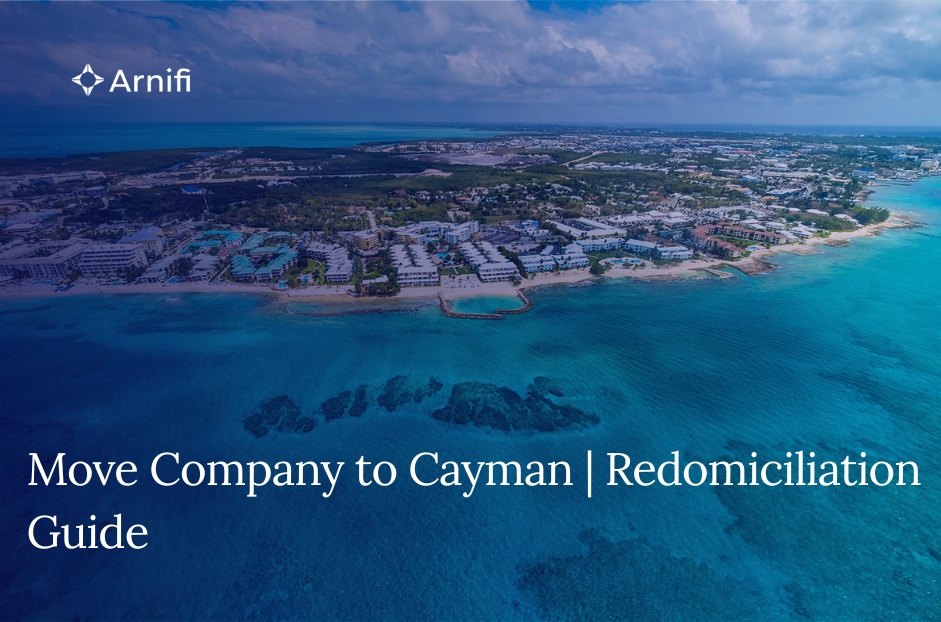
Many founders start thinking about how to move company to Cayman once international investors enter the picture. Redomiciliation lets a business change its legal home to the Cayman Islands while keeping the same entity, contracts & also operating history intact.
Table of contents
Introduction
At some point, company structure becomes more than paperwork. It begins to affect funding, investor comfort, tax exposure & even how future exits are handled.
Many international businesses eventually look at jurisdictions that make global operations easier to manage. The Cayman Islands sits near the top of that list. Venture funds know the framework. Lawyers understand the rules. Investors are comfortable with the setup.
Because of that, discussions often start around whether it makes sense to move company to Cayman rather than building new structures from scratch. The idea is to keep the same company alive, but shift its legal home to a jurisdiction built for global business.
The real question is not whether redomiciliation is possible for founders who are running a growing company. The real question is whether the structure helps the business scale more easily.
What Redomiciliation Actually Means
Redomiciliation refers to transferring a company’s legal registration from one jurisdiction to another while the company itself continues to exist.
Operations remain intact. Contracts remain valid. Assets and liabilities stay within the same entity. The corporate address simply moves to a new legal home.
Instead of dissolving one company and creating another, the existing entity continues its life under the Cayman law. This structure explains why many international businesses choose to move company to Cayman rather than forming a completely new entity.
That continuity removes a significant amount of friction for the founders who manage investors, employees, and ongoing contracts.
Why Companies Consider the Cayman Islands
The Cayman Islands has become a preferred jurisdiction for global corporate structures for several practical reasons.
Regulatory Stability
Cayman corporate law is quite predictable and internationally recognized. Investors and venture funds are familiar with its legal framework, as it reduces uncertainty during the fundraising or acquisitions.
Tax Neutrality
The jurisdiction does not impose corporate income tax, capital gains tax, or withholding tax on most structures. That neutrality is often valuable for the companies that are operating across multiple countries.
Investor Familiarity
Global venture capital firms, private equity funds, and hedge funds frequently use Cayman entities. When a company chooses to move company to Cayman, investor onboarding and governance structures tend to align more smoothly.
Flexible Corporate Structures
Cayman companies allow flexibility in share classes, governance models and also capital structuring. This flexibility becomes especially relevant when planning for future funding rounds or exit strategies.
Key Requirements Before Redomiciling
A company cannot simply change jurisdictions overnight. Certain conditions must be satisfied before the redomiciliation process begins.
Approval from the Existing Jurisdiction
The current jurisdiction must allow outward redomiciliation. Some countries restrict the ability to transfer corporate registration abroad.
Shareholder Approval
Corporate bylaws or governing documents typically require shareholder consent before major structural changes take place.
Good Standing Status
The company must be compliant with the filings, taxes & regulatory obligations in its current jurisdiction.
Once these conditions are satisfied, the formal process to move company to Cayman can begin.
The Redomiciliation Process Explained
The process itself follows a clear sequence handled by corporate service providers and legal advisors.
Step 1: Internal Corporate Approval
Directors and shareholders approve the decision through board resolutions and shareholder resolutions.
Step 2: Cayman Registrar Application
An application is filed with the Cayman Islands Registrar of Companies requesting continuation of the entity under Cayman law.
Step 3: Documentation Submission
Key documents typically include:
- Certificate of incorporation from the original jurisdiction
- Constitutional documents
- Good standing certificate
- Director and shareholder registers
Step 4: Regulatory Review
The Cayman Registrar reviews the application to confirm compliance with continuation rules.
Step 5: Issuance of Continuation Certificate
Once approved, the company officially becomes a Cayman entity.
At this stage, the business has successfully completed the decision to move company to Cayman, while maintaining the same corporate identity.
Practical Advantages After Redomiciliation
The benefits of Cayman redomiciliation tend to appear in several operational areas.
Global Investment Access
International investors often prefer Cayman holding structures due to familiarity with governance rules and shareholder protections.
Simplified Cross-Border Structuring
Cayman entities often function well as holding companies managing subsidiaries in different countries.
Efficient Exit Structures
Acquisitions, mergers, and IPO preparation frequently become easier within Cayman corporate frameworks.
For companies raising capital or expanding internationally, the choice to move company to Cayman often reflects a long-term strategic decision rather than a short-term tax consideration.
Common Misunderstandings About Cayman Redomiciliation
| Myth | Reality |
| Redomiciliation erases compliance obligations. | Companies still follow economic substance rules, regulatory filings & international reporting standards after redomiciling. |
| Only large corporations use Cayman structures. | Venture-backed startups, fintech companies & investment vehicles regularly adopt Cayman entities. |
| The process takes months of disruption. | With the right documentation and coordination, the transition can move relatively quickly. |
Understanding these differences helps the leadership teams approach the decision to move the company to Cayman Islands with a clearer view of how the process actually works.
Where Arnifi Helps
Cross-border corporate changes involve more coordination than what most of the founders expect. There are legal documents to prepare, registrar filings to manage, and compliance requirements that need to line up across jurisdictions.
Arnifi works with companies that are exploring international setups such as Cayman redomiciliation. The support usually covers structural guidance, preparation of corporate documents & coordination with Cayman service providers.
Instead of piecing the process together across multiple advisors, businesses get a clearer path through the regulatory steps involved in relocating a company structure.
Conclusion
Jurisdiction decisions rarely feel urgent in the early stages of a company. Growth, hiring & product development tend to take priority.
But as businesses grow internationally, the legal home of the company starts to matter more. Investors pay attention to it. Lawyers structure deals around it. Future acquisitions often depend on it.
That is why more companies begin exploring whether it makes sense to move company to Cayman once international capital or global operations enter the picture.
The transition itself is not about abandoning an existing company. It is about relocating that company into a legal framework that many global investors already understand.
With the right preparation and experienced support like Arnifi, the process becomes very manageable. Arnifi helps businesses navigate that transition so that founders can focus on building their company rather than untangling the regulatory details.
FAQs
What does redomiciling a company mean?
Redomiciling means transferring a company’s legal registration to another jurisdiction while the same entity continues operating.
How long does Cayman redomiciliation take?
Most redomiciliation processes take several weeks once documentation and approvals are prepared.
Can contracts remain valid after redomiciliation?
Yes, contracts usually remain valid because the same legal entity continues to exist.
Do shareholders need to approve redomiciliation?
Yes, shareholder approval is typically required under corporate governance rules.
Is Cayman suitable for venture-backed companies?
Yes, many venture-backed companies operate under Cayman holding structures due to investor familiarity.
Top UAE Packages


Related Articles

Top UAE Packages
Get in Touch