
List of Top Logistics Companies in Saudi Arabia


Learn about the best logistics companies in Saudi Arabia, such as Aramex, DHL, SMSA, FedEx, Naqel, Saudi Post, and others. Discover the processes of comparing shipping, warehousing and fulfilment, freight, technology, pricing, and last-mile services from abroad, and the licensing and registration requirements as well as customs and setup procedures for Saudi Arabia before selecting a logistics partner.
Table of contents
- Introduction
- What Do You Need Before Working With a Logistics Company in Saudi Arabia?
- What Costs Should Foreign Businesses Consider?
- List of Top Logistics Companies in Saudi Arabia
- How Do You Choose the Right Logistics Partner in Saudi Arabia?
- What Is the Difference Between a Logistics Provider, Freight Forwarder, and 3PL?
- What Logistics Services Do E-Commerce Businesses Need?
- What Should You Ask Before Signing a Contract?
- How Does Logistics Fit Into Setting Up a Business in Saudi Arabia?
- Common Mistakes Foreign Businesses Make
- Frequently Asked Questions
- Conclusion
Introduction
Saudi Arabia’s logistics and e-commerce sector is expanding rapidly, as the demand for dependable shipping, freight forwarding, warehousing, fulfilment, and last-mile delivery services rises. The Kingdom’s e-commerce logistics market is projected to grow at a substantial pace till 2031, and logistics planning plays a significant role in the success of local and foreign businesses. Choosing a logistics company involves more than comparing delivery prices. Businesses should first understand their activity, licensing, import requirements, storage needs, technology requirements, and customer-delivery model. Most articles simply list logistics companies in Saudi Arabia. This guide also explains what foreign businesses need before approaching a provider, the costs they should plan for, and how logistics fits into the wider Saudi market-entry process.
What Do You Need Before Working With a Logistics Company in Saudi Arabia?
1. Determine Your Business Activity
Specify whether the business will be e-commerce, trading, import & export, distribution, manufacturing, or any other industrial commerce. The activity could have an impact on the licence, product approvals, customs process, warehousing arrangements, and delivery model.
2. Understand Your Saudi Business Structure
A foreign company should determine how it will operate in Saudi Arabia before negotiating logistics services. This may involve a local entity, branch, distribution arrangement, or another permitted structure. The structure affects the company’s registration, licensing, banking, staffing, import rights, and operational responsibilities.
3. Check Required Licences and Registrations
Depending on the model, the business may need:
- A Commercial Registration.
- The relevant investment or business licence.
- Activity-specific approvals.
- Importer or exporter registration.
- Tax and customs registration.
- Product conformity or sector approvals.
- Warehouse, municipal, or location-related permissions.
The Saudi Business Center provides electronic company-registration services, including Commercial Registration procedures.
4. Prepare Required Documents
Potential documents include incorporation certificates, shareholder and director identification, constitutional documents, authorisations or powers of attorney, commercial registration records, product information, and import/export documents.
A logistics provider cannot replace the company’s own legal and regulatory obligations. Businesses should understand their setup requirements before signing a logistics contract.
What Costs Should Foreign Businesses Consider?
Logistics expenses are not limited to delivery charges.
Business setup costs
Budget for company formation, licensing, registration, applicable approvals, professional support, banking, and compliance.
Logistics costs
Consider shipping, freight, warehousing, fulfilment, packaging, last-mile delivery, handling, storage, and returns.
Import-related costs
These may include customs clearance, duties where applicable, documentation, product conformity, and customs-related service charges.
Operational costs
Also review insurance, technology integration, inventory management, order processing, and customer-service costs.
The final amount depends on the product type, shipment volume, destination, storage period, delivery speed, and selected provider.
List of Top Logistics Companies in Saudi Arabia
These companies serve different requirements. No single provider is best for every business.
1. Aramex
Aramex provides domestic and international shipping, courier services, and last-mile delivery. It may suit e-commerce businesses and companies needing regional parcel distribution.
2. Tamer Group / Zajil Express
Zajil Express offers courier solutions, warehousing, supply-chain support, and domestic delivery. It may suit businesses seeking integrated courier and logistics services.
3. DHL Express
DHL is widely used for international express shipping and cross-border e-commerce. It may suit companies that prioritise global reach, delivery visibility, and time-sensitive international shipments.
4. SMSA Express
SMSA has a strong Saudi presence and provides express delivery, domestic shipping, and e-commerce logistics. It may suit businesses focused on deliveries within the Kingdom.
5. FedEx Express
FedEx supports international shipments, express delivery, and cross-border logistics. It may suit companies moving goods between Saudi Arabia and international markets.
6. Naqel Express
Naqel is a Saudi-based provider offering e-commerce logistics, last-mile delivery, and end-to-end shipment support. It may suit online businesses requiring domestic fulfilment and delivery.
7. Saudi Post
Saudi Post benefits from a national postal network and offers domestic parcel and e-commerce delivery services. It may suit businesses requiring broad local reach.
8. SAPTCO
SAPTCO’s transportation capabilities include domestic transport and freight-related services. It may suit businesses with regional movement or transport requirements.
9. DB Schenker
DB Schenker provides transportation, freight, supply-chain management, and e-commerce logistics. It may suit larger businesses with complex or international supply chains.
10. Fetchr
Fetchr uses technology-driven delivery solutions for online businesses, particularly last-mile operations. It may suit businesses seeking technology-enabled customer delivery.
11. Al Bassam International Transport
Al Bassam provides freight forwarding, domestic transportation, and regional transport solutions. It may suit businesses moving commercial cargo within Saudi Arabia and neighbouring markets.
12. Almajdouie Logistics
Almajdouie offers transportation, warehousing, and supply-chain services. It may suit businesses requiring storage and movement of goods at scale.
13. Al-Rashed Transport
Al-Rashed provides domestic transportation and delivery solutions. It may suit businesses seeking local freight or distribution support.
14. CEVA Logistics
CEVA is a global logistics and freight, supply-chain management, and e-commerce provider. It could be appropriate for businesses that have global operations or complicated shipping needs.
15. ALJAZIRA Logistics
ALJAZIRA Logistics offers full-package logistics, transportation, and warehousing solutions. It might be a good option for companies that want to have customer-focused storage and distribution.
How Do You Choose the Right Logistics Partner in Saudi Arabia?
1. Network coverage
Check the cities, regions, international routes, and delivery locations covered by the provider.
2. Services offered
Compare shipping, freight, warehousing, fulfilment, last-mile delivery, customs coordination, and returns management.
3. Technology capabilities
Review shipment tracking, order management, API integration, real-time visibility, and reporting.
4. E-commerce capabilities
Check whether the provider supports inventory, online-order integration, fulfilment, last-mile delivery, cash-on-delivery requirements, and returns.
5. Pricing
Compare shipping, storage, fulfilment, handling, packaging, and additional charges rather than reviewing only the advertised delivery price.
6. Scalability
Confirm that the provider can support the business as it moves from small shipments to growing e-commerce or enterprise volumes.
When choosing a provider, companies should not only choose because they are well-known, but also due to the fact that they may have the necessary operational requirements. Before starting interaction with local logistics service providers, foreign businesses can adopt the help of Arnifi to understand the larger picture and compliance guidelines.
What Is the Difference Between a Logistics Provider, Freight Forwarder, and 3PL?
| Service | Primary role |
| Courier | Parcel collection and delivery |
| Freight forwarder | Organising freight movement |
| 3PL | Outsourced logistics and fulfilment |
| Warehouse provider | Storage, inventory, and fulfilment |
| Last-mile provider | Final delivery to the customer |
Identifying the required service first helps businesses avoid selecting an unsuitable logistics partner.
What Logistics Services Do E-Commerce Businesses Need?
The complete e-commerce journey may look like this:
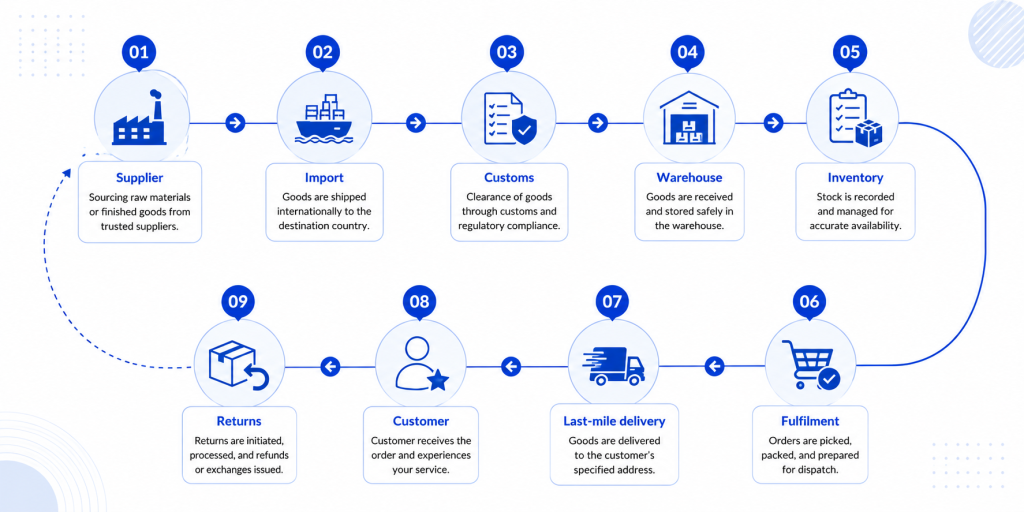
Businesses may require warehousing, inventory management, order fulfilment, domestic shipping, returns handling, tracking, packaging, and customer-delivery support.
What Should You Ask Before Signing a Contract?
Ask the provider:
- Which cities and countries do you cover?
- Do you provide warehousing and fulfilment?
- Do you offer last-mile delivery?
- Do you support international shipments?
- What are your delivery timelines?
- How are shipping and storage charges calculated?
- Are there handling or additional fees?
- Can you integrate with our e-commerce platform?
- How are returns managed?
- What tracking information is available?
- Who coordinates customs-related processes?
- Can your service scale with our growth?
How Does Logistics Fit Into Setting Up a Business in Saudi Arabia?
The wider process may follow this sequence:
- Business setup: Choose the appropriate Saudi business structure and define the company’s operating model.
- Licensing and registration: Obtain the required Commercial Registration, business licence, and activity-specific approvals.
- Banking: Open a corporate bank account and establish payment and financial processes.
- Import/export requirements: Complete customs, importer/exporter, product, and documentation requirements where applicable.
- Logistics partner selection: Compare providers based on shipping, freight, warehousing, delivery, technology, and pricing needs.
- Warehousing and fulfilment: Arrange inventory storage, order processing, packaging, and shipment preparation.
- Business operations: Begin sales, distribution, delivery, returns, and ongoing compliance activities.
Choosing a logistics provider shouldn’t be done in isolation. Before engaging in business in Saudi Arabia, a foreign company should learn the structure of its business, the activities it can do, the type of license it needs, the compliance requirements, the import model and the location in which it can operate. Logistics companies ensure the transportation, storage, or distribution of products. With Arnifi, companies from abroad can proceed to become operational in the Saudi market in tune with the local environment and in accordance with the time required.
Common Mistakes Foreign Businesses Make
Common mistakes include:
- Choosing only according to price.
- Ignoring geographic coverage.
- Failing to check warehousing capabilities.
- Overlooking last-mile requirements.
- Ignoring additional charges.
- Selecting a provider before understanding import requirements.
- Failing to check technology integration.
- Not planning for returns.
- Choosing a provider that cannot scale.
- Treating logistics separately from business setup.
Frequently Asked Questions
1. What are the top logistics companies in Saudi Arabia?
Major providers include Aramex, Zajil Express, DHL, SMSA, FedEx, Naqel, Saudi Post, SAPTCO, DB Schenker, Fetchr, CEVA, and ALJAZIRA Logistics.
2. Which logistics company is best in Saudi Arabia?
The right choice depends on location, shipment volume, product type, routes, warehousing, technology, fulfilment, and budget.
3. Do foreign companies need a Saudi licence?
Usually, foreign businesses need an appropriate structure, Commercial Registration, licence, activity approvals, and applicable import or tax registrations.
4. What is the difference between a 3PL and a logistics company?
A 3PL manages outsourced storage, fulfilment, and delivery. “Logistics company” is a broader term covering several logistics services.
5. Do logistics companies handle customs clearance?
Some providers offer or coordinate customs services, but the business remains responsible for accurate documentation, registrations, and regulatory compliance.
Conclusion
Saudi Arabia’s booming logistics and e-commerce sector holds great promise for both domestic and international enterprises. But selecting a logistics partner isn’t a decision based solely on shipping costs. Some of the key factors that businesses need to consider are network coverage, freight and warehousing, fulfilment, last-mile delivery, technology, returns, pricing, and scalability. They should also ensure their Saudi business registration, activity, customs, import licenses, and compliance requirements prior to choosing a provider. Foreign businesses looking to enter Saudi Arabia can benefit from Arnifi‘s expertise in setting up a company, licensing, ensuring compliance, and more, before their operations’ network setup.
References:
Saudi Business Center Site
FASAH Import and Export Portal
Top Saudi Arab Packages


Related Articles



Top Saudi Arab Packages
Get in Touch