
Free Trade Zones in Malaysia | Which Zone Is Right for Your Business?

Anushka
Content Writer
Anushka Basu is a business content writer specialised in global business market insights. She aims to simplify complex regulatory, financial, and business concepts into… Read more


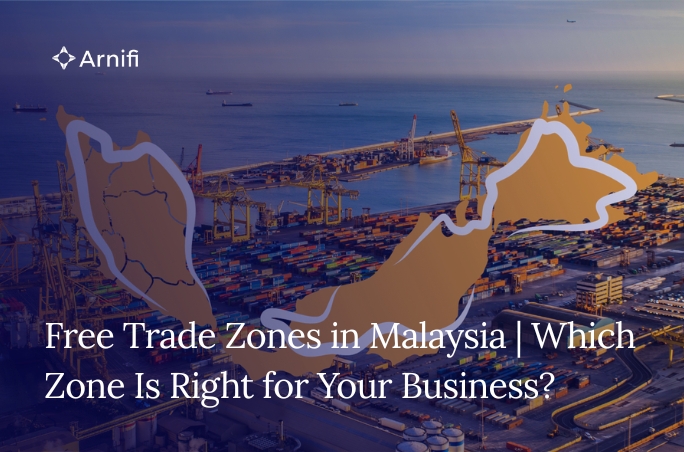
If you ask ten investors where to set up in Malaysia, most will zoom in right away on cities, cost curves, or incentive deals. But honestly, one of the more crucial picks often happens before all that, which is choosing the right free trade zone, and not just the right address.
Malaysia’s free zone system was built to push export-led growth, international trade, and manufacturing investment. And still, today it stays one of Malaysia’s strongest advantages for non-local companies trying to run regional operations across Southeast Asia.
Getting a real sense of the different free trade zones in Malaysia can help businesses cut costs, make logistics flow better, and keep cross-border trade from turning into a slow maze.
Table of contents
Introduction
Malaysia’s Free Zones Act created specific zones where companies can do manufacturing, trading, warehousing, and export work, under a customs setup that is more streamlined than elsewhere.
These zones usually suit businesses that bring in raw materials, process goods, keep inventory, or distribute products internationally. Instead of pretending all free zones behave exactly the same, investors should notice that Malaysia uses different types of zones meant for different business patterns.
In many cases, choosing the correct zone can change day-to-day operations more than choosing a particular city.
What are free trade zones in Malaysia?
Free trade zones in Malaysia are designated areas where approved firms get customs and tax benefits for eligible activities.
The goal is pretty straightforward: encourage exports, pull in foreign investment, and strengthen Malaysia’s position in global supply chains.
Companies that operate inside approved zones may access customs duty relief, simpler import-export procedures, and smoother movement of goods meant for international markets.
What are the two main types of free zones?
Malaysia mainly works through two structures.
Free Industrial Zones (FIZ)
These zones are geared for manufacturers that import raw materials, refine or process products, and export finished goods. A lot of multinational electronics, semiconductor, and industrial manufacturers use Free Industrial Zones, because the export-oriented framework fits that model well.
Free Commercial Zones (FCZ)
These zones tend to focus on trade and logistics, not manufacturing. Businesses typically use FCZs for things like:
- Warehousing
- Repackaging
- Distribution
- Transhipment
- International trading
So, they’re often a strong fit for logistics providers and regional distribution firms.
Which are the most important free zones?
| Zone | Type | Main Focus |
| Bayan Lepas Free Industrial Zone | FIZ | Electronics & Manufacturing |
| Pasir Gudang Free Industrial Zone | FIZ | Manufacturing & Export |
| Port Klang Free Zone | FCZ | Logistics & Distribution |
| Port of Tanjung Pelepas Free Zone | FCZ | Shipping & Trade |
| Digital Free Trade Zone | FCZ | E-commerce & Cross-Border Trade |
These names keep showing up in lists of the most recognised free trade zones in Malaysia, mostly because of infrastructure, connectivity, and ongoing investor activity.
Why do foreign investors choose free zones?
The appeal goes well beyond tax savings. Many foreign businesses pick free trade zones in Malaysia because they offer:
- Less complex customs steps
- Access to ports and airports in a strategic way
- Duty exemptions for qualifying imports
- Quicker movement of goods
- Better supply-chain efficiency
For export-driven companies, these kinds of benefits can meaningfully lift operational performance.
What is the Digital Free Trade Zone?
Traditional zones usually serve manufacturing and logistics, while the Digital Free Trade Zone was created for e-commerce players. This initiative supports companies working on:
- Cross-border online sales
- E-commerce fulfilment
- Digital trade
- International marketplace operations
As online commerce keeps expanding across ASEAN, the DFTZ has turned into a distinct entry among free trade zones in Malaysia.
How do businesses choose the right zone?
It depends on what the company actually does. A manufacturer exporting finished products may get more value from a Free Industrial Zone. A logistics operator might see more value in a Free Commercial Zone. An online retailer that leans heavily into international sales may find the Digital Free Trade Zone fits better. That’s why reviewing the full list of free trade zones in Malaysia should be part of business planning, not something you tack on later.
How can Arnifi help?
Choosing among free trade zones in Malaysia is not only about comparing incentives. Companies also need to think about licensing requirements, customs obligations, day-to-day operational needs, workforce planning, and longer-term expansion objectives. Arnifi supports investors by helping them assess suitable locations, understand regulatory requirements, and set up business structures that match their growth plan.
FAQs
What are free trade zones in Malaysia?
They are designated areas that provide customs and trade advantages for qualifying business activities.
What is the difference between FIZ and FCZ?
FIZs focus on manufacturing, while FCZs support logistics, trading, and distribution activities.
What is the Digital Free Trade Zone?
It is a specialised zone built to support e-commerce and cross-border digital trade.
Can foreign companies operate in free zones?
Yes. Many of Malaysia’s free trade zones are designed to attract foreign investment.
Which is the most well-known free zone?
Bayan Lepas, Port Klang, and Port of Tanjung Pelepas are among the most recognised.
Conclusion
Malaysia’s free zone network is still one of the country’s strongest investment strengths. Whether the business is centred on manufacturing, logistics, or e-commerce, the right zone selection can shape costs, efficiency, and long-term growth. So, understanding the list of free trade zones in Malaysia is an important step for any investor planning regional expansion.
Top UAE Packages
Related Articles

Top UAE Packages
Get in Touch
