
Dubai Municipality Waste Management | A Complete Guide for Businesses
by Snigdha Sujan Dec 03, 2025  5 MIN READ


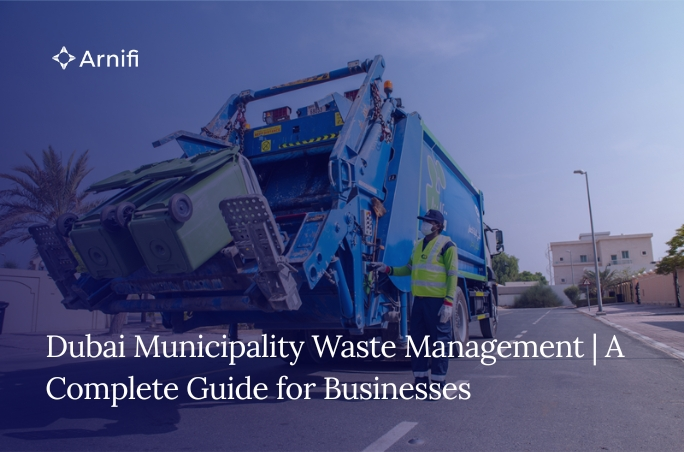
Learn how businesses can meet Dubai Municipality Waste Management requirements with proper waste segregation, registration, and compliance. This guide explains key rules, sector-specific obligations, common mistakes, and how expert support from Arnifi ensures smooth approvals and adherence to Dubai’s sustainability standards.
Table of contents
- Introduction
- Why Dubai Municipality Waste Management Matters?
- What Dubai Municipality Waste Management cover?
- Dubai Municipality Registration: Why Businesses Need It?
- Step-by-Step | How to Register with Dubai Municipality
- Waste Management Requirements for Different Sectors
- Common Mistakes Businesses Make
- How to Choose the Right Waste Management Provider?
- Tips for Cost-Efficient Waste Management
- FAQs
- Conclusion
Introduction
As the city is constantly growing and flourishing, the Dubai Municipality Waste Management enforces on the businesses to handle waste responsibly by following a set of rules. This not only helps meet the legal requirements but it also supports the goals of sustainability, which helps reduce waste that is sent to landfills, encouraging recycling and keeping the emirate clean and friendly with the environment.
Why Dubai Municipality Waste Management Matters?
All businesses must mandatorily follow the Dubai Municipality Waste Management under the UAE cabinet resolution No. (39) and law No. 18 of 2024. If any company is found failing to follow the compulsion can face serious consequences like fines, shutdown of the operation, or even cancellation of of license during the routine inspections conducted by the authorities. Apart from the legal obligations, conducting a responsible waste management helps strengthen the company’s reputation, increasing the eco-focused market and supporting the goal of Dubai’s Sustainability.
Effective enforcement of proper waste management is highly important as it helps reduce health risks and improves the hygiene of the workspace. It can even be beneficial as it lowers the costs through the right method of disposal, protecting the business from any penalties. This gives the business a competitive advantage by showing genuine concern and commitment towards protecting the environment.
What Dubai Municipality Waste Management cover?
The Dubai Municipality Waste Management regulates how businesses handle waste disposal of solid waste. The companies must ideally sort their waste into categories, or recyclable and hazardous, with the usage of bins that a colour-coded. The blue bins are for recyclable waste, green for organic waste, and black for general waste.
A dedicated recycling services are assigned to collect the recyclable material to help in reduction reduction of landfill use and support the 2030 sustainability target of Dubai. The wastes that are hazardous to the environment must be separately handled in line with the Federal Law No. 24. It requires a proper storage, transportation and good treatment to ensure safety and compliance.
Commercial and industrial waste handling rules demand registration for collection services. Businesses must document practices for audits, ensuring safe transport and disposal.
Dubai Municipality Registration: Why Businesses Need It?
All commercial properties and companies generating waste must register with the Dubai Municipality for disposal services. This applies to sectors like construction and manufacturing, and registration links directly to waste management approvals and permits.
Benefits include access to authorised collectors, compliance verification, and reduced inspection risks. It ensures seamless integration with Dubai’s waste infrastructure.
Step-by-Step | How to Register with Dubai Municipality
Access the Dubai Municipality portal via their official website and select waste services. Create an account using business trade license details and Emirates ID. Submit required documents like tenancy contract, floor plans, and waste generation estimates.
Apply for waste-related permits, including hazardous waste if applicable. Await approvals, typically within days, and integrate with registered providers. Renew annually to avoid delays.
Waste Management Requirements for Different Sectors
- Construction: Segregate debris, concrete, and hazardous materials like paints; obtain permits for large volumes and use designated landfills.
- Manufacturing: Handle industrial effluents and chemicals per Law No. 18; implement on-site treatment for recyclables.
- Hospitality: Daily waste collection from kitchens and rooms; segregate food waste for composting.
- Retail and Commercial Spaces: Use colour-coded bins in stores; schedule regular pickups to prevent overflows.
Each sector faces tailored inspections to enforce Dubai Municipality Waste Management standards.
Common Mistakes Businesses Make
Failing to segregate waste properly leads to rejected collections and fines. Many overlook mandatory permits for hazardous materials, risking suspensions.
Incorrect disposal methods, like mixing recyclables with general waste, violate colour-coded rules. Delays in permit renewals or incomplete reporting trigger audits and penalties.
How to Choose the Right Waste Management Provider?
Verify the provider’s Dubai Municipality registration and compliance with Law No. 18 of 2024. Check certifications like ISO for environmental management.
Assess their capability for sector-specific handling, such as hazardous waste transport. Ensure alignment with segregation and reporting guidelines for seamless audits.
Tips for Cost-Efficient Waste Management
Reduce waste at source through inventory controls and reusable packaging. Partner with recycling firms to monetise scraps and meet diversion targets.
Implement digital tracking apps for audits and optimise collection schedules. Conduct regular employee training to minimise errors and fines.
FAQs
What is the Dubai Municipality waste management approval?
It certifies businesses for proper waste handling, including segregation and disposal permits under local laws.
Do small businesses need to register?
Yes, all commercial entities must register, regardless of size, for collection services.
How often do permits need renewal?
Annually, with documentation updates to maintain compliance.
Is hazardous waste disposal outsourced?
Often, yes, to licensed providers following Federal Law No. 24.
Conclusion
Dubai’s waste management regulations compliance is the most important key to keeping your business operating efficiently, which supports the sustainability goals of the city. The regular inspections can be overwhelming and complex, with the requirements of strict rules imposed on segregation and hazardous waste protocols. Here is where Arnifi can lend you a helping hand to make everything easier for you. Arnifi will guide you through every stage from securing approvals to managing registrations, renewals and compliance that is ongoing with the Dubai Municipality Authorities. It makes it easier for you not to worry about the missed steps or penalties. Arnifi will help you in handling the technicalities while helping you adhere to Dubai’s environmental standards, while your business can focus on its development along with its contribution towards a cleaner and greener future.
Top UAE Packages


Related Articles



Top UAE Packages
Get in Touch