
Using a DIFC Foundation for Succession Planning Under Sharia Considerations

Shethana P
SEO Content Writer
Shethana specialises in creating content that simplifies complex business, compliance, and regulatory topics for global business incorporation. She focuses on SEO strategy, content accuracy,… Read more


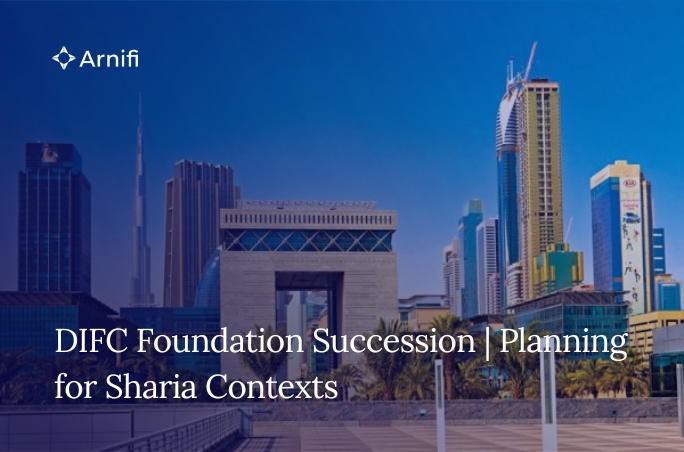
A DIFC Foundation succession planning structure can help UAE families separate asset ownership, governance and inheritance planning in a clearer way. This becomes especially important when family wealth includes real estate, operating companies, offshore entities or mixed family expectations around Sharia inheritance UAE rules.
A DIFC Foundation does not remove the need for legal advice. It gives families a vehicle that can hold assets, follow written governance rules and support succession planning under DIFC’s legal framework.
Table of contents
Why Sharia Considerations Matter
Succession planning in the UAE can become sensitive because different rules may apply depending on religion, nationality, asset type, family facts and the documents in place. The UAE’s Federal Decree-Law on Personal Status was issued in 2024 and became effective on 15 April 2025, with the official UAE legislation portal noting that the Arabic text prevails if interpretation issues arise.
For Muslim families, Sharia-based inheritance principles can be central to estate planning. For non-Muslims, DIFC Courts Wills Service gives those living or investing in the UAE an option to pass UAE assets and appoint guardians according to instructions in a registered will. DIFC Courts also state that the Wills Service handles probate matters and probate claims for non-Muslims.
A foundation can sit beside these tools, but it should be coordinated carefully with wills, family agreements and legal advice.
DIFC Foundation at a Glance
| Area | What it means for succession |
| Legal base | DIFC Foundations Law No. 3 of 2018 and later amendments |
| Main role | Holding assets and applying written governance rules |
| Common use | Family wealth, business ownership, property holding and succession |
| Key documents | Charter, by-laws and council resolutions |
| Governance | Founder, council, guardian and qualified recipients where used |
| Sharia angle | Must be aligned with family faith, heirship expectations and legal advice |
| Related tool | DIFC will and foundation planning may be used together for non-Muslim estates |
What a DIFC Foundation Can Do
Foundations Law DIFC Law No. 3 of 2018 is the legal base, along with related regulations including Ultimate Beneficial Ownership Regulations and Operating Regulations.
In practical terms, a DIFC Foundation can act as a legal vehicle that holds assets for stated objects or qualified recipients. It can help families avoid fragmented ownership, reduce direct personal holding risk and place decision-making inside a written structure.
This is useful when the founder wants a family business, real estate portfolio or investment company to continue beyond one generation. Instead of transferring shares directly to several heirs, the foundation can hold the asset while the charter and by-laws guide benefit, control and governance.
How It Helps With Forced Heirship UAE Concerns
Forced heirship UAE concerns usually appear when family members expect fixed inheritance shares or when asset division could disrupt a business. A family company can become difficult to manage if shares are divided across heirs who have different levels of involvement.
A foundation can help by moving ownership into a governance vehicle during the founder’s lifetime. The foundation may hold shares, define qualified recipients and appoint a council to manage decisions. This can reduce the risk of a sudden ownership split after death.
But this must be handled with care. A foundation should not be used to defeat lawful rights without proper advice. Families should review Sharia principles, UAE succession rules, tax issues, matrimonial claims and foreign heirship rules before moving assets.
DIFC Will and Foundation Planning
A DIFC will and foundation can work together, especially for non-Muslim families with UAE assets. The DIFC Wills Service gives non-Muslims living or investing in the UAE the option to pass assets and appoint guardians through instructions in a registered will. The system supports distribution of UAE assets according to registered wills, backed by judicial enforcement.
The will can deal with personal estate assets. The foundation can deal with assets already placed inside the foundation structure. This distinction matters because assets owned by the foundation may no longer sit in the founder’s direct personal estate in the same way.
Families should not treat a foundation as a replacement for a will in every case. In many situations, the cleaner approach is to use both, with each document doing a specific job.
Governance Roles Families Should Define
Good succession planning is not only about who receives assets. It is also about who manages decisions after the founder steps back.
A strong DIFC succession structure should define:
- Who sits on the foundation council.
- Who can replace council members.
- Who acts as guardian or protector if the founder wants extra oversight.
- Which family members are qualified recipients.
- How business shares, property income or investments are managed.
- How disputes are handled if heirs disagree.
These rules should be written before conflict begins. Once a dispute starts, even good documents can become harder to apply.
When This Structure May Work Best
A DIFC Foundation may suit families that have UAE property, Dubai-based companies, regional investments or heirs living in the GCC. It may also help founders who want succession planning to feel more familiar than a trust.
This route can work well when:
- The founder wants asset continuity instead of direct share division.
- A family company needs stable ownership after death or incapacity.
- UAE property or operating assets need structured control.
- The family wants a Dubai-based governance vehicle.
- Non-Muslim estate planning also needs a registered will.
- Sharia-sensitive planning must be discussed openly with advisers.
Conclusion
A DIFC Foundation can be a strong succession planning tool for UAE-anchored families, especially where business continuity and asset control matter. At Arnifi, we help founders and families compare UAE foundation routes with practical setup clarity. We support entity formation, documentation coordination, compliance planning and banking preparation.
For DIFC Foundation succession planning, we help organise the early facts so legal, tax and Sharia advisers can review the structure with better context.
FAQs:
1. Can a DIFC Foundation support succession planning?
Yes. A DIFC Foundation can hold assets and apply written governance rules, which may support succession planning for family businesses, property and investment assets.
2. Does a DIFC Foundation replace a will?
Not always. A will may still be needed for personal estate assets, guardianship and assets outside the foundation. Many families use both tools together.
3. Can a DIFC Foundation help with Sharia inheritance UAE planning?
It can support structured planning, but it must be reviewed with legal and Sharia advisers. Families should not assume it automatically overrides inheritance rules.
4. Who controls a DIFC Foundation?
Control usually sits with the foundation council under the charter and by-laws. A guardian may also provide oversight if the structure includes that role.
Top UAE Packages
Related Articles
Top UAE Packages
Get in Touch
