
Complete Guide to Cayman Islands Company Formation
by Rifa S Laskar Mar 10, 2026  8 MIN READ


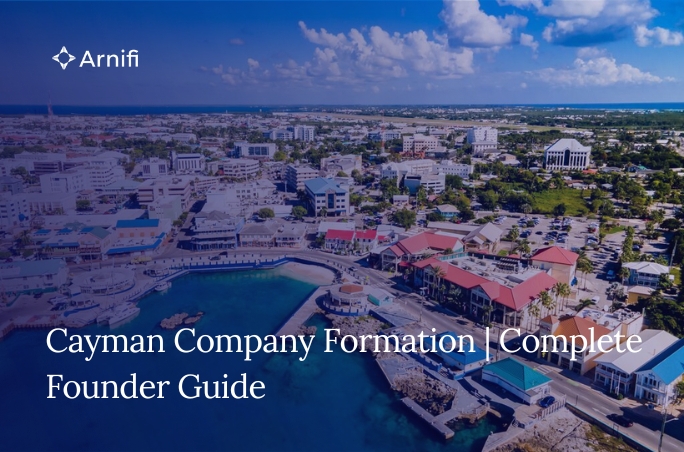
For many founders when building global businesses, the Cayman Islands often appears in the conversations about tax efficiency, investor comfort & international structuring. Cayman Company Formation has become a common path for startups, funds & holding companies that need a neutral jurisdiction that is trusted by investors across borders.
Table of contents
- 1. Introduction
- 2. Why the Cayman Islands Became a Global Business Hub
- 3. Types of Companies Available in the Cayman Islands
- 4. Key Benefits for Founders and Investors
- 5. Step-by-Step Process to Form a Cayman Company
- 6. Costs and Ongoing Requirements
- 7. Common Use Cases for Cayman Companies
- 8. Where Arnifi Fits Into the Process
- 9. FAQs
- 10. Conclusion
1. Introduction
Every founder eventually reaches a point where the structure of the company starts to matter as much as the idea behind it. Raising capital that is expanding into other markets, or holding assets across jurisdictions creates questions that a simple local company cannot always answer. That is where Cayman Company Formation enters into the conversation.
The Cayman Islands has quietly built a reputation over the decades as one of the most respected offshore financial centers in the world. Investors recognize it, global law firms operate there & regulatory systems are stable and predictable. Because of that, founders, venture funds & international businesses often explore this jurisdiction when they’re planning long-term corporate structures.
Instead of treating it as a mysterious offshore destination, this guide will help to understand how the system actually works, what the setup process looks like & why so many international companies choose this route.
2. Why the Cayman Islands Became a Global Business Hub
The Cayman Islands did not become a corporate hotspot by accident. Over time, the government focused on building a legal and financial system designed for international business. The result is a jurisdiction that is known for stability, clear regulations & a strong reputation among the investors.
Global venture capital funds frequently structure their entities here because the legal framework is familiar to investors in the United States, Europe & Asia. Courts follow English common law & financial regulations are widely respected in the global finance industry.
This combination of legal reliability and international acceptance is a major reason Cayman Company Formation continues to be a preferred choice for holding companies, investment funds & multinational structures.
3. Types of Companies Available in the Cayman Islands
Not every company formed in the Cayman Islands looks the same. Different structures exist depending on the purpose of the business.
The most common option is the Exempted Company, typically used for international operations or investment structures. These companies that operate outside the local Cayman market are widely used by the startups that are raising venture capital.
Another option is the Limited Liability Company (LLC), which resembles the LLC structures that are commonly used in the United States. This model offers flexibility in governance and profit distribution.
There are also Segregated Portfolio Companies that are often used by the investment funds to separate assets and liabilities within a single entity.
Choosing the correct structure is one of the most important decisions in Cayman Company Formation, since it affects governance, taxation treatment & investor relationships.
4. Key Benefits for Founders and Investors
Several advantages explain why founders consider this jurisdiction when structuring international companies.
Tax neutrality is the most widely discussed benefit. The Cayman Islands does not impose corporate income tax, capital gains tax, or withholding tax. This makes it easier to build international holding structures without layering additional taxation.
Another important factor is the investor familiarity. As venture capital firms, private equity funds & institutional investors frequently work with Cayman entities, which reduces the legal friction during fundraising.
There is also a high level of confidentiality and flexibility in corporate governance. Shareholder structures, voting rights & board management can be designed to match the needs of the founders and investors.
Because of these factors, Cayman Company Formation often becomes part of the discussion when companies prepare for international fundraising.
5. Step-by-Step Process to Form a Cayman Company
- Choose a company name
Start by selecting a company name and checking its availability with the Cayman Islands Registrar of Companies. The name must be unique and should not conflict with the existing registered companies. - Prepare the company documents
The next step is to prepare the main legal documents, usually the Memorandum and Articles of Association. These documents explain the company’s purpose, share structure & how the company will be governed. - Appoint directors and shareholders
After the documents are ready, the company appoints its directors and shareholders. These individuals or entities will manage the company and hold ownership. - Register the company through a licensed provider
The incorporation application is then submitted through a licensed Cayman corporate service provider who handles the official filing with the authorities. - Receive the Certificate of Incorporation
Once the registration is approved, the Registrar issues a Certificate of Incorporation. This certificate confirms that the company is legally formed. - Work with experienced advisors
While the steps look simple, international structuring often requires guidance to ensure compliance with legal and investor requirements. Many founders planning Cayman Company Formation work with specialists such as Arnifi who assist with cross-border company setup and documentation.
6. Costs and Ongoing Requirements
Setting up a company in the Cayman Islands is generally more expensive than forming a local business in many countries, but the structure serves a very different purpose.
Initial setup costs typically include government registration fees, legal documentation, and service provider charges. These costs often range from several thousand dollars depending on complexity.
There are also annual renewal fees and registered office requirements. Every Cayman company must maintain a licensed registered office within the jurisdiction and file annual returns.
Despite these obligations, the administrative workload remains relatively light compared to many other international jurisdictions.
7. Common Use Cases for Cayman Companies
The Cayman Islands structure appears in several business scenarios.
One of the most common is venture capital backed startups. Many international startups raise capital through Cayman holding companies while operating subsidiaries in different countries.
Another frequent use case is investment funds, where the Cayman legal framework provides flexibility for global investors.
Cayman entities are also used for holding intellectual property, international assets, and cross-border investments.
For these reasons, Cayman Company Formation is often discussed during early strategic planning for businesses that expect to operate globally.
8. Where Arnifi Fits Into the Process
International company structuring can quickly become complicated, especially when multiple jurisdictions, investors & compliance rules come into play.
Arnifi works with founders, startups & international businesses that need clarity before making any structural decisions. Instead of pushing a single jurisdiction, the focus stays on understanding the purpose behind the company structure first. Only then does the discussion move toward locations like the Cayman Islands, UAE free zones, or other international hubs.
Support typically includes jurisdiction comparison, documentation guidance & coordination with the legal and corporate service providers. This helps founders move from concept to compliant company structure without getting lost in any legal complexity.
For businesses that are evaluating offshore structures or preparing for international investment rounds when they have that guidance early it often saves time and prevents expensive restructuring later.
9. FAQs
What is the Cayman company formation cost?
Cayman company formation cost usually starts from around $3,000 depending on services and government fees.
What are the Cayman company formation requirements?
Basic requirements include a registered office, at least one director, shareholders, and incorporation documents.
What are the Cayman company formation fees?
Fees include government registration charges, service provider costs & annual renewal payments.
What is a Cayman Islands exempted company?
A Cayman Islands exempted company is the most common structure used for international businesses and holding companies.
Can foreign founders start a Cayman Islands company?
Yes, foreign founders can fully own and operate a Cayman Islands company.
10. Conclusion
Global businesses rarely stay confined to one country for long. As companies expand, attract investors & build international partnerships, the underlying corporate structure begins to shape & how easily that growth can happen.
That is why Cayman Company Formation continues to appear in conversations among founders, venture capital firms & international advisors. The jurisdiction offers a trusted legal system, tax neutrality & a structure that investors around the world understand.
Still, forming a company in the Cayman Islands is not just simply a paperwork exercise. It requires very careful planning around governance, compliance & long-term strategy.
For founders that are exploring international company structures, Arnifi provides the guidance that is needed to navigate these decisions and build a corporate setup that supports global growth from the start.
Top UAE Packages


Related Articles

Top UAE Packages
Get in Touch