
Caribbean Offshore Companies | A Practical Guide for Founders
by Rifa S Laskar Mar 21, 2026  6 MIN READ


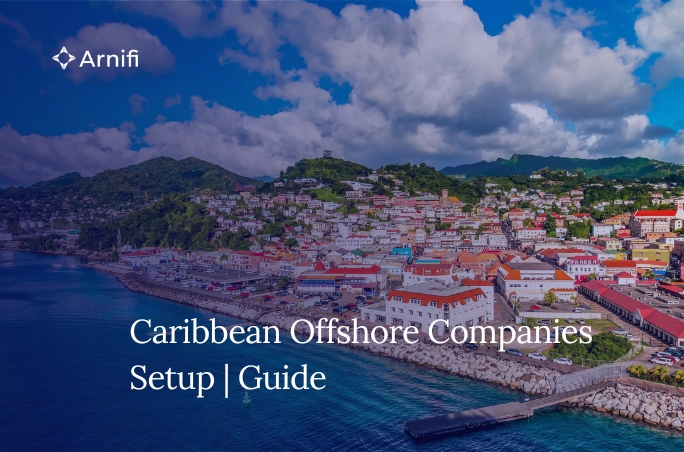
Caribbean offshore companies attract founders looking for tax efficiency, privacy, and global flexibility. But not every structure fits every business. Understanding jurisdictions, compliance, and long-term implications makes the difference between a smart setup and a costly mistake.
Table of contents
- Introduction
- Why do Founders consider Offshore Structures in the Caribbean?
- Which Jurisdictions Actually Make Sense?
- How do Caribbean Offshore Companies Actually Work in Practice?
- What Are The Common Mistakes Founders Make?
- How to Structure it the Right Way?
- What Role does Compliance Play Today?
- Where does Arnifi fit into This Process?
- Conclusion
- FAQs
Introduction
Start by questioning the assumption that offshore automatically means an advantage. Caribbean offshore companies can be powerful tools, but only when aligned with the right business model, jurisdiction, and compliance approach. Many founders rush into incorporation without understanding how these structures actually function in practice.
A more grounded approach helps. Think beyond tax savings. Look at operational flexibility, banking realities, and regulatory expectations. That shift in perspective tends to separate sustainable setups from short-term experiments.
Why do Founders consider Offshore Structures in the Caribbean?
The appeal is not random. Caribbean offshore companies have built a reputation over decades for being business-friendly, especially for international operations.
Tax neutrality often sits at the top of the list. Many jurisdictions in the Caribbean offer zero or very low corporate tax for non-resident income. That alone draws digital businesses, holding entities, and investment structures.
Then comes confidentiality. Some jurisdictions limit public disclosure of directors and shareholders. For founders managing multiple ventures or sensitive assets, that layer of privacy matters.
Ease of incorporation also plays a role. Compared to heavily regulated onshore systems, company formation in the Caribbean is relatively straightforward. Fewer bureaucratic hurdles, faster timelines, and less friction.
But the real reason experienced founders look here is flexibility. These structures work well for cross-border operations, especially when revenue streams come from multiple countries.
Which Jurisdictions Actually Make Sense?
Not all Caribbean jurisdictions are equal. That’s where many first-time founders slip.
The British Virgin Islands remain a popular choice. It offers a stable legal framework and is widely accepted by international banks and investors.
Cayman Islands tend to attract investment funds and larger corporate structures. It’s more expensive, but often seen as more credible in institutional environments.
St. Lucia and Belize offer cost-effective alternatives. They work well for smaller operations but may face more scrutiny when opening international bank accounts.
Choosing the right jurisdiction depends less on cost and more on how the business operates. A SaaS company, for instance, will have very different needs compared to a trading business or a holding entity.
How do Caribbean Offshore Companies Actually Work in Practice?
On paper, the structure looks simple. In reality, operations require careful handling.
A typical offshore company earns income from outside its jurisdiction. That income is not taxed locally. However, compliance obligations still exist. Annual filings, registered agents, and in some cases, economic substance requirements.
Banking is where things get real. Opening and maintaining accounts can be more complex than expected. Banks now ask detailed questions about business activity, source of funds, and operational presence.
Another factor is management and control. If decision-making happens in a high-tax country, tax authorities there may still claim jurisdiction. This is often overlooked but critical.
So while Caribbean offshore companies offer flexibility, they demand discipline in execution.
What Are The Common Mistakes Founders Make?
The biggest mistake is chasing tax savings without understanding compliance.
Some founders assume offshore automatically means zero obligations. That leads to issues with reporting, banking, and even personal tax exposure.
Another mistake is picking a jurisdiction purely based on cost. Cheaper setups often come with hidden trade-offs, especially when dealing with global partners or financial institutions.
Ignoring substance requirements is also risky. Some jurisdictions now expect a certain level of local presence depending on the business activity.
And then there’s poor structuring. Without a clear purpose, offshore entities can become liabilities instead of assets.
How to Structure it the Right Way?
Start with clarity. What is the company meant to do? Hold assets, manage IP, process payments, or operate a business?
Then align jurisdiction with that purpose. A holding company may fit well in BVI, while a fund structure may lean towards Cayman.
Next comes compliance planning. Understand reporting obligations not just in the offshore jurisdiction but also in the founder’s home country.
Banking should be considered early, not after incorporation. Some jurisdictions are easier to bank with than others.
Finally, think long-term. Caribbean offshore companies should support growth, not just reduce taxes in the short term.
What Role does Compliance Play Today?
Compliance is no longer optional. Global regulations have tightened significantly.
Information sharing between countries has increased. Reporting standards like CRS mean financial data can be exchanged across borders.
This does not eliminate the benefits of offshore structures. It simply means they must be used correctly.
A well-structured offshore company remains fully legal and effective. A poorly structured one creates unnecessary risk.
Where does Arnifi fit into This Process?
Setting up Caribbean offshore companies involves more than filing paperwork. It requires understanding jurisdictions, aligning business goals, and managing compliance across borders.
Arnifi simplifies that process. From choosing the right jurisdiction to handling incorporation and ongoing requirements, the focus stays on making the structure actually work in practice.
Instead of navigating multiple service providers, everything is handled in one place. That reduces friction and avoids the common mistakes that slow founders down.
Conclusion
Caribbean offshore companies can offer real advantages when used with clarity and intent. They are not shortcuts. They are tools.
The difference lies in execution. Thoughtful structuring, proper compliance, and the right jurisdiction can turn an offshore setup into a strategic asset.
Arnifi helps bring that structure together. For founders looking to build globally without unnecessary complexity, the right support makes all the difference.
FAQs
1. Are Caribbean offshore companies legal?
Yes, they are legal when structured and reported correctly.
2. Do offshore companies pay zero tax?
In many cases yes locally, but other tax obligations may still apply.
3. Is banking difficult for offshore companies?
It can be, depending on jurisdiction and business activity.
4. Which Caribbean jurisdiction is best?
It depends entirely on the business model and goals.
5. Do offshore companies require compliance filings?
Yes, annual filings and reporting are typically required.
Top UAE Packages


Related Articles
Top UAE Packages
Get in Touch