
Beyond the Basics | Navigating PEP Sanction Screening and High-Risk Relationships
by Prajwal Yaji Jan 24, 2026  5 MIN READ


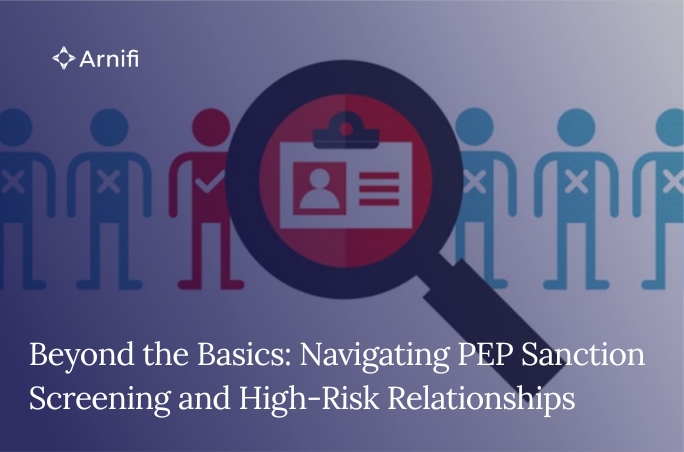
Compliance isn’t just about ticking boxes; it is about understanding who you are really doing business with. For many Corporate Service Providers, the term “PEP” often triggers a sense of dread. Is it a reason to walk away from a deal, or simply a signal to look closer?
The truth is that PEP sanction screening is one of the most misunderstood areas of AML compliance. While many treat it as a one-time onboarding hurdle, regulators increasingly view it as a dynamic, ongoing obligation. If your team treats a Politically Exposed Person (PEP) as an automatic “no,” you might be missing opportunities. If you treat them as “business as usual,” you are likely inviting a regulatory catastrophe.
Why does this matter for your firm? Because in the current enforcement climate, a failure to identify a PEP is viewed as a failure of your entire risk management framework.
Table of contents
What Is a Politically Exposed Person (PEP)?
Before we dive into the mechanics, we need to be clear on the definitions. Under UAE AML laws and FATF guidance, a PEP is an individual who is, or has been, entrusted with a prominent public function.
This isn’t just about heads of state. Influence and position matter more than intent. We categorise them into several high-risk groups:
- Domestic PEPs: Senior officials within the UAE government, military, or judiciary.
- Foreign PEPs: Individuals holding prominent roles in other countries.
- International Organization PEPs: Directors and senior members of entities like the UN or IMF.
- Family & Associates: This is the “hidden” risk. PEP checks must extend to family members and close business associates, as they are often the primary conduits for wealth concealment.
The Critical Difference: PEP Screening vs Sanctions Screening
One of the most common mistakes compliance teams make is confusing these two processes. While they often happen at the same time, their legal implications are worlds apart.
Sanctions screening is a binary check. If a person is on a sanctions list (like the UN or OFAC lists), you generally cannot do business with them. Period. It is a legal prohibition.
PEP sanction screening, however, is part of a risk-based approach. Being a PEP is not a crime; it is a status that carries higher inherent risk for bribery or embezzlement. Unlike sanctions, you can often onboard a PEP, provided you apply enhanced due diligence and PEP protocols and obtain senior management approval.
Why are PEPs High Risk?
Why do regulators focus so heavily on these individuals? The logic is simple: influence. A PEP has the power to direct public funds, award contracts, and influence policy. This power creates a natural exposure to financial crime typologies like “Source of Wealth” inflation.
AML PEP requirements exist to ensure that the money entering the UAE financial system from these individuals is legitimate and not the result of the misuse of public office.
Implementing Enhanced Due Diligence (EDD) for PEPs
Once a PEP due diligence check returns a match, your standard KYC process stops, and your EDD process begins. This is where “one-size-fits-all” compliance fails.
Enhanced due diligence requires a deep dive into two distinct areas:
- Source of Funds (SoF): Where did the money for this specific transaction come from?
- Source of Wealth (SoW): How did this individual accumulate their entire fortune over their lifetime?
For a PEP, a bank statement isn’t enough. You need to verify the origins of their wealth through independent documents, public records, and professional references. Furthermore, you cannot onboard a PEP without formal Senior Management Approval. Does your current SOP clearly define who has the authority to sign off on a high-risk relationship?
The Role of Technology: AML Software for PEP Screening
Static checks fail because people move, roles change, and influence evolves. This is why ongoing monitoring for PEPs is non-negotiable.
Using dedicated AML software for PEP screening allows for:
- Real-time Updates: Lists are updated daily as political appointments change.
- False Positive Reduction: Advanced algorithms help distinguish between a high-ranking official and someone who simply shares a common name.
- Audit Trails: When the Ministry of Economy asks why you onboarded a specific client, your software provides a timestamped record of every check and risk assessment.
Common PEP Screening Requirements UAE
The UAE Federal AML Law and Cabinet Decisions are very specific. Regulators expect to see a documented risk-scoring system. If you are operating as a CSP, your PEP screening requirements in the UAE mandate that you reassess these clients more frequently than standard ones.
Mistakes to avoid:
- The “Former PEP” Trap: Just because someone left office two years ago doesn’t mean the risk has vanished. UAE regulations often require a “once a PEP, always a PEP” (or at least a very long cooling-off period) mindset.
- Ignoring Associates: Failing to screen the business partners of a PEP is a frequent red flag during audits.
Quick Compliance FAQs
Are PEPs automatically considered high-risk customers?
Yes. Under UAE law, PEPs are inherently high-risk, necessitating EDD and senior management sign-off.
Do family members of PEPs require enhanced due diligence?
Yes. Close family members and associates are treated with the same level of scrutiny as the PEPs themselves.
How long does someone remain classified as a PEP?
While some jurisdictions suggest 12 to 24 months after leaving office, the UAE takes a more conservative approach based on the continuing influence of the individual.
Effective PEP sanction screening is about finding the balance between being a “gatekeeper” and a “business enabler.” By aligning your technology with a robust internal policy, you ensure that high-risk doesn’t mean high-anxiety for your firm.
Are your internal screening lists up to date for 2026? Perhaps it is time for a mock audit of your high-risk files.
Top UAE Packages


Related Articles
Top UAE Packages
Get in Touch