
Anti-Money Laundering Rules for Singapore Businesses
by Anushka Basu Mar 26, 2026  5 MIN READ


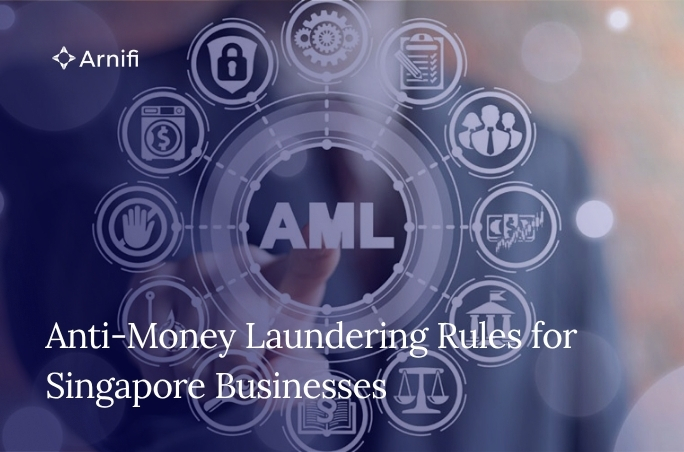
A common misconception about anti-money laundering rules in Singapore is that they apply only to banks. In reality, businesses across sectors must follow strict AML standards. This guide will discuss the requirements for anti-money laundering in Singapore, who must comply, and how companies can manage obligations without overcomplicating daily operations.
Table of contents
- Introduction
- Why AML Compliance Matters for Businesses
- Which Businesses Must Follow AML Rules
- Core AML Requirements Businesses Must Follow
- What Does Customer Due Diligence Mean?
- Record Keeping and Reporting Obligations
- Risk-Based Approach to AML
- Practical AML Compliance Structure
- Common AML Challenges Businesses Face
- How Businesses Can Stay Compliant
- Why AML Compliance Is a Business Priority
- FAQs
- Conclusion
Introduction
Most businesses assume AML rules apply only to financial institutions, but the previous expectation has changed because compliance requirements now apply to all business sectors in Singapore. The requirement for anti-money laundering Singapore compliance now extends to banks, corporate service providers, fintech firms, and specific trading companies. It has transformed into an essential operational need for businesses, and those who understand anti-money laundering Singapore regulations can prevent penalties while maintaining their status with regulatory bodies.
Why AML Compliance Matters for Businesses
Anti-money laundering regulations in Singapore aim to prevent misuse of the financial system.
Businesses are expected to:
- Identify suspicious financial activity
- Verify customer identity
- Maintain proper records
- Report unusual transactions
Because Singapore is a global financial hub, anti-money laundering Singapore standards are strict and closely monitored.
Which Businesses Must Follow AML Rules
Not all companies face the same level of anti-money laundering obligations in Singapore; however, regulators directly oversee several sectors.
Typically covered under anti-money laundering:
- Financial institutions
- Corporate service providers
- Payment and fintech companies
- Real estate intermediaries
- Dealers in high-value goods
Usually, anti-money laundering requirements affect several businesses indirectly through partnership obligations and banking relationships in Singapore.
Core AML Requirements Businesses Must Follow
If you really wish to understand what establishes the foundation for compliance in the case of anti-money laundering in Singapore, it has to be key controls. Businesses need to comply with CDD, which is customer due diligence; KYC, which stands for know your customer; record-keeping; and transaction monitoring. All of this is done in conjunction to establish the backbone for compliance in Singapore.
What Does Customer Due Diligence Mean?
Customer due diligence is one of the most critical aspects of anti-money laundering in Singapore.
It involves:
- Verifying customer identity
- Understanding the nature of business relationships
- Assessing risk levels
- Monitoring ongoing transactions
Proper due diligence will ensure that anti-money laundering requirements are met consistently.
Record Keeping and Reporting Obligations
Maintaining accurate records is essential under anti-money laundering rules.
Businesses are required to:
- Keep transaction records for regulatory review
- Maintain identification documents
- Report suspicious activities to authorities
Failure to meet these obligations can result in penalties under anti-money laundering regulations.
Risk-Based Approach to AML
Singapore follows a risk-based approach, which means not all customers are treated equally.
Under Anti-Money Laundering , businesses must:
- Classify customers by risk level
- Apply enhanced due diligence for high-risk cases
- Monitor transactions based on risk exposure
This approach ensures that anti-money laundering Singapore compliance is proportionate and effective.
Practical AML Compliance Structure
| Requirement | Purpose |
| Customer due diligence | Verify identity and assess risk |
| Transaction monitoring | Detect unusual activity |
| Record keeping | Maintain audit trail |
| Reporting | Notify authorities of suspicious cases |
This table outlines how anti-money laundering compliance is typically structured.
Common AML Challenges Businesses Face
Implementing anti-money laundering rules can be difficult, especially for smaller companies.
Common challenges include:
- Lack of internal compliance systems
- Difficulty identifying high-risk transactions
- Limited staff training
- Managing regulatory updates
These challenges are common across industries dealing with anti-money laundering Singapore requirements.
How Businesses Can Stay Compliant
The most important thing to understand, however, is the fact that compliance doesn’t necessarily have to be complex or chaotic. And, if you do it the right way, you can do it with no hassle whatsoever. It is possible to effectively run an anti-money laundering operation if an individual trains employees on the AML procedures, uses technology for the operation, reviews the operation, and, most importantly, develops an internal policies framework. Not only will your business comply with the anti-money laundering requirement, but it will also do so with no complexities.
Why AML Compliance Is a Business Priority
AML is no longer just a regulatory obligation. It directly affects business credibility.
Strong practices help:
- Build trust with banks and partners
- Reduce regulatory risk
- Improve operational transparency
- Support long-term sustainability
This is why anti-money laundering compliance is increasingly seen as a business requirement, not just a legal one.
FAQs
Q) What is anti-money laundering in Singapore?
A) It refers to regulations that prevent illegal funds from entering the financial system.
Q) Do all businesses need AML compliance?
A) Not all, but many sectors are directly or indirectly affected.
Q) What is customer due diligence?
A) It is the process of verifying customer identity and assessing risk.
Q) What happens if AML rules are ignored?
A) Businesses may face fines, penalties or regulatory action.
Conclusion
The financial system receives protection through Singapore’s anti-money laundering regulations, which exist to maintain its operational integrity. The expansion of compliance requirements forces organisations to establish formal anti-money laundering procedures. Understanding these requirements early on helps companies sustain their business operations without facing any kind of penalty. AML compliance, when done correctly, becomes a part of the business operations.
Struggling with the intricacies of AML processes? Arnifi helps companies develop AML systems, align AML compliance processes, and create documentation for AML compliance requirements.
Reach out to us today if you are exploring AML requirements in Singapore, so that your business takes the correct step towards compliance!
Top Singapore Packages


Related Articles
Top Singapore Packages
Get in Touch