
Pvt Ltd vs LLC in Dubai | Key Differences

Anushka
Content Writer
Anushka Basu is a business content writer specialised in global business market insights. She aims to simplify complex regulatory, financial, and business concepts into… Read more

Tulika Saxena
AVP, Sales & Marketing | IIM Nagpur
Tulika Saxena specializes in business finance, sales strategy, and market positioning. Leads growth and partnerships, ensuring seamless business setup experiences and client success across… Read more


Key Fact: Under UAE Federal Decree-Law No. 32 of 2021 on Commercial Companies, LLC and Private Joint Stock Company are recognised legal forms. Pvt Ltd is not generally a separate mainland legal form competing with LLC. Free zones may register private limited liability companies under their individual regulatory frameworks.
Table of contents
- Introduction
- Is Pvt Ltd a Separate Legal Structure in Dubai?
- What Is an LLC Company in Dubai?
- What Is the Difference Between Pvt Ltd and LLC in Dubai?
- What Is the Difference Between Mainland LLC and Free Zone LLC?
- How Does Ownership Work in Dubai LLCs and Private Companies?
- How Are LLCs and Private Companies Taxed in Dubai?
- What Are the Incorporation and Compliance Requirements?
- Which Structure Should You Choose for Your Business in Dubai?
- How Can Arnifi Help With Dubai Company Formation?
- FAQs
- Conclusion
- References
Introduction
A founder reviewing two Dubai incorporation proposals may see one labelled Pvt Ltd and the other LLC. Both appear to offer limited liability, yet their legal descriptions raise an important question: are these genuinely different company structures? Understanding Pvt Ltd vs LLC in Dubai starts with identifying the registration jurisdiction and the legal form recognised by the relevant authority.
Is Pvt Ltd a Separate Legal Structure in Dubai?
Pvt Ltd, short for Private Limited Company, is a familiar corporate designation in countries such as India. In the UAE, the Commercial Companies Law recognises specific legal forms, including Limited Liability Companies (LLCs) and Private Joint Stock Companies (PrJSCs).
Dubai mainland registration generally does not treat Pvt Ltd as an independent legal form that competes with an LLC.
Free zones may, however, register entities using the term Private Limited Liability Company. These entities operate under the relevant free zone’s regulatory framework.
For founders comparing incorporation proposals, the important details are:
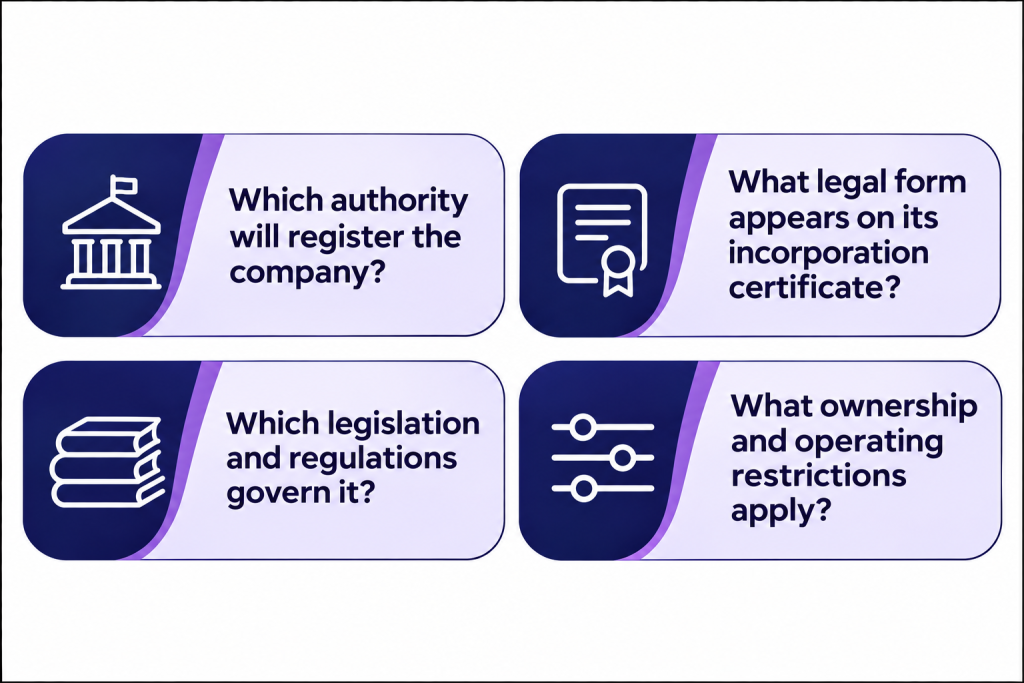
The name alone does not establish the company’s legal status.
What Is an LLC Company in Dubai?
A Limited Liability Company is a separate legal entity whose shareholders generally have liability limited to their capital contributions, subject to applicable legal exceptions.
Dubai LLCs can have individual or corporate shareholders, including foreign investors where permitted. Mainland LLCs are registered through Dubai’s Department of Economy and Tourism (DET).
Free zones also offer LLC structures, commonly described as FZ-LLCs or Private Limited Liability Companies.
What Is the Difference Between Pvt Ltd and LLC in Dubai?
| Factor | Pvt Ltd terminology | UAE LLC |
| Legal status | Depends on registration framework | Recognised UAE legal form |
| Mainland availability | Not generally a separate legal form | Available |
| Free zone availability | Used by certain authorities | Available across many zones |
| Ownership | Depends on registered entity | Shareholders hold capital interests |
| Tax treatment | Depends on entity and tax rules | Subject to UAE Corporate Tax |
| Compliance | Authority-specific | Depends on jurisdiction and activity |
The comparison should focus on the actual registered entity rather than the terminology used in a sales proposal.
What Is the Difference Between Mainland LLC and Free Zone LLC?
| Factor | Mainland LLC | Free Zone LLC |
| Registration | Dubai DET | Relevant free zone authority |
| Market access | Broader UAE mainland operations, subject to licensing | Free zone and international operations, with mainland restrictions |
| Legal framework | Federal law and mainland regulations | Federal law plus applicable free zone rules |
| Activities | DET-approved activities | Activities permitted by the zone |
| Premises | Mainland office requirements | Zone-specific facility requirements |
A mainland LLC suits businesses that require direct access to the wider UAE market. A free zone LLC may suit businesses whose operations align with a particular zone’s permitted activities and facilities.
Free zone businesses selling into the mainland must comply with the applicable licensing, customs or operating arrangements.
How Does Ownership Work in Dubai LLCs and Private Companies?
Ownership depends on the selected legal form and the relevant authority’s requirements.
- LLCs generally accommodate individual and corporate shareholders.
- Mainland LLCs can have up to 50 partners.
- Private Joint Stock Companies can accommodate broader shareholding arrangements, subject to their statutory requirements.
- Share transfers must follow applicable legal procedures and company constitutional documents.
- Foreign investors can own 100% of many mainland businesses, subject to restrictions and approvals for certain activities.
A Private Joint Stock Company differs from an LLC in its shareholding framework, governance requirements and capital arrangements. It is not simply another name for a privately owned LLC.
How Are LLCs and Private Companies Taxed in Dubai?
UAE Corporate Tax applies according to the company’s taxable status and income. Legal form alone does not determine whether a business receives preferential tax treatment.
| Tax consideration | General position |
| Corporate Tax | 0% on taxable income up to AED 375,000 and 9% above that threshold |
| Free zone regime | 0% on qualifying income for eligible Qualifying Free Zone Persons |
| Non-qualifying free zone income | Subject to applicable Corporate Tax rates |
| Registration | Tax registration and filing obligations apply |
| Dividends | Subject to applicable corporate and shareholder tax rules |
Qualifying Free Zone Persons must meet specific conditions, including substance, qualifying income and transfer pricing requirements. A free zone licence alone does not guarantee a 0% Corporate Tax rate.
What Are the Incorporation and Compliance Requirements?
The incorporation process depends on whether the business is mainland or free zone registered.
Typical requirements include:
- Selecting the business activity and legal form.
- Reserving an approved trade name.
- Obtaining initial approval.
- Preparing the Memorandum of Association where required.
- Submitting shareholder and director documentation.
- Securing premises or an approved facility.
- Obtaining the relevant trade licence.
- Completing Corporate Tax registration.
- Maintaining accounting records and meeting annual filing obligations.
Additional approvals may apply to regulated business activities.
Which Structure Should You Choose for Your Business in Dubai?
Your choice should reflect how the business will operate.
| Business requirement | Structure to evaluate |
| Direct UAE mainland trading | Mainland LLC |
| International or zone-specific operations | Free Zone LLC |
| Larger ownership and capital arrangements | Private Joint Stock Company |
| Expansion into regulated activities | Structure permitted by the relevant regulator |
Before signing an incorporation proposal, confirm the legal form, registration authority, permitted activities, ownership arrangements and expected compliance costs.
How Can Arnifi Help With Dubai Company Formation?
Arnifi can help entrepreneurs evaluate mainland and free zone jurisdictions, identify an appropriate legal structure and coordinate incorporation documentation. Its corporate setup support can also assist founders in understanding licensing requirements, registered office arrangements and ongoing compliance obligations. This helps business owners organise their establishment process around their commercial objectives.
FAQs
Is Pvt Ltd the same as LLC in Dubai?
Not automatically. Pvt Ltd is terminology used in different jurisdictions, while LLC is a recognised UAE legal form. Certain free zones use Private Limited Liability Company terminology for their registered entities.
Can foreigners own 100% of a Dubai LLC?
Yes. Full foreign ownership is permitted for many mainland activities and generally available in free zones, subject to applicable restrictions and approvals.
Is a free zone LLC different from a mainland LLC?
Yes. Both provide limited liability, but their registration authorities, licensing frameworks, permitted activities and market access arrangements differ.
Does a Dubai LLC pay Corporate Tax?
Yes, unless an applicable exemption or preferential regime applies. The standard framework includes 0% on taxable income up to AED 375,000 and 9% above that threshold.
Can a Dubai LLC have a corporate shareholder?
Yes. Mainland LLCs and many free zone LLCs can accommodate corporate shareholders, subject to the relevant authority’s documentation requirements.
Which is better for startups, mainland LLC or free zone LLC?
The choice depends on customer location, activities, premises, visa requirements and expansion plans. A mainland LLC may suit businesses requiring broad local market access, while a free zone LLC may suit businesses aligned with a particular zone.
Conclusion
Pvt Ltd vs LLC in Dubai is primarily a question of legal terminology and registration framework. Mainland LLCs, free zone LLCs and Private Joint Stock Companies have distinct legal and operational characteristics. Entrepreneurs should verify the actual legal form, ownership rules, licensing authority, market access and tax obligations before choosing a structure. A clear understanding of these differences makes company formation decisions more practical and helps avoid unnecessary compliance complications.
References
- UAE Legislation – Federal Decree-Law No. 32 of 2021 on Commercial Companies
- UAE Government – Steps to Start a Business on the Mainland
- Invest in Dubai – Legal Forms of Company Structure
- UAE Government – Starting a Business in a Free Zone
- UAE Government – Full Foreign Ownership of Commercial Companies
- Federal Tax Authority – Corporate Tax FAQs
Top UAE Packages
Related Articles


Top UAE Packages
Planning Your Next Business Move?
