
CRS Compliance Mauritius | A Practical Guide for Financial Institutions


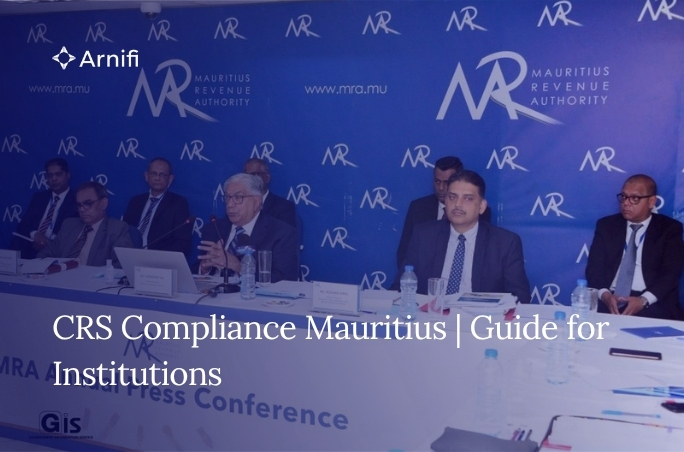
CRS compliance Mauritius affects how financial institutions collect, verify, and report client information under global transparency rules. This blog walks through what CRS reporting financial institutions Mauritius are expected to handle in real operations, not just policy documents. It also explains the MRA CRS obligations Mauritius in a way that reflects day-to-day compliance work, which includes due diligence, classification & reporting timelines. The aim is to simplify a process that often feels heavier than it needs to be, while pointing out where mistakes usually happen and how institutions can stay consistent without building unnecessary complexity into their systems.
Table of contents
- Introduction
- What is CRS and how does it apply in Mauritius?
- Which businesses fall under CRS reporting financial institutions Mauritius?
- How does CRS due diligence actually work in practice?
- What are the key MRA CRS obligations Mauritius requires?
- Where do financial institutions usually get it wrong?
- How can institutions build a smoother CRS compliance process?
- How should institutions prepare for CRS reporting cycles?
- Where Arnifi fits in
- Conclusion
- FAQs
Introduction
Start by looking at CRS as part of daily operations, not a once-a-year reporting exercise. That shift tends to solve more problems than any checklist ever could.
CRS compliance Mauritius often feels complicated because it is handled too late in the process. When it sits separately from onboarding or internal workflows, gaps begin to show. Those gaps do not stay small for long.
A more grounded approach works better. Build it into how accounts are opened, reviewed, and maintained. The rest starts to fall into place.
What is CRS and how does it apply in Mauritius?
CRS, or Common Reporting Standard, is a global system designed to share financial account information between countries. The goal is to reduce tax evasion by making financial data more transparent across borders.
Mauritius has committed to this framework, which means financial institutions operating here must identify and report certain accounts to the tax authority.
CRS compliance Mauritius sits right in the middle of this system. It connects local institutions with global reporting expectations. Ignoring it is not really an option, but overcomplicating it is just as risky.
Which businesses fall under CRS reporting financial institutions Mauritius?
This is where confusion usually starts.
The definition of a financial institution under CRS is not limited to banks. It includes custodians, investment entities, and in some cases, structures that hold or manage assets rather than actively trade.
CRS reporting financial institutions Mauritius need to determine their classification early. That decision affects everything that follows, from due diligence to reporting obligations.
Getting this wrong creates a chain reaction. Accounts may be reviewed incorrectly, reports may be incomplete, and fixing it later becomes harder than getting it right at the start.
How does CRS due diligence actually work in practice?
On paper, the steps are clear. Collect self-certifications, determine tax residency, and verify the information.
In practice, it is rarely that clean.
Different rules apply to new accounts and pre-existing ones. Individual clients are treated differently from entities. Passive entities require identifying controlling persons, which adds another layer of review.
CRS compliance Mauritius requires more than collecting forms. It involves checking whether the information makes sense, whether documents match, and whether records are properly stored.
The difficulty is not understanding the rules. It is applying them consistently across teams and time.
What are the key MRA CRS obligations Mauritius requires?
The Mauritius Revenue Authority expects institutions to report accurately and on time. But reporting is only one part of the picture.
MRA CRS obligations Mauritius also include maintaining clear documentation of how due diligence was performed. That means keeping records of self-certifications, validation checks, and classification decisions.
When issues arise, the first question is usually not about the data submitted. It is about how that data was collected and verified.
CRS compliance Mauritius tends to hold up better when institutions can show a clear process behind every reported figure.
Where do financial institutions usually get it wrong?
A few patterns appear often.
Manual handling of data is one. It works in the beginning but becomes inconsistent over time. Small differences in how teams interpret rules start to create larger gaps.
Another issue is incomplete or unchecked self-certifications. Forms are collected, but no one really looks at them closely.
Then there is documentation. When records are missing or scattered, even correct reporting can become difficult to defend.
CRS reporting financial institutions Mauritius that perform well usually focus less on volume and more on clarity. Clean processes tend to reduce errors naturally.
How can institutions build a smoother CRS compliance process?
The easiest way to simplify CRS is to stop treating it as a separate function.
When onboarding teams understand what information is needed and why, fewer corrections are required later. When compliance teams stay aligned with operations, reviews become faster and more consistent.
Systems also matter. Even a simple structured workflow works better than scattered spreadsheets.
CRS compliance Mauritius becomes manageable when it is part of how the institution runs, not something added at the end.
How should institutions prepare for CRS reporting cycles?
Last-minute reporting tends to expose every weakness in the system.
A better approach is steady preparation. Accounts should be reviewed continuously & not all at once. Data should be checked as it comes in, not just before submission.
Internal reviews help as well. A quick check halfway through the cycle often prevents larger issues later.
CRS compliance Mauritius works best when reporting becomes a natural outcome of ongoing processes rather than a deadline-driven task.
Where Arnifi fits in
Arnifi works with financial institutions that need clarity around CRS, not just compliance.
The focus stays practical. Instead of adding layers, the approach looks at existing processes and identifies where things break or slow down. That includes reviewing classification, fixing due diligence gaps, and aligning reporting workflows.
For many institutions, the issue is not lack of effort. It is lack of structure.
CRS compliance Mauritius becomes easier when the process reflects how the business actually operates.
Conclusion
CRS compliance Mauritius is often seen as a burden because it is handled too late or in isolation.
When approached early and built into everyday workflows, it becomes far more manageable. The rules do not change, but the way they are handled does.
That is where structured support makes a difference.
Arnifi helps institutions move away from reactive fixes and toward a more stable setup. The goal is not just to meet reporting requirements, but to make sure those requirements fit naturally into ongoing operations.
FAQs
What is CRS compliance Mauritius?
It refers to identifying and reporting financial accounts under global tax transparency rules.
Who falls under CRS reporting financial institutions Mauritius?
Banks, custodians, investment entities & certain holding structures may qualify.
What are MRA CRS obligations Mauritius?
They include due diligence, record-keeping & annual reporting to the tax authority.
Is CRS reporting required every year?
Yes, it is an ongoing annual compliance requirement.
What is the most common CRS compliance issue?
Incorrect classification and weak documentation tend to cause the most problems.
Top UAE Packages


Related Articles


Top UAE Packages
Get in Touch