
MRA Enforcement Actions and Penalties in Mauritius | A Practical Guide for Businesses


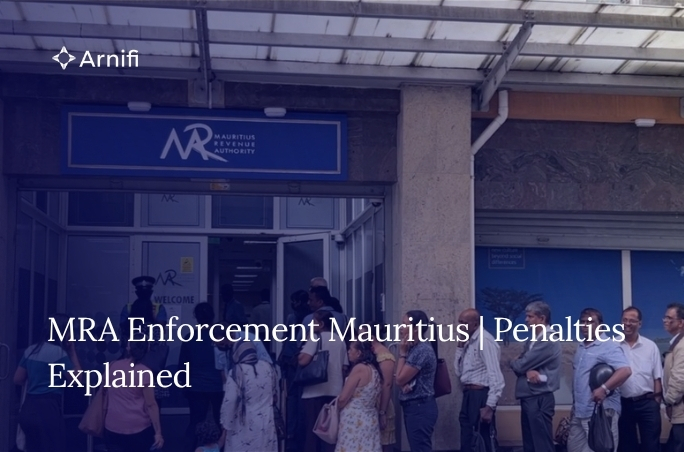
MRA enforcement in Mauritius is no longer something that businesses can afford to overlook. With tighter systems and closer monitoring, even small gaps in reporting can lead to serious consequences. This article breaks down how enforcement actions work, what typically triggers scrutiny, and what are the types of Mauritius Revenue Authority penalties businesses may face. It also explains how tax compliance in Mauritius fits into everyday operations & not just year-end filings. Understand the risks early, avoid unnecessary penalties & build a structure that keeps the business aligned with regulatory expectations over time.
Table of contents
- Introduction
- What is MRA Enforcement Mauritius and Why Does it Matter Now?
- How Does the Mauritius Revenue Authority Identify Non-Compliance?
- What Actions Can the MRA Take Against Businesses?
- What are the Most Common Mauritius Revenue Authority Penalties?
- How Expensive Can Non-Compliance Really Get?
- What Does Strong Tax Compliance Mauritius Look Like in Practice?
- Why do Businesses Still Fall Into Compliance Gaps?
- How Can Businesses Reduce Risk Before Enforcement Begins?
- Where Does Arnifi Fit Into This?
- Conclusion
- FAQs
Introduction
MRA enforcement Mauritius has quietly shifted from a background process to something far more active. It is structured, consistent, and increasingly difficult to ignore. For the businesses that are operating in or through Mauritius, that changes how compliance needs to be approached.
Enforcement is not just about catching mistakes. But it is about testing how reliable and transparent a business really is. That makes it worth pausing for a moment and asking a simple question. Are systems strong enough to hold up under scrutiny, or are they only designed to get filings done?
That difference matters more than most expect.
What is MRA Enforcement Mauritius and Why Does it Matter Now?
At its core, MRA enforcement Mauritius refers to how the tax authority monitors filings, checks inconsistencies, and takes action where needed. It is not random. It follows a method.
Over time, the approach has become more data-driven. Systems now pick up patterns across filings, transactions, and declarations. When something feels off, it gets flagged.
This matters because the margin for error has reduced. Earlier, small issues could go unnoticed for longer periods. Now, they tend to surface much faster. For businesses, this means fewer second chances and quicker consequences.
How Does the Mauritius Revenue Authority Identify Non-Compliance?
The process usually starts quietly. A return gets filed. Data gets recorded. Then systems begin to compare.
Tax compliance Mauritius is assessed not just on whether filings exist, but whether they make sense. If reported numbers do not align with financial activity, questions start to appear.
Some common triggers include:
- Delays in filing returns
- Differences between declared income and actual flows
- High-value or unusual cross-border transactions
- Incomplete or inconsistent documentation
It is rarely about one large mistake. Most cases build over time. Small inconsistencies create a pattern, and that pattern leads to review.
What Actions Can the MRA Take Against Businesses?
Once something is flagged, the process becomes more direct. The first step is usually a notice asking for clarification or additional documents.
If the response does not resolve the issue, it can move into a formal audit. At this stage, records are examined in detail. Transactions are reviewed. Supporting documents are checked.
In more serious cases, enforcement can escalate further. This may include legal proceedings or restrictions on certain operations. The direction depends on how the issue develops and how quickly it is addressed.
What are the Most Common Mauritius Revenue Authority Penalties?
Mauritius Revenue Authority penalties can vary, but they tend to follow a clear structure.
Common ones include:
- Fixed fines for late submissions
- Interest charges on outstanding tax amounts
- Penalties for underreporting income
- Additional charges for repeated non-compliance
The financial cost is only part of the picture. Once penalties begin, they often bring operational pressure with them. Finance teams spend more time on explanations and corrections. Business momentum slows down.
How Expensive Can Non-Compliance Really Get?
On paper, penalties may seem manageable. In reality, the total cost adds up quickly. There are direct costs like fines and interest. Then there are indirect ones. Time spent dealing with audits. Disruption to daily operations. Delays in decision-making. In some cases, reputational damage that affects partnerships.
MRA enforcement Mauritius does not just test compliance. It tests how prepared a business is to handle pressure. Those without clear systems tend to feel the impact more strongly.
What Does Strong Tax Compliance Mauritius Look Like in Practice?
It is not complicated, but it does require discipline.
Strong tax compliance Mauritius usually comes down to a few basics done well:
- Financial records that are accurate and updated regularly
- Filings completed on time, without last-minute rush
- Documentation that clearly supports every major transaction
- Internal checks that catch errors before submission
The goal is not perfection. It is consistency. When records are clean and processes are clear, responding to any query becomes straightforward.
Why do Businesses Still Fall Into Compliance Gaps?
Some businesses treat compliance as something to deal with later. Others rely too heavily on fragmented systems. There are also cases where teams simply do not keep up with changing requirements.
Another common pattern is growth without structure. As operations expand, complexity increases. Without proper systems in place, gaps begin to appear.
By the time those gaps are noticed, enforcement may already be in motion.
How Can Businesses Reduce Risk Before Enforcement Begins?
The most effective approach is to stay ahead of the process.
This can be done by:
- Setting internal deadlines earlier than official ones
- Reviewing filings before submission
- Keeping documentation organised and accessible
- Running periodic internal checks
These steps are simple, but they change how a business responds under pressure. Instead of reacting to notices, the business stays prepared for them.
Where Does Arnifi Fit Into This?
Arnifi works with businesses that want to move beyond reactive compliance. The focus is on building systems that hold up, not just systems that get by.
This includes structuring financial processes, supporting regular filings, and helping teams stay aligned with expectations shaped by MRA enforcement Mauritius. Over time, this reduces the likelihood of errors and the stress that comes with them.
The idea is simple. When compliance becomes part of the structure, it stops feeling like a burden.
Conclusion
MRA enforcement Mauritius is not unpredictable. It follows certain patterns, and those patterns are becoming easier to spot.
Businesses that treat compliance as an ongoing process tend to navigate it with fewer issues. Those who delay or overlook it often face avoidable costs.
The difference usually comes down to preparation. With the right systems in place, most risks can be managed early. Arnifi helps to build that foundation. We turn compliance into something stable and manageable rather than reactive and stressful.
FAQs
What is MRA enforcement Mauritius?
It is the process of monitoring and acting on tax compliance by authorities.
What triggers enforcement actions?
Late filings, mismatched data, and poor documentation.
Are penalties always financial?
No, they can also affect operations and reputation.
How can compliance risks be reduced?
By maintaining consistent records and timely filings.
Does external support help with compliance?
Yes, it simplifies processes and reduces costly errors.
Top UAE Packages


Related Articles


Top UAE Packages
Get in Touch