
MEWA’s Role in Advancing Agritech, FoodTech and Water Innovation Opportunities in Saudi Arabia


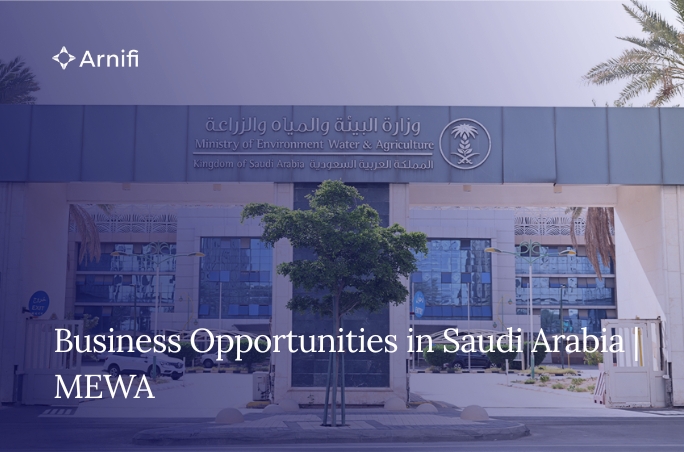
Serious business opportunities in Saudi Arabia are not hiding in the trends but in national priorities like food and water security. MEWA startup programs are the funding pathways and sector incubators quietly shaping agritech, foodtech, and water technology startups into scalable ventures in Saudi Arabia.
Table of contents
- 1. Introduction
- 2. MEWA’s Role in Advancing Sustainable Innovation
- 3. MEWA Startup Programs Supporting Early-Stage Innovation
- 4. FoodTech Acceleration and Commercialisation Pathways
- 5. Water Innovation and the Sahabah Incubation Model
- 6. Eligibility Criteria for Sector-Focused Startups
- 7. Non-Dilutive Financing and Capital Access
- 8. Market Gaps Creating Scalable Opportunities
- 9. How These Sectors Strengthen the Saudi Startup Ecosystem
- 10. Entry Considerations for Founders
- 11. How Arnifi Supports Agritech and FoodTech Business Setup in Saudi Arabia
- 12. FAQs
- 13. Conclusion
1. Introduction
Most founders, when they look at Saudi Arabia and think of big contracts, infrastructure or tech platforms but few start with food and water & that is usually a mistake.
Saudi Arabia imports a large share of its food, as it operates in one of the driest climates in the world and spends heavily on desalinating water. That combination creates pressure at a national level. Food and water security are not talking points. They are structural concerns that sit close to economic planning.
This is where business opportunities in Saudi Arabia begin to look different. The government wants more local production, better resource use and smarter agriculture. As climate conditions force efficiency & population growth increases, the demand increases. Supply chain shocks have already shown what dependency can cost.
Anyone studying business in Saudi Arabia seriously should start by asking a simple question. Where is the country under pressure and willing to invest in the long term? The answer often leads straight to agritech, foodtech and water innovation.
2. MEWA’s Role in Advancing Sustainable Innovation
The Ministry of Environment, Water and Agriculture (MEWA) plays a major role in shaping how these sectors develop. It regulates, but it also enables & sets standards, it also builds programs to help companies to meet them.
Under Vision 2030, sustainability and diversification are the core themes but oil revenue still matters, but resilience now matters just as much. That means building domestic capacity in agriculture and water management.
MEWA is not just an authority for founders to deal with later. It influences the funding channels, pilot access and sector direction. If a solution improves crop yield with less water, reduces food waste or supports controlled-environment farming, it sits inside a policy-backed priority. That alignment reduces market uncertainty, which is rare in early-stage sectors.
3. MEWA Startup Programs Supporting Early-Stage Innovation
Early-stage ventures often struggle with two things, credibility and access. MEWA startup programs attempt to reduce both barriers.
Sedrah, the ministry-backed incubator and accelerator, supports pre-seed to growth-stage startups working in agriculture and related areas. It connects founders with sector experts, testing facilities and pilot environments. For sustainable agriculture in Saudi Arabia, startups, this kind of access can turn an idea into validated proof.
There is also a strategic link with the Agricultural Development Fund. This matters because incubation without funding alignment rarely leads to scale. Through the Agricultural Development Fund startups can explore structured financing that supports equipment, infrastructure and also expansion.
Laboratories and demonstration farms give space to test irrigation systems, soil technologies and agri-automation tools without immediately facing full risk. That lowers early burnout & increases technical strength.
4. FoodTech Acceleration and Commercialisation Pathways
Food innovation in Saudi Arabia is not just limited to farming. Processing, storage, logistics and alternative inputs are equally important. The food and agriculture technology accelerator Saudi Arabia initiative is designed to help viable products to move towards commercial use.
Agritech startups in Saudi Arabia often intersect with food supply chains, so collaboration becomes necessary. Production without distribution does not scale. The accelerator environment helps connect startups with manufacturers and retailers earlier in the process.
Foodtech startups in Saudi Arabia also receive structured support through incubation programs that focus on compliance, food safety and market access. Regulations in food are detailed, and without guidance many young companies slow down at this stage. The program environment reduces that setback.
This creates business opportunities in Saudi Arabia that feel more predictable. There is a demand, and there is institutional support that is guiding companies toward meeting it.
5. Water Innovation and the Sahabah Incubation Model
Water is where urgency is most visible. Desalination keeps cities running, yet it consumes energy. Agriculture needs irrigation, yet groundwater is limited.
The Sahabah Incubation Program focuses on water-focused entrepreneurs. It supports solutions in monitoring, treatment and efficiency. Sahabah Acceleration then helps move proven ideas closer to deployment.
Water technology startups Saudi Arabia operate in a highly regulated field, so institutional backing makes a real difference. Ministry involvement signals credibility and can open doors to pilot projects.
From a strategic perspective, some of the strongest business opportunities in Saudi Arabia are to reduce water waste and improve irrigation efficiency. These are the long-term needs & not short term cycles.
6. Eligibility Criteria for Sector-Focused Startups
Programs generally look for alignment with sustainability outcomes. Sustainable agriculture, water management, desalination efficiency and waste-to-value biotech all qualify under the right structure.
Water technology startups Saudi Arabia must show technical readiness and compliance planning. Agritech and biotech ventures are expected to demonstrate local relevance rather than imported templates that ignore climate realities.
The key is measurable impact, higher yield with less water & lower waste in processing. Reduced energy use in desalination.
7. Non-Dilutive Financing and Capital Access
Capital intensity in agriculture and water can be high. Through the Agricultural Development Fund, startups may access financing that limits early equity dilution. That changes the growth equation.
Venture capital interest in climate and food systems is increasing within business in Saudi Arabia. Public-private collaboration models also allow corporates to co-invest or partner in structured ways.
When evaluating business opportunities in Saudi Arabia, founders should think in terms of layered capital. Grants, concessional funding and private equity can work together if structured properly.
8. Market Gaps Creating Scalable Opportunities
Precision agriculture still has room to grow, especially solutions tailored to desert conditions. Vertical farming holds promise, but must solve cost efficiency. Alternative proteins are gaining attention as part of food security planning.
Smart irrigation and improved desalination technologies remain priority areas. These gaps exist because the country’s environment demands innovation.
This is where business in Saudi Arabia becomes practical rather than theoretical. Problems are clear. Budgets are allocated. The need is ongoing.
9. How These Sectors Strengthen the Saudi Startup Ecosystem
Agritech, food and water innovation help diversify beyond oil. They build manufacturing capacity, research clusters and export potential in climate-adaptive technology.
Business opportunities in Saudi Arabia increasingly include solutions that can expand into similar climates across the region. That regional angle strengthens long-term scale.
As validation grows, investor confidence follows. That deepens the ecosystem and strengthens business in Saudi Arabia across connected sectors.
10. Entry Considerations for Founders
Regulatory approvals in food, agriculture and water are detailed. Product testing and pilot validation are often mandatory before full rollout.
Anyone exploring how to start a business in Saudi Arabia in these fields should plan licensing carefully. Activity classification, compliance documentation and institutional partnerships matter early.
Strong local partnerships reduce friction and increase speed.
11. How Arnifi Supports Agritech and FoodTech Business Setup in Saudi Arabia
Arnifi works with founders entering regulated markets where structure affects funding access. Company formation, licensing scope and compliance mapping are handled with sector realities in mind.
For agritech startups in Saudi Arabia and foodtech startups in Saudi Arabia, the correct setup can influence eligibility for MEWA programs and Agricultural Development Fund pathways.
Careful structuring supports momentum rather than slowing it down.
12. FAQs
What startup programs does MEWA offer?
MEWA supports incubators such as Sedrah and Sahabah, focused on agriculture and water innovation.
Does Saudi Arabia support FoodTech startups?
Yes, foodtech startups in Saudi Arabia receive incubation and funding support aligned with national food security goals.
Are water technology startups eligible for government support?
Water technology startups Saudi Arabia can access incubation, pilot programs and financing support.
Is Saudi Arabia good for agritech startups?
Yes, strong policy alignment and funding access make agritech startups in Saudi Arabia well-positioned for growth.
13. Conclusion
Agritech, FoodTech and water innovation are tied directly to national planning. Business opportunities in Saudi Arabia in these sectors are structured through MEWA-backed incubators, funding channels and pilot infrastructure.
For founders studying the business opportunities in Saudi Arabia, the message is to focus on where the country must innovate & not where it simply wants to experiment.
With careful planning and the right setup, businesses in Saudi Arabia within these priority sectors can move from the pilot stage to long-term scale. Arnifi supports that transition with practical guidance, we ensure your expansion is aligned, compliant and ready for funding pathways that matter.
Top UAE Packages


Related Articles



Top UAE Packages
Get in Touch