
Tax Procedures Guide for Trade Licenses in the UAE | Federal Tax Authority 2026 Update

Anushka
Content Writer
Anushka Basu is a business content writer specialised in global business market insights. She aims to simplify complex regulatory, financial, and business concepts into… Read more


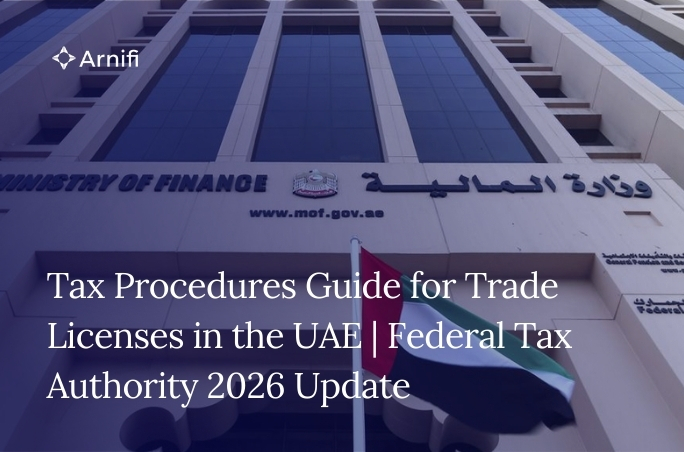
Are you trying to understand the UAE’s tax procedures for trade licenses? Learn about amendments, cancellation, renewal, freezing, issuance, and transfer. This guide covers requirements for both individuals and legal persons, which will help your business stay compliant and confidently manage licensing changes.
Table of contents
- 1. Introduction
- 2. Why Did the Federal Tax Authority Issue These Guides
- 3. Issuing New Trade Licences for Individuals
- 4. Renewal of Trade Licences for Individuals
- 5. Amendments to Trade Licence for Individuals
- 6. Cancellation and Administrative Cancellation for Individuals
- 7. Freezing a Sole Proprietorship
- 8. Transfer or Sale of Licences for Individuals
- 9. Issuing New Trade Licences for Legal Persons
- 10. Renewal of Trade Licences for Legal Persons
- 11. Amendments to Trade Licences for Legal Persons
- 12. Cancellation and Administrative Cancellation for Legal Persons
- 13. Freezing a Legal Person
- 14. Transfer or Sale of a Licence for a Legal Person
- 15. Access, Language, and Support
- 16. Conclusion
1. Introduction
One of the most vital parts when setting up a business in the UAE is navigating tax procedures linked to trade licenses. Be it for corporate entities or individual entrepreneurs, above all, understanding how licensing actions connect with tax registration and compliance is necessary in maintaining smooth operations and avoiding unwanted delays. To support this, the Federal Tax Authority has issued two explanatory publications, one for individuals and another for legal persons.
Combining these two, this guide aims to offer a clear, simplified overview of the procedures taxpayers are required to follow when interacting with said licensing authorities, covering everything from issuing and renewing licenses to amendments, cancellations, freezing, and transfer or sale.
2. Why Did the Federal Tax Authority Issue These Guides
Let us begin by understanding why these publications came into existence. The purpose of these publications is straightforward: to make tax procedures easier to understand and easier to apply.
They are designed to:
- Raise awareness of tax procedures related to trade licences
- Clarify practical steps connected to licensing authorities.
- Explain how different licensing actions affect tax registration.
- Provide constant support and guidance that aligns with approved regulations and laws.
What makes accessibility way easier is that both of these guides are available in English and Arabic. This means it automatically caters to a larger audience and range of taxpayers.
3. Issuing New Trade Licences for Individuals
Individuals operating as sole proprietors, sole proprietorships, or similar structures are referred to here. The guide outlines three primary scenarios for issuing new licences.
Issuing a New Licence for a Branch of Any Type
When an individual holds a trade licence and wishes to open an additional branch, this procedure applies. The new branch is issued in coordination with the existing registrant’s tax profile.
Issuing a New Licence for a Sole Proprietorship (Owner Not Registered)
If the owner is not yet registered with the Federal Tax Authority, tax registration forms part of the licensing process. This ensures the individual becomes a recognised registrant before business activities begin.
Issuing a New Licence for a Sole Proprietorship (Owner Already Registered)
There may be a case where the owner is already registered. Herein, a new license is created using the pre-existing registration details. This allows for the process to become more streamlined.
4. Renewal of Trade Licences for Individuals
Every type of trade license that is held by individuals is, by default, subject to renewal. Renewals ensure that licensing and tax records remain valid and current. Timely renewal helps avoid administrative penalties and operational interruptions.
5. Amendments to Trade Licence for Individuals
Amendments may involve changes to licence details or changes to the legal form of the business.
Amending All Types of Trade Licences (Same Legal Type)
This includes updates such as business activities, trade name, or address, while keeping the same legal structure.
Changing Legal Type from LLC to Sole Proprietorship
(Owner Not Registered – No Other Activities)
This applies when an LLC is converted into a sole proprietorship and the owner is not previously registered and holds no other activities.
Changing Legal Type from LLC to Sole Proprietorship
(Owner Registered – Has Other Activities)
Therefore, this scenario applies when the owner already has tax registration and maintains additional licensed activities.
6. Cancellation and Administrative Cancellation for Individuals
Different cancellation scenarios exist depending on how many licences or activities the individual holds.
Cancellation of All Branch Licences
Used when all registered branches are to be closed.
Cancellation of a Sole Proprietorship
(With No Other Activities / Other Trade Licences)
Applies when the individual has only one business and intends to fully exit.
Cancellation of a Sole Proprietorship
(With Other Activities / Other Trade Licences)
Used when one proprietorship is closed, but other licences remain active.
7. Freezing a Sole Proprietorship
A sole proprietorship may be frozen for a period of 12 months or more when there are no other activities or other trade licences under the same registrant. Freezing temporarily suspends operations without permanently cancelling the licence.
8. Transfer or Sale of Licences for Individuals
The guide identifies four structured scenarios for transferring or selling a licence to a sole proprietorship:
- Previous owner not registered, no other activities; new owner not registered
- Previous owner not registered, no other activities; new owner has other activities.
- The previous owner has other activities; the new owner is not registered.
- Both previous and new owners have other activities.
Each scenario ensures the correct alignment of ownership and tax registration.
9. Issuing New Trade Licences for Legal Persons
Legal persons include companies such as limited liability companies and similar entities.
Issuing a New Licence for Legal Persons (Such as LLC)
This applies when a company is newly established and needs a trade licence linked to its tax registration.
Issuing a New Licence for a Branch
Used when an existing company opens an additional branch
10. Renewal of Trade Licences for Legal Persons
Legal persons must renew all trade licences to keep them valid and compliant.
11. Amendments to Trade Licences for Legal Persons
Amending All Types of Trade Licences (Same Legal Type)
Covers updates that do not change the legal structure.
Changing Legal Type from Sole Proprietorship to Legal Person
(No Other Activities)
Applies when a sole proprietorship converts into a legal person and has no additional activities.
Changing Legal Type from Sole Proprietorship to Legal Person
(Has Other Activities)
Applies when the owner maintains other licensed activities.
12. Cancellation and Administrative Cancellation for Legal Persons
Cancellation of a Legal Person (Such as an LLC)
Used when a company ceases operations entirely.
Cancellation of All Branch Licences
Applies when branches are closed.
13. Freezing a Legal Person
A legal person may freeze its licence for 12 months or more to temporarily suspend operations without permanently closing the business.
14. Transfer or Sale of a Licence for a Legal Person
Use this procedure when a company transfers or sells ownership of its trade licence.
15. Access, Language, and Support
Both guides are available in Arabic and English. Each summary provides direct access to the full publications.
For further assistance, taxpayers may contact the Federal Tax Authority:
- Contact Centre: 800 82923
- Website: tax.gov.ae
- Service Channel: Tax Live Connect
16. Conclusion
The Federal Tax Authority UAE’s tax procedures guides offer a practical framework with clarity, as a result, managing trade license-related tax matters in the UAE is simplified. The guide outlines every major scenario in a structured manner, helping taxpayers navigate licensing changes with confidence and clarity.
For companies and individuals, following these procedures correctly is not only a simple regulatory requirement but also a significant cornerstone of sustainable and compliant business operations.
Top UAE Packages
Related Articles



Top UAE Packages
Get in Touch
