
Freezones in KSA | A Clear Guide to Business Opportunities and Advantages

Ishika Bhandari
Content Writer
Ishika Bhandari is a content writer with experience in creating SEO-focused content across diverse industries, including business, lifestyle, and jewellery. She specializes in turning… Read more


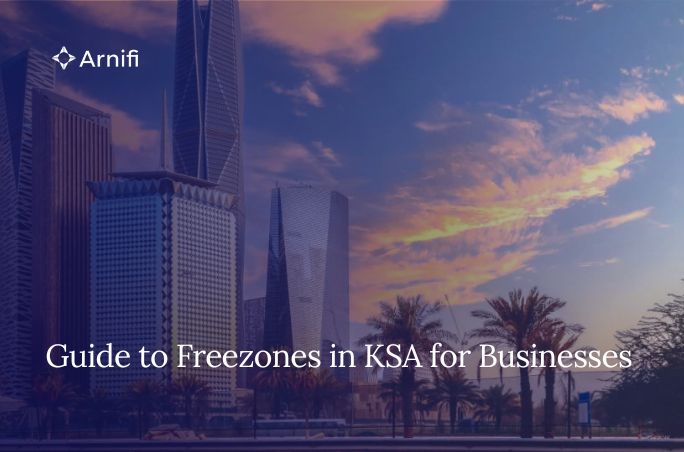
Table of contents
Saudi Arabia is undergoing rapid changes that impact its entire economic structure. Through Vision 2030, the Kingdom established freezones in KSA, which aim to attract worldwide investors and create an economy that operates beyond oil and creates a business landscape that supports competition.
The special economic zones of Saudi Arabia provide businesses with legal, financial, and operational advantages that surpass what they can achieve through standard operations on the mainland. The facility operates at a strategic location to provide support for essential industries, which include logistics, manufacturing, and technology development, and various service sectors.
The blog examines Saudi Arabia’s free zones by explaining their existence and available types, the business operations they enable, and essential investor advantages and actual business needs for organizations that intend to establish their operations in these high‑potential locations.
What Are Freezones in KSA?
Freezones in KSA function as special economic zones that implement business-friendly regulations that stand apart from the national business regulations in place across the country. The zones function through their customized systems, which enable businesses to establish operations by reducing regulatory obstacles and enabling tax exemptions, customs advantages, and ownership flexibility. The zones exist to bring in foreign direct investment, while they attract international corporations and assist domestic companies, and enable the Kingdom to participate in global trade and supply networks.
How Freezones in KSA Fit into Vision 2030
Vision 2030 functions as Saudi Arabia’s economic development program, which aims to decrease the Kingdom’s dependence on petroleum income while expanding the private sector and establishing an environment that fosters innovation and attracts foreign investors. Free zones operate as the primary foundation for this vision because they create an environment that enables different economic sectors to develop through the implementation of improved economic regulations.
Saudi Arabia uses its economic zones, which offer superior infrastructure and investor-friendly regulations and strategic location benefits, to establish itself as an international business center that connects markets from Asia to Europe and Africa.
Main Freezones in Saudi Arabia and Their Focus Areas
The freezone concept extends to multiple areas, but Saudi Arabia has established specific operational zones that develop their unique industrial focus areas and deliver distinct economic benefits. The freezones in KSA operate multiple facilities, which include logistics centers, manufacturing zones, and technology-based workspaces.
1. King Abdullah Economic City (KAEC)
The Red Sea coastal region in Makkah Province contains KAEC, which functions as a major free zone for the region. The facility supports industrial development through its framework, which promotes both trade activities and service operations. The area provides businesses with port access and import/export advantages to create a successful environment for automotive supply, light electronics, consumer goods, pharmaceuticals, and logistics operations.
2. Ras Al‑Khair Special Economic Zone
The Eastern Province of Arabia contains this zone, which focuses on industrial sectors that include shipbuilding, mining support, and industrial engineering. The facility provides a suitable working environment for companies that focus on raw material processing, metal production, and energy service delivery.
3. Jazan Special Economic Zone
The Jazan facility supports food processing and metal processing, and general industrial activities in its southwestern Saudi Arabian location. The facility uses its maritime location to enable efficient export processes and establish worldwide supply chain connections.
4. Cloud Computing & Informatics SEZ
The Riyadh-based zone serves as the operational center for businesses that provide digital services and cloud computing solutions. The facility provides operational assistance and tax advantages to companies that develop cloud computing solutions, operate data centers, and build AI and IT infrastructure.
5. Riyadh Integrated Logistics Zone (RILZ)
The free zone near Riyadh provides businesses with customs assistance while they operate within its access zone that connects to both trade routes and airports. The facility manages logistics operations, supply chain handling, e‑commerce storage, and worldwide transportation systems.
Types of Business Activities Supported in Freezones
Freezones in Saudi Arabia support all types of business activities that operate in the region. The zones support multiple industries through their dedicated resources and specialized incentive systems. The zones provide business opportunities for these common business types in their areas of operation:
Industrial and Manufacturing Firms
Industrial firms that operate production, assembly, and manufacturing work processes can decrease their tax obligations while gaining customs benefits through their location at key transportation hubs. The industrial functions of King Abdullah Economic City and Jazan make them suitable operational locations for industrial businesses.
Logistics and Supply Chain Businesses
The Integrated Logistics Zone offers seamless access to airports, highways, and freight facilities, which enables effective warehousing operations, distribution work, and fulfillment functions.
Technology and Digital Services
The Cloud Computing and Informatics SEZ provides support for IT services, cloud infrastructure, software development, and data center operations. The zones create a perfect business chance for technology startups and digital service providers who want to grow in the Middle East region.
Trade and Commercial Services
Businesses use free zones to conduct their import and export activities because these zones provide them with customs exemptions and their operational needs of building distribution networks and running business operations.
Support and Business Services
The freezone environment permits foreign ownership and simplifies regulatory procedures for business operations, which include professional services that provide consulting and logistics support, business process outsourcing, and market entry advisory services.
Key Advantages of Setting Up in a Freezone in Saudi Arabia
The Saudi Arabian freezone system provides multiple advantages that attract both international investors and domestic business owners to establish their operations in these regions.
100% Foreign Ownership
Free zones permit foreign investors to own their entire business operations, which differs from mainland businesses that require local partnerships for most companies. This enables international companies to maintain full control while enjoying operational independence.
Tax and Customs Incentives
Freezone companies typically receive substantial tax benefits, which include corporate tax exemptions for designated time periods and permission to conduct duty-free imports and exports of their goods.
Simplified Business Setup
The registration procedure for companies in these zones has been simplified because it now requires fewer regulatory obstacles and allows faster license acquisition. This enables companies to establish their presence in the market while decreasing their operational expenses.
Strategic Geographic Location
The free zones of Saudi Arabia are situated close to major ports and airports and trading corridors, which provide access to both regional and international markets. This advantage particularly benefits logistics companies, manufacturing businesses, and export-oriented enterprises.
World‑Class Infrastructure
Free zones offer advanced business resources, which include industrial parks, dedicated logistical centers, and technology infrastructure to help organizations run their business activities effectively.
Freedom to Repatriate Profits
The majority of free zones provide foreign investors with the option to move their profits and capital back to their home countries without any limitations on their ability to conduct financial transfers.
How Arnifi Supports Businesses in Freezones
The process of establishing operations in the KSA freezones proves to be challenging for foreign investors who must handle licensing and legal and regulatory processes. Arnifi provides expert guidance to simplify this process. Through the complete service of initial consultation and company registration, license processing, and visa management, and ongoing compliance support, Arnifi helps businesses save time and reduce operational risks while they concentrate on their business growth. Through their partnership with Arnifi, entrepreneurs can confidently enter the Saudi market while seizing all available opportunities in KSA freezones.
Conclusion
Businesses seeking expansion in the Middle East should consider the freezones located in KSA as an excellent business opportunity. The zones establish flexible work environments which attract both global businesses and local companies through their combination of economic incentives and contemporary infrastructure and strategically positioned locations and support for multiple industries.
The freezones of Saudi Arabia provide multiple business benefits which align with your operational requirements for manufacturing and logistics and tech services and global trade activities. Investors and entrepreneurs need to understand the operational mechanisms of each zone and the business activities they permit and the available incentives to make strategic decisions which will support their business development in a rapidly developing global business environment.
FAQs
1. What are freezones in KSA?
Special economic areas with business-friendly rules and incentives.
2. Who can set up a business in a Saudi freezone?
Foreign and local investors can establish companies with full ownership options.
3. What types of businesses are allowed in freezones in KSA?
Industrial, logistics, tech, trade, and service-oriented companies.
4. Are there tax benefits in freezones?
Yes, many zones offer tax exemptions and customs advantages.
5. Do businesses in freezones need a physical office?
Requirements vary by zone; some allow virtual offices while others need physical space.
Top UAE Packages


Related Articles
Top UAE Packages
Get in Touch