
Integrating the goAML Portal | The Mandatory Tool for Regulatory Reporting in the UAE

Shethana P
SEO Content Writer
Shethana specialises in creating content that simplifies complex business, compliance, and regulatory topics for global business incorporation. She focuses on SEO strategy, content accuracy,… Read more


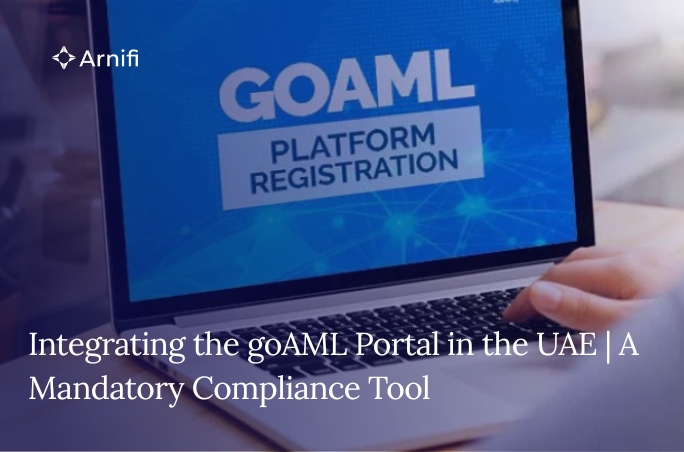
The goAML portal in the UAE is the digital gateway between your business and the UAE government’s anti-money laundering authorities. In simple terms, it is the official online system where companies must report suspicious clients, unusual activities, and questionable transactions. It is not optional. It is not symbolic. Under the UAE’s AML framework, the goAML portal is a mandatory legal requirement for Corporate Service Providers (CSPs) and other DNFBPs. It serves as the exclusive communication channel for reporting suspicious activity to the UAE Financial Intelligence Unit (FIU). For regulated businesses, mastering this platform is the line between operational excellence and the risk of heavy administrative sanctions.
The Legal Basis for goAML in the UAE
Compliance is a matter of law, not intent. Federal Decree-Law No. 20 of 2025 regarding AML/CFT anchors the mandatory use of the goAML portal, and Cabinet Decision No. 134 of 2025 further enforces it by detailing the reporting obligations for suspicious activities. For the UAE Financial Intelligence Unit (FIU), this portal is the primary conduit for financial intelligence; every submission is a critical contribution to national security, far exceeding a mere procedural formality. You are discharging a statutory duty. Each filing satisfies a DNFBP goAML obligation in the UAE and feeds into the national framework for detecting, analysing, and disrupting financial crime.
Who Must Register on the goAML Portal?
Is the goAML registration in the UAE optional for certain zones? Simply put: no. Whether you are a mainland entity or operating within a free zone, the mandate applies across the board.
Corporate Service Providers sit squarely within the DNFBP category. That classification carries a direct legal consequence: goAML registration in the UAE is a prerequisite for keeping your licence in good standing. Regulators treat non-registration as a compliance failure in its own right, even if you have not yet detected any suspicious activity.
While firms often leverage external consultants, legal liability for reporting remains solely with the Compliance Officer or the Money Laundering Reporting Officer (MLRO). You may delegate the administration of the task, but accountability is non-transferable. Regulators view a ‘placeholder’ MLRO not just as a weak link, but as a primary red flag that demands their immediate scrutiny.
What Must Be Reported? SAR vs STR
Confusion often arises when distinguishing between a Suspicious Activity Report (SAR) and a Suspicious Transaction Report (STR) reporting. The distinction between a SAR and STR to the UAE is not semantic. It is operational. Getting it wrong can distort your risk profile in the eyes of regulators.
- Suspicious Transaction Report (STR): Submitted when a transaction either completed or currently in progress displays clear indicators of illicit activity or money laundering.
- Suspicious Activity Report (SAR): You must submit this report when a client’s behaviour, background, or intent appears suspicious, even if the client has not finalized or attempted a specific financial transaction.
“Without Delay” | The Regulatory Clock
Understanding how to file SAR on goAML UAE within the legal timeframe often boils down to a single, high-stakes phrase: “without delay”. But here’s the catch for those hunting for a specific number of days in the statutes: there isn’t one. Instead, the UAE Financial Intelligence Unit (FIU) interprets “without delay” as absolute immediacy. If a regulatory inspection reveals your MLRO identified a red flag but sat on it for three weeks while “internally investigating,” you are likely already in breach. The FIU expects a report the moment a suspicion is solidified. What does this mean for you? Any gap in the reporting chain creates an opening for significant penalties for not filing SAR in the UAE.
The Filing Process and Safe Harbour Protection
Filing a SAR or STR is not a one-click exercise. If you want your report to stand up to regulatory scrutiny, you need to treat the goAML system as a structured compliance workflow.
Here’s how the process really works in practice.
- Step 1: Entity Profiling and Registration
- Step 2: User Roles and Access Controls
- Step 3: Internal Escalation and Case Preparation
- Step 4: Report Creation and Submission
- Step 5: Record Retention and Audit Trail
Business owners worry about tipping off clients. MLROs worry about being sued. Staff worry about personal liability. That anxiety leads to hesitation. Hesitation leads to late filings.
Here’s the legal reality. The UAE’s Safe Harbor provisions provide a robust legal shield, granting firms and individuals immunity from administrative, civil, and criminal liability for reports filed in good faith. However, this protection is not absolute; you forfeit it if you submit a report that is malicious, reckless, or grossly negligent.
Common Compliance Failures
Even with the goAML portal UAE active, firms often stumble during inspections. Common issues include:
- Inadequate Narratives: Providing a one-sentence summary that fails to explain why the activity is suspicious.
- Failure to Register: Assuming the parent company or a third party handles the portal registration.
- Over-reporting: Filing “defensive” reports on every client to avoid risk, which the FIU views as a failure of your internal risk assessment.
FAQs
1. Is registration on the goAML portal mandatory for CSPs in the UAE? Yes, it is a statutory requirement for all DNFBPs, including CSPs, regardless of their jurisdiction within the UAE.
2. What is the legal basis for using the goAML portal in UAE AML compliance? Federal Decree-Law No. 20 of 2025 and Cabinet Decision No. 134 of 2025 establish this mandate.
3. What is the difference between a Suspicious Activity Report (SAR) and a Suspicious Transaction Report (STR)? An SAR is filed when behaviour or circumstances are suspicious, even without a completed transaction. An STR is filed when an actual transaction has taken place and shows signs of illicit activity.
4. What does “reporting without delay” mean under UAE AML laws? It means filing as soon as a reasonable suspicion is formed. There is no fixed number of days. Unjustified internal delays are treated as regulatory breaches.
5. Who is responsible for filing SARs and STRs on the goAML portal? The designated MLRO or Compliance Officer remains legally accountable, even if external consultants assist with preparation or data entry.
6. Can a CSP be penalised for failing to register or report on the goAML portal? Yes. Failure to register or report can lead to heavy fines, suspension of the business license, or even criminal prosecution.
Conclusion
The goAML portal is not just a reporting tool. It is evidence of compliance. For UAE regulators, performance outweighs documentation. Compliance is measured by the speed of your escalations, the clarity of your documentation, and the precision of your goAML filings. In the eyes of the law, technical glitches, internal bottlenecks, and commercial sensitivities are never valid excuses for a failure to report. For Corporate Service Providers and other regulated entities, the correct use of goAML is now a frontline regulatory control. In today’s enforcement environment, intention is irrelevant. Execution is the ultimate measure of compliance. If your workflows are unclear, your MLRO is overstretched, or you have never stress-tested your reporting quality, now is the time to act
Top UAE Packages


Related Articles

Top UAE Packages
Get in Touch