
Understanding Malaysia Stamp Duty Self Assessment MyTax 2026

Anushka
Content Writer
Anushka Basu is a business content writer specialised in global business market insights. She aims to simplify complex regulatory, financial, and business concepts into… Read more


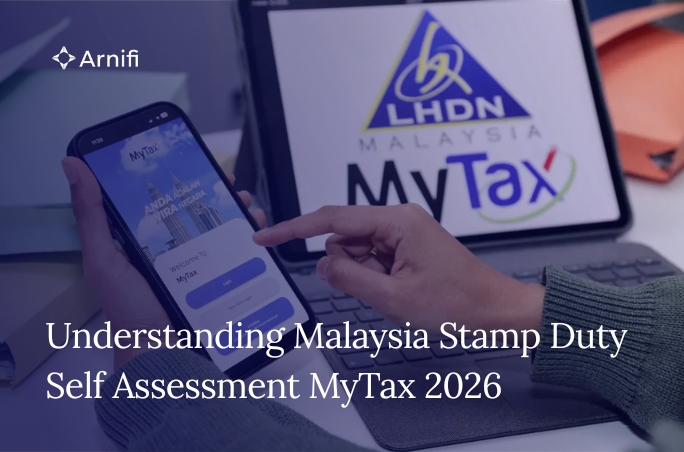
Malaysia’s stamp duty set-up is moving into one of its more serious compliance shifts in decades as the government is now officially switching toward a self-assessment model starting 1 January 2026. Basically, businesses, employers, legal teams, and taxpayers will end up being the people who calculate, declare, and pay stamp duty themselves through the MyTax platform, instead of just waiting for the old school assessment routine.
Table of contents
- Why is Malaysia moving to a self-assessment stamp duty system?
- What happens to the STAMPS portal after 2025?
- How does the stamp duty return MyTax Malaysia process work?
- Could businesses face higher audit risks under self-assessment?
- What changes apply to employment contracts?
- Why are businesses preparing earlier for the transition?
- Could penalties increase under the new system?
- FAQs
- Conclusion
Why is Malaysia moving to a self-assessment stamp duty system?
The Malaysia stamp duty self-assessment MyTax 2026 arrangement is part of a bigger plan: to digitise tax administration and make compliance faster. Before this, taxpayers would send documents over so LHDN officers could adjudicate and assess, and then the stamp duty would be determined. Now, under the new framework, taxpayers or appointed agents have to work it out on their own, then declare the duty amount via MyTax. The rollout is expected to be gradual between 2026 and 2028, depending on what document types are involved. So, the change is expected to hit:
- Businesses
- HR departments
- Legal firms
- Property transactions
- Corporate agreements
For lots of companies, this feels like a real change in the internal compliance mindset, because responsibility is no longer outside in the same way.
What happens to the STAMPS portal after 2025?
One of the more noticeable operational changes is that the STAMPS portal will be discontinued as of December 2025 transition will effectively move users fully to MyTax and the new e-Duti Setem (e-DS) module. Under the updated method, it roughly looks like this:
| Previous System | New System From 2026 |
| STAMPS portal | MyTax e-Duti Setem |
| LHDN officer assessment | Self-assessment by the taxpayer |
| Manual adjudication | Digital filing and payment |
| Assessment notice issued | Deemed assessment upon submission |
So, the STAMPS portal’s December 2025 transition means companies should start thinking about a much more hands-on, self-managed compliance environment now. If a business has been running mostly manual processing, it may need operational tweaks during the transition window.
How does the stamp duty return MyTax Malaysia process work?
The stamp duty return MyTax Malaysia workflow generally requires taxpayers to sign in to MyTax, upload relevant documents, complete declaration documents, and then calculate the duty payable themselves, directly in the system. In general, the flow involves:
- Tax Identification Number (TIN) registration
- Uploading chargeable instruments
- Choosing the instrument category
- Self-calculating stamp duty
- Submitting returns electronically
Once businesses submit a return, the system automatically raises the assessment under the self-assessment framework.
Overall, the MyTax Malaysia stamp duty return process shortens stamping timelines while placing greater accountability on taxpayers.
Could businesses face higher audit risks under self-assessment?
Yes, and that’s one of the major issues people keep raising. The self-assessment stamp duty 5-year audit conversation is getting more important lately, because businesses will now have to make sure classification and duty calculation are correct themselves. In this self-assessment setup, LHDN is expected to be more focused on:
- Incorrect classifications
- Underpayment of duty
- Late filings
- Missing documentation
- Valuation mismatches/valuation discrepancies
That’s why a lot of companies are already pumping up internal checks, as if a self-assessment error happens, penalties and reassessment exposure may still come up years later.
The self-assessment stamp duty 5-year audit risk is even more relevant for firms handling heavy document volumes across HR, leasing, finance, and procurement.
What changes apply to employment contracts?
There’s one clear update involving the stamp duty employment contract RM3,000 threshold rule. Starting 1 January 2026, employment contracts where the monthly remuneration is below RM3,000 may be exempt from stamp duty obligations.
The stated intention is to reduce compliance burden for lower-income employment situations, while also simplifying administrative tasks for employers. Still, employment agreements above the RM3,000 stamp duty threshold may still need proper stamping and filing under the new framework.
For HR departments managing lots of staff, this is operationally important because employment contract compliance may face more attention during audits.
Why are businesses preparing earlier for the transition?
Many businesses are reviewing internal workflows now, since the Malaysia stamp duty self-assessment MyTax 2026 framework increases taxpayer responsibility in a very direct way. Companies are looking at things like:
- Contract management systems
- Internal approval workflows
- Payroll document processes
- Legal documentation procedures
- Stamp duty classification controls
If businesses previously relied on external adjudication, they may now need tighter internal compliance coordination between finance, HR, and legal teams. That’s extra important for businesses dealing with:
- Lease agreements
- Employment contracts
- Financing documents
- Service agreements
- Share-related instruments
Could penalties increase under the new system?
Yes. Penalties for late stamping, incorrect submissions, and underpayment remain real risks under the self-assessment framework. LHDN has already signalled that it will strengthen compliance enforcement and audit monitoring as things move forward. So businesses that don’t manage compliance carefully could face:
- Late payment penalties
- Additional duty assessments
- Audit reviews
- Documentation disputes
In other words, the shift toward digital self-assessment makes recordkeeping and internal review much more important than they used to be.
FAQs
What is Malaysia stamp duty self assessment MyTax 2026?
It is Malaysia’s new self-assessment stamp duty setup, starting from 1 January 2026.
Is the STAMPS portal discontinued in December 2025?
Yes, the platform moves over fully to MyTax and the e-Duti Setem platform.
What is the stamp duty return MyTax Malaysia process?
Taxpayers need to self-work out the amounts, declare and then send the stamp duty return online via MyTax.
What is the self-assessment stamp duty 5 year audit concern?
For companies, there is a real chance of audits later on if the stamp duty computations or the way documents are classified are done incorrectly.
What is the stamp duty employment contract RM3,000 threshold?
If an employment contract has a monthly remuneration of under RM3,000, it may fall under a stamp duty exemption.
Conclusion
The Malaysia stamp duty self-assessment MyTax 2026 transition feels like a big change in how businesses handle document stamping duties. Starting with the STAMPS portal discontinued on the December 2025 shift, filing is now more digital, with MyTax as the main route.
In this self-assessment world, taxpayers are expected to compute, manage, and control stamp duty obligations far more on their own. And since audit risk, filing duties, and day-to-day operational exposure rise, companies are tightening internal controls and compliance processes before implementation. For those moving through this change, structured support via Arnifi can help. Be it document review, stamp duty reporting, or the digital filing workflow going ahead, everything is handled professionally. Reach out to us at Arnifi today!
Top UAE Packages


Related Articles


Top UAE Packages
Get in Touch