
Family Business Succession in Hong Kong | Tax-Efficient Wealth Transfer

Ishika Bhandari
Content Writer
Ishika Bhandari is a content writer with experience in creating SEO-focused content across diverse industries, including business, lifestyle, and jewellery. She specializes in turning… Read more


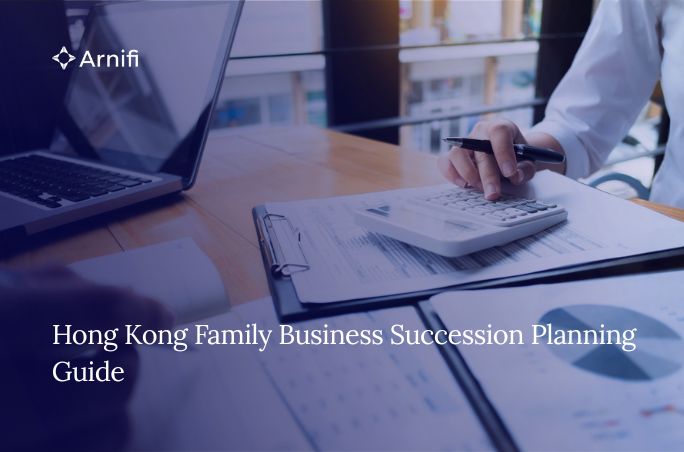
Hong Kong family business succession planning usually starts late. The founder is still signing bank documents, approving supplier payments, handling family decisions and keeping the business moving. Then one health issue, marriage dispute, shareholder disagreement or second-generation handover can expose how fragile the structure is. Succession is not only about passing wealth to the next generation. It is about keeping control clear, tax exposure manageable and the business stable when the founder is no longer the only decision-maker.
Table of contents
Why Succession Planning Matters In Hong Kong?
Hong Kong is often seen as friendly for family wealth because it does not have estate duty for deaths occurring on or after 11 February 2006. IRD also states that no estate duty affidavits or clearance papers are needed for grant of representation applications in those cases.
That helps, but it does not solve succession on its own. A family can still face delay if shares are held personally, company records are unclear, bank mandates depend only on one person or heirs disagree on who should run the business.
Tax-efficient succession is not only about paying less tax. It is also about avoiding forced share transfers, rushed valuations, blocked bank access and unclear authority after a founder’s death or retirement.
Start With Ownership Before Tax
Many family businesses in Hong Kong have a simple shareholding pattern at the beginning. The founder owns the operating company directly. A spouse may hold shares. Children may be added later. Sometimes a sibling or early investor stays on the register long after they stopped helping the business.
That setup may work for daily operations, but it becomes weak for succession. If the founder wants one child to manage the company and another to receive investment income, direct shareholding may not give enough control. If the business has Mainland China subsidiaries, property, bank loans or offshore entities, a personal share transfer can become even harder.
A better first step is an ownership map. List the operating company, subsidiaries, property assets, investment accounts, loans, guarantees, shareholder agreements and bank signatories. Then decide which assets need business continuity and which assets are mainly family wealth.
Succession Structures At A Glance
| Structure | Best Use | Tax And Control Point |
| Direct Share Transfer | Simple family transfer where ownership is not complex | Hong Kong stock transfers may trigger stamp duty and valuation checks |
| Holding Company | Separates family ownership and operating business control | Useful when several businesses or subsidiaries sit under one family group |
| Family Trust | Helps separate legal ownership, control rules and beneficiary interests | Works best when the trust deed and governance letter are clear |
| Family Office | Manages investment assets, reporting and family decision support | May fit larger families with investment portfolios and multi-generation planning |
| Shareholders’ Agreement | Controls voting, exits, disputes and transfer limits | Important when family members have different roles in the company |
| Will And Estate File | Supports personal asset transfer after death | Should match company records, trust papers and banking arrangements |
Estate Planning Hong Kong Tax-Efficient Does Not Mean Tax-Free
Estate planning Hong Kong tax-efficient work should be careful with the word “tax-efficient.” Hong Kong has no estate duty and does not tax capital gains as a separate tax category. IRD states that Hong Kong does not tax capital gains and capital-nature onshore equity disposal gains are not subject to profits tax.
Still, tax costs can appear in other places. A transfer of Hong Kong stock by gift can be charged at HK$5 plus 0.2% of the stock value. GovHK also lists contract note duty for Hong Kong stock at 0.1% on the sold note and 0.1% on the bought note.
For a family company, this matters because a “simple gift” of shares may still need stamping. If the company owns property, subsidiaries or valuable operating assets, the share value needs proper support. A low transfer price between family members will not always remove duty concerns.
Hong Kong Trust Succession Planning
Hong Kong trust succession planning can help when a family wants continuity without handing full control to the next generation at once. A trust can hold shares or investment assets while the trust deed sets out how trustees should act and how beneficiaries may receive benefits.
This can be useful when children are still young, siblings have different business skills or the founder wants voting control to remain structured. It can also help when the family wants to separate business control and economic benefit.
Hong Kong modernised its trust law through the Trust Law (Amendment) Ordinance 2013, which commenced operation on 1 December 2013. The official announcement also noted statutory controls on trustee exemption clauses for new trusts and later application for existing trusts.
A trust should not be treated like a form downloaded at the last minute. The family needs to think through trustee powers, protector rights, replacement rules, voting instructions, distribution policy and conflict handling.
HK Family Office Succession Structure
An HK family office succession structure is usually more relevant when the family has significant investment assets, several entities, international holdings or a need for formal reporting.
Hong Kong has a profits tax concession regime for eligible family-owned investment holding vehicles or FIHVs, managed by eligible single family offices. IRD states that the concession applies to qualifying and incidental transactions for years of assessment starting on or after 1 April 2022, subject to the regime’s conditions.
The rules are not casual. IRD says the FIHV must be normally managed or controlled in Hong Kong, managed by an eligible single family office and meet substantial activity requirements. The aggregate value of specified assets managed by the eligible SFO for the family’s FIHV or FIHVs must be at least HK$240 million.
For families below that level, a formal family office may be unnecessary. A simpler holding company, trust, shareholders’ agreement and reporting process may work better.
Generation Transfer Family Business HK
Generation transfer family business HK planning should deal with two questions separately. Who owns the wealth? Who runs the business?
Sometimes the eldest child inherits shares but does not want to manage operations. Sometimes one sibling works inside the business while others expect dividends. Sometimes the founder wants to keep voting control but start transferring economic value.
These issues should be written down. A family charter, board structure, dividend policy, employment rules for family members and exit rules can prevent emotional disputes later. This is especially useful when in-laws, cousins or third-generation members begin entering the picture.
Conclusion
Family business succession in Hong Kong can be tax-efficient, but it still needs structure. No estate duty helps, but it does not replace ownership planning, trust design, stamp duty review or governance rules. The strongest succession plans are built before pressure appears. A clear structure protects the business, gives family members fewer reasons to dispute and helps wealth move with less friction.
Arnifi helps Hong Kong families organise these moving parts so wealth transfer decisions stay practical, properly documented and easier for the next generation to follow.
FAQs:
1. Does Hong Kong Have Estate Duty?
No. Estate duty was abolished for deaths occurring on or after 11 February 2006.
2. Is A Family Business Share Gift Tax-Free In Hong Kong?
Not always. A gift of Hong Kong stock can still attract stamp duty based on the stock value.
3. Can A Trust Help With Family Business Succession?
Yes. A trust can help manage control, distributions and beneficiary rights, but the trust deed must be drafted carefully.
4. When Does A Hong Kong Family Office Structure Make Sense?
It usually makes sense when the family has sizable investment assets, several entities, cross-border holdings and a need for formal reporting.
Top UAE Packages
Related Articles

Top UAE Packages
Get in Touch
