
FATF High-Risk Countries | A Practical Guide for Businesses in Mauritius


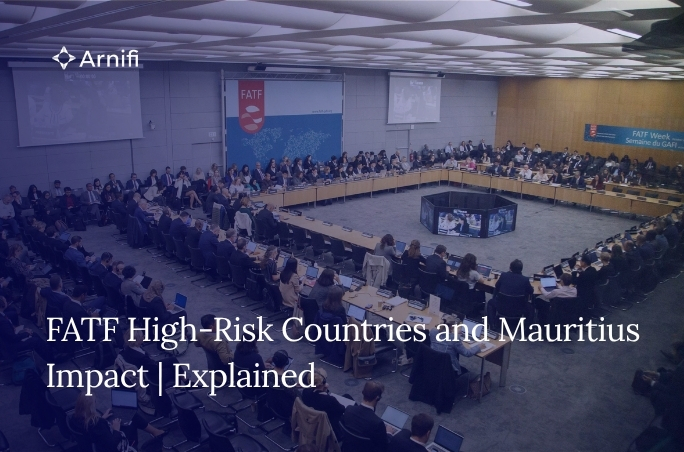
Financial Action Task Force (FATF) high-risk countries influence how the businesses in Mauritius operate, especially when money moves across borders. Transactions that are linked to such jurisdictions face delays, deeper scrutiny & sometimes rejection. This shifts how companies approach compliance, partnerships & growth. Concepts like enhanced due diligence, FATF Mauritius are no longer optional as steps are tucked inside compliance teams. They shape everyday business decisions. This article breaks down what these classifications mean, how they affect operations in Mauritius & what practical steps help to manage the pressure without slowing the progress. The aim is to make a complex topic easier to understand and apply.
Introduction
Any business connected to international clients, investors, or payments needs a clear view of how FATF high-risk countries fit into its risk landscape. This is not abstract policy talk. It shows up in slower transactions, more questions from banks, and tighter compliance expectations. Mauritius sits at a point where global standards and business ambition meet. Ignoring this connection tends to create friction later. If businesses understand it early, it keeps their operations easier and decisions more controlled.
What Are FATF High-Risk Countries And How Are They Identified?
FATF high-risk countries are jurisdictions that are flagged for serious gaps in preventing money laundering and terrorist financing. These lists come from the Financial Action Task Force & they carry weight far beyond policy circles.
Once a country appears on this list, global financial institutions adjust quickly. Risk teams tighten controls. Transactions linked to those regions are reviewed more closely.
There is also a distinction between jurisdictions under monitoring and those considered high risk. The latter category triggers the strongest response from banks and regulators. For businesses, the label alone can change how a transaction is treated, even before details are reviewed.
Why Do FATF High-Risk Countries Directly Affect Businesses in Mauritius?
Mauritius operates as a gateway for international investment and cross-border structuring. Because of that, it remains closely aligned with global compliance expectations.
When FATF high-risk countries enter the picture, financial institutions in Mauritius respond immediately. Payments may pause for review. Documentation requests increase. In some cases, relationships are reconsidered.
This does not mean business stops. It means the environment becomes stricter. Every transaction is connected, even indirectly & carries more weight in terms of explanation and proof.
How Do These Classifications Impact Day-to-Day Operations?
The impact builds gradually. A routine payment takes longer than expected. A new client onboarding process stretches because additional checks are required. Internal teams spend more time answering compliance queries than focusing on growth.
These are not isolated incidents. They become patterns when exposure to higher-risk jurisdictions exists.
Operationally, three areas feel the pressure most:
- Onboarding timelines extend
- Transaction approvals slow down
- Compliance costs increase
None of this is dramatic on its own, but together it affects momentum.
What Is Enhanced Due Diligence FATF Mauritius and When Does it Apply?
Standard checks no longer cover everything when higher-risk jurisdictions are involved. That is where enhanced due diligence FATF Mauritius comes in.
This process goes deeper. It looks at the origin of funds, the structure of ownership, and also the intent behind transactions. It also requires ongoing monitoring rather than one-time verification.
In Mauritius, this approach aligns with a risk-based framework. More risk leads to more scrutiny. That is the principle regulators expect businesses to follow.
The shift here is practical. Compliance is not just about ticking boxes. It is about understanding the full picture behind financial activity.
What Risks Are Often Underestimated?
Indirect exposure is one of the biggest blind spots.
A business may not operate in a high-risk jurisdiction but could still have clients, partners, or suppliers who do. That connection alone can trigger enhanced checks.
Another overlooked factor is reputation. Associations with FATF high-risk countries can influence how partners and financial institutions view a business, even when everything is legitimate.
There is also a tendency to rely too heavily on banks to manage risk. In reality, responsibility starts within the business. Clear records and strong internal processes make a noticeable difference.
How Can Businesses Manage This Without Slowing Down Growth?
Avoiding risk entirely is not practical. Managing it well is what matters.
Strong internal systems come first. Documentation should be consistent and easy to access. Decision-making processes should be clear.
Understanding what banks expect also helps. When requirements are anticipated, interactions become smoother.
Technology can support this by tracking transactions and flagging unusual patterns early. It reduces manual effort and improves response time.
The broader shift is mindset. Compliance should sit alongside business strategy, not behind it. That is how operations stay efficient even when dealing with FATF high-risk countries.
What Does This Mean For Mauritius As a Financial Centre?
Mauritius has built its position on trust and regulatory alignment. That reputation depends on how well businesses and institutions respond to global standards.
The presence of FATF high-risk countries in global discussions raises the bar for everyone involved. Investors look for clarity and consistency. Regulators expect accountability.
For businesses, this creates an opportunity as well. Strong compliance signals reliability. It builds confidence with partners and supports long-term relationships.
Where Does Arnifi Come In?
Compliance can feel heavy when handled without structure. Requirements evolve & internal teams often spend more time reacting than planning.
Arnifi focuses on making this process manageable. From setting up clear frameworks to supporting enhanced due diligence FATF Mauritius requirements, the approach stays practical.
The idea is not to overcomplicate things. It is to create systems that work consistently, even as expectations change. This allows businesses to stay compliant while keeping operations steady.
Conclusion
FATF high-risk countries shape more than regulation. They influence how businesses move money, build partnerships & plan growth.
The challenge is of staying aligned with the global expectations while keeping business fluid for Mauritius. That balance depends on awareness and early action.
Clear processes, better understanding & the right support make a difference. Arnifi helps to translate these requirements into steps that actually work, w businesses to move forward with clarity instead of hesitation.
FAQs
What are FATF high-risk countries?
Jurisdictions identified for major AML and CFT weaknesses.
Why do they affect Mauritius businesses?
They trigger stricter checks on transactions and relationships.
What is enhanced due diligence FATF Mauritius?
A deeper level of verification for higher-risk financial activity.
Can indirect exposure create issues?
Yes, even second-level connections can raise compliance concerns.
Is compliance always a slowdown?
Not when built into processes early and handled strategically.
Top UAE Packages


Related Articles
Top UAE Packages
Get in Touch