
Top 15 High-Growth Business Opportunities in Oman for 2026

Zahira Shaik
SEO Content Writer
Zahira Shaik is an SEO Content Writer and Published Author specializing in research-based content. She excels at analyzing market trends, regulations, and industry developments… Read more

Tulika Saxena
AVP, Sales & Marketing | IIM Nagpur
Tulika Saxena specializes in business finance, sales strategy, and market positioning. Leads growth and partnerships, ensuring seamless business setup experiences and client success across… Read more


Business opportunities in Oman are expanding rapidly as the Sultanate undergoes a significant economic transformation. With the government’s efforts in diversification of economy and infrastructure development, Oman is shifting away from its dependence on crude oil. Oman provides a good business opportunity for investors and entrepreneurs because of its stability.
Table of contents
- Why Is Oman a Promising Market for Business Opportunities in 2026?
- What Are the Top Government-Backed Business Opportunities in Oman?
- What Are the High-Demand Technology and Digital Business Opportunities in Oman?
- What Are the Best Consumer, Lifestyle, and Specialized Business Opportunities in Oman?
- What Are the Key Benefits of Starting a Business in Oman?
- How Do You Choose the Right Business Opportunity in Oman?
- What Challenges Do Foreign Entrepreneurs Face When Setting Up a Business in Oman?
- Frequently Asked Questions
- How Can You Start Your Business in Oman With Arnifi?
Why Is Oman a Promising Market for Business Opportunities in 2026?
The momentum of Oman’s economy comes from the country’s state strategies and regulations.
- Oman Vision 2040 and Economic Diversification: Vision 2040 is the state policy aimed at transforming the country into an economy based on the use of technologies. The goal is to raise the contribution of non-oil industries to over 90% of GDP.
- Growing Focus on Non-Oil Industries: The government invests in the growth of various non-oil industries, including manufacturing, logistics, tourism, technology, and agriculture.
- Strategic Location Between Asia, Africa, and Europe: Oman is situated outside the Strait of Hormuz, which makes it a natural gateway for trading between three continents.
- Increasing Demand for Technology and Digital Services: Modernization programs in the public and private sectors lead to the increasing demand for enterprise solutions, digital security, and automation services.
- Growth in Key Consumer & Industrial Sectors: The rapid growth of urban areas and population leads to increased demand in healthcare, specialty catering, logistics, and retail.
- Emerging Gaps for New Businesses: Market gaps in specialized software, specialty healthcare services, specialty consumer products, and downstream processing provide many business opportunities.
What Are the Top Government-Backed Business Opportunities in Oman?
In line with Oman Vision 2040, these capital-intensive and strategic sectors have policies backed by long-term leases for land and easy approval procedures.
1. Renewable Energy and Green Hydrogen
- Solar & Wind Energy: Setting up commercial-scale solar energy projects and onshore wind energy projects.
- Green Hydrogen Derivatives: Manufacturing and processing of emissions-free green hydrogen derivatives.
- Green Technology-Based Clean Energy Projects and Exports: Integration of green technology in clean energy projects along with export purposes.
2. Logistics, Shipping, and Supply Chain
- Maritime Transport & Freight: International sea freight operations, feeder lines, and cold chain shipping logistics.
- Warehousing & Logistics: State-of-the-art warehouses along with inventory control solutions.
- Development in Sohar, Salalah, and Duqm: Port-related development opportunities leveraging the huge investment in infrastructure.
- Trade Connectivity between Asia, Africa, and Europe: Intermodal hub networks enabling bulk transit across borders.
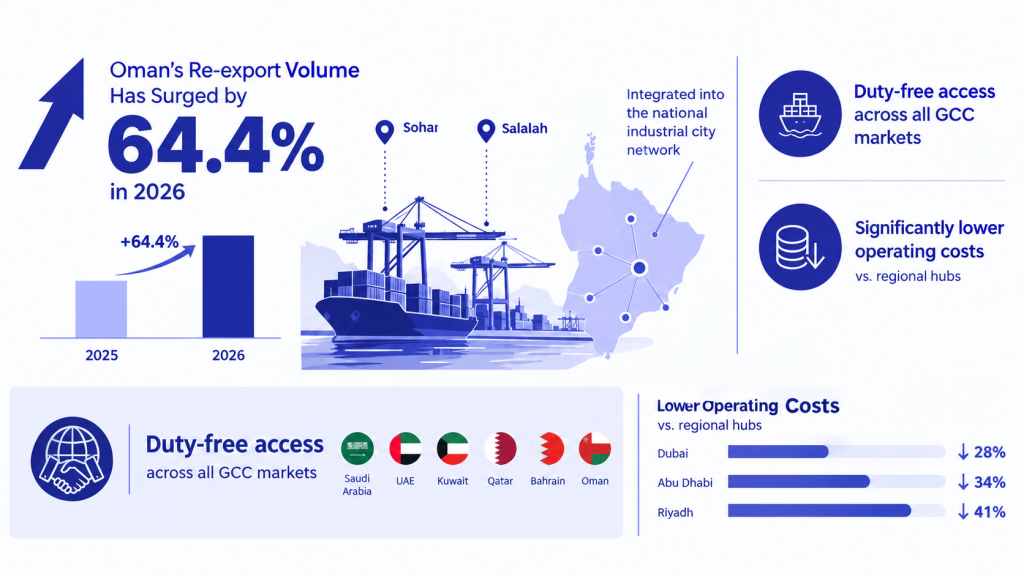
Oman’s re-export volume has surged by 64.4% in 2026, driven by major ports like Sohar and Salalah integrated into the national industrial city network. Businesses benefit from duty-free access across all GCC markets with significantly lower operating costs compared to regional hubs like Dubai, Abu Dhabi, or Riyadh.
3. Tourism, Luxury Hospitality, and MICE
- Luxury Resort Properties: Upscale boutique hotels, wellness centers, and business-oriented beach resorts.
- Ecotourism and Adventure Tourism: Mountain resorts, desert safaris, and ecologically certified beach resorts.
- Heritage and Cultural Tourism: Historical tours, heritage-based shopping, and cultural centers.
- MICE Infrastructure: First-rate convention centers, event management software, and exhibit management.
4. Advanced Manufacturing and Downstream Processing
- Industries Related to the Petrochemical Industry: Production of polymers, specialty chemicals, and plastic derivatives.
- Aluminum Industries and General Manufacturing: Metal refining, car components, and machine assembly.
- Construction Material Industries: Ecological concrete, prefabrication modules, and structural steel.
- Downstream Processing: Refining of raw material extraction to create industrial goods for export.
Under the Kafa’a Lean Manufacturing Programme, participating factories achieve up to OMR 360,000 in annual operational savings through waste reduction and capacity improvements. Starting with 9 factories in Phase 1 and scaling to over 60, this initiative opens high-value advisory and lean consulting opportunities.
5. Mining and Mineral Processing
- Copper: Extraction, smelting, and refining of commercial copper deposits.
- Chromite: High-density extraction for metallurgical processing.
- Gold: Advanced mineral prospecting and precious metal processing.
- Gypsum: Industrial supply chain sourcing for export wallboard and plaster manufacturing.
- Silica: Glassmaking grade silica harvesting and industrial refining.
- Mineral Extraction and Processing: Processing raw materials locally to capture added market value before global export.
What Are the High-Demand Technology and Digital Business Opportunities in Oman?
While traditional businesses in the region are being modernized through digitization, the high-tech industries provide low-cost opportunities and scalability for foreign technology entrepreneurs.
6. ICT, Data Centers, and Cloud Services
- Data Center Infrastructure: Secure and localized server hosting and colocation facilities.
- Cloud Services: Multi-cloud integration, private cloud hosting, and enterprise SaaS services.
- Cybersecurity: Threat detection, penetration testing, and regulatory compliance advisory.
- Smart-City Technology: Municipal and grid surveillance solutions and urban mobility software.
- Digital Transformation Consulting: Legacy IT infrastructure modernization services for Omani public and private organizations.
7. Local Online Payment Gateways
- Localized Payment-Processing Solutions: Multi-currency payment gateways for local Debit/Knet and credit card payment networks.
- E-Commerce Payment Infrastructure: Seamless integration, subscription billing capabilities, and fraud prevention services.
- Solutions Tailored to Omani Businesses: Easy-to-implement checkout services customized for Omani SMBs and micro-businesses.
8. App-Based Food and Grocery Delivery
- Food Delivery Platforms: Local restaurant aggregators with real-time driver location tracking.
- Grocery Delivery: Fast commerce micro-fulfillment centers ensuring fast and door-to-door deliveries.
- On-Demand Consumer Services: Mobile apps for laundry, home maintenance, and on-demand cleaning services.
- App-Based Logistics Networks: App-based last-mile delivery networks for regional SMBs.
9. Digital Mapping and Property Addressing Solutions
- Digital Address Systems: Centralized geospatial addressing systems for urban & suburban master developments.
- Property Mapping: Detailed cadastral addressing and aerial survey services with drones.
- Logistics Tracking: Fleet routing software with address coordinate information.
- Addressing Solutions for Developing Areas: Digital addressing with pinpoint technologies for new areas.
10. Enterprise AI and Business Automation
- AI-Powered Customer Management: Conversational AI, automated tickets & localized chatbots with Arabic NLP.
- Workflow Automation: Robotic Process Automation (RPA) for finance, operations, and HR administration.
- Automated Sales Funnels: Automated lead scoring, CRM, and sales funnels for mid-level companies.
- Digital Transformation for SMEs: Turnkey business automation services for SMEs.
Oman is actively assessing 60 factories using the Smart Industry Readiness Index to evaluate automation, AI, connectivity, supply chain management, and workforce readiness. Every factory assessment yields a precise gap analysis, creating direct procurement opportunities and technology integration contracts for B2B tech providers.
What Are the Best Consumer, Lifestyle, and Specialized Business Opportunities in Oman?
Changes in demographics, disposable income, and urbanization have continued to drive consumer demand in retail, healthcare, and the dining industry.
11. Modern Agriculture and Commercial Aquaculture
- Technology-Enabled Farming: Vertical farming systems, hydroponics, and precise drip-irrigation systems.
- Sustainable Agriculture: Organic food production and eco-friendly soil fertilization practices.
- Commercial Aquaculture: Controlled land-based and offshore fish/shrimps farming.
- Fish Processing: Seafood processing, packaging, and exportation processes.
- Food-Security-Related Opportunities: Local food production initiatives that aim to eliminate imports of basic foods
12. Specialized Healthcare and HealthTech
- Specialized Clinics: Outpatient specialty clinics for orthopedic, dental, and cosmetic treatment.
- Medical Equipment: Supply of advanced diagnostic devices, laboratory equipment, and surgical supplies.
- Healthcare Technology: Hospital Management Systems (HMS) and Electronic Health Records.
- Digital Health Solutions: Telemedicine booking portals and telemonitoring patient services.
13. Niche and Culturally Diverse Restaurants
- Japanese and Sushi Concepts: High-end sushi bars, omakase and contemporary Asian fusion concepts.
- Italian Restaurants: Artisanal family-style pizzeria and fresh pasta concepts.
- Spanish Cuisine: Authentic tapas lounge and Mediterranean specialty restaurants.
- Caribbean Cuisine: New flavor introductions through street-food and casual concepts.
- Specialized Rather Than Generic Concepts: Custom-designed food experiences tailored to ensure maximum customer engagement.
14. Experiential Dessert and Beverage Businesses
- Social-Media-Friendly Concepts: Innovative food design, interactive desserts, and boutique interior spaces.
- Specialty Desserts: French patisserie, artisanal ice cream shops, and high-end bakeries.
- Innovative Beverages: Specialty cold brews, boba tea, and botanical beverages.
- Youth and Family-Oriented Experiences: Social spaces for youth interaction and entertainment.
15. E-Commerce and Digital Retail
- Apparel: Direct-to-consumer fashion apparel, modest fashion brands, and sportswear.
- Beauty and Wellness: Organic skincare, specialty cosmetics, and personal care digital stores.
- Travel-Related Products and Services: Travel luggage, outdoor adventure gear, and automated reservation services.
- Specialized Online Stores: Hobbies, electronics, and pet care online marketplaces.
What Are the Key Benefits of Starting a Business in Oman?
The Omani government offers foreign investors competitive legal and financial incentives to build and scale regional operations.
100% Foreign Ownership
According to Omani law on foreign capital investment, foreign investors are allowed to own 100% of their business ventures in all business areas except for a few sectors.
Competitive Corporate Tax Environment
Oman has maintained a corporate tax rate of 15%, which is reasonable and transparent, in comparison to other regions with higher taxes.
Free Zone and Special Economic Zone Incentives
Running operations from special economic zones or free zones (Duqm, Sohar and Salalah) would bring many benefits.
Tax Holidays and Customs Benefits
Businesses running their operations in the economic zones will have access to exemptions from corporate taxes and customs duties on the import of capital equipment and raw materials and the export of their products.
Repatriation of Capital and Profits
Foreign entities are free to repatriate their capital and profits to their countries without any restrictions regarding foreign exchange control.
How Do You Choose the Right Business Opportunity in Oman?
Selecting the optimal entry path depends on your target market, startup capital, technical expertise, and operational scale.
| Decision Matrix | Strongest Alignment with Vision 2040 | Higher Initial Investment | Tech-Entrepreneur Centric | Smaller Initial Entry |
| Top Sector | Green Energy, Logistics, Aquaculture | Heavy Manufacturing, Mining, Hotels | ICT, Payment Gateways, Enterprise AI | E-Commerce, Niche Dining, Specialized SaaS |
| Capital Scale | ~$500k to $10M+ | ~$1M to $50M+ | ~$50k to $500k | ~$10k to $100k |
| Target Setup | Free Zone / SEZ (Duqm/Sohar) | Free Zone or Industrial Mainland | Mainland / Free Zone (Tech Parks) | Mainland Commercial |
What Challenges Do Foreign Entrepreneurs Face When Setting Up a Business in Oman?
The following are possible challenges to foreign entrepreneurs in their efforts to establish a business in Oman:
- Corporate Structuring: Inappropriate selection of activity codes or structures may hinder further business development or require additional licenses to be issued.
- Licensing and Incorporation: Going through the process of multiple approvals with MOCIIP, the Ministry of Labor, and Municipality Authorities.
- Visa Processing: Preparing visa documentation in accordance with strict formatting regulations for investors, partners, and employees’ residence permits.
- Banking Setup: Compliance with strict banking regulations for corporate bank account opening.
- Accounting and Tax Requirements: Organizing corporate accounting that conforms to Omani VAT and corporate regulations.
- Document Attestation: Getting certified by the Embassy and MOFA for any international corporate documentation.
- Ongoing Compliance and Renewals: Managing multiple schedules for municipal, union, and business renewals and compliance.
Frequently Asked Questions
What Are the Most Profitable Business Opportunities in Oman?
Some profitable industries in Oman are renewable energy solutions, specialized IT and AI automation, specialized outpatient healthcare, last-mile delivery services, and unique F&B concepts.
Is Oman a Good Place to Start a Business in 2026?
Yes. The country is characterized by excellent economic stability, growing free zones, Vision 2040, and a good foreign business ownership environment.
Can Foreigners Own 100% of a Business in Oman?
Yes. As per the Foreign Capital Investment Law, foreigners can wholly own commercial entities in a large number of economic sectors without a local partner.
What Are the Best Industries to Invest in Oman?
Top sectors in Oman include renewable energy, green hydrogen, logistics, tourism, manufacturing, ICT, agriculture, and healthcare.
How Much Does It Cost to Start a Business in Oman?
There are different costs, which depend on the type of activity, legal form, and geographical arrangement (Mainland or Free Zone).
What Are the Best Free Zones and SEZs in Oman?
There are several main free zones in Oman: the Special Economic Zone at Duqm (SEZAD), Sohar Free Zone, Salalah Free Zone, and Al Mazunah Free Zone.
What Taxes Do Businesses Pay in Oman?
In Oman, there is a regular tax rate of 15%, applied to commercial profit. There is also a Value Added Tax of 5%. Free Zone companies can have tax holidays.
Can Foreign Entrepreneurs Hire Employees in Oman?
Yes. Foreign companies have the right to employ both foreign and local workers, as long as they meet Omanization quotas.
How Can You Start Your Business in Oman With Arnifi?
Oman presents clear commercial growth opportunities across heavy industrial sectors, software tech, and high-demand consumer markets. Capitalizing on these emerging gaps requires choosing the right legal activity, selecting an optimal business structure, and remaining compliant with domestic regulations.
Arnifi serves as your strategic operational partner, providing software solutions and advisory support for entity setup, banking, HR, legal execution, and ongoing regulatory compliance.
Ready to launch your business in Oman? Use the Arni Cost Calculator to estimate your custom setup expenses instantly!
References
- Oman Vision 2040 Implementation Follow-up Unit: https://www.vision2040.om
- Ministry of Commerce, Industry and Investment Promotion (MOCIIP – Invest Easy Portal): https://www.investeasy.gov.om
- Public Authority for Special Economic Zones and Free Zones (OPAZ): https://www.opaz.gov.om
- Oman Investment Authority (OIA): https://www.oia.gov.om
Top UAE Packages


Related Articles

Top UAE Packages
Get in Touch