
Documents Needed for Ejari in Dubai 2026 | Requirements & Process

Ishika Bhandari
Content Writer
Ishika Bhandari is a content writer with experience in creating SEO-focused content across diverse industries, including business, lifestyle, and jewellery. She specializes in turning… Read more

Tulika Saxena
AVP, Sales & Marketing | IIM Nagpur
Tulika Saxena specializes in business finance, sales strategy, and market positioning. Leads growth and partnerships, ensuring seamless business setup experiences and client success across… Read more


Key Fact: The documents needed for Ejari depend on how the tenancy is being registered and who is submitting the application. For standard registration, the unified tenancy contract is the main document, while applicants using a trustee centre may also need an Emirates ID and Power of Attorney where applicable.
Table of contents
- Introduction
- What Documents Are Needed for Ejari?
- Ejari Documents for Tenants
- Ejari Documents for Landlords
- Documents Needed for Ejari Renewal
- Documents Needed for Ejari Cancellation
- How to Register Ejari After Preparing the Documents
- Common Document Issues During Ejari Registration
- Ejari Documents: Physical vs Online Registration
- How Can Arnifi Help With Ejari Registration?
- Conclusion
- FAQs
Introduction
Ejari is Dubai’s official system for registering tenancy contracts. Having the correct documents ready can make the registration process easier and reduce delays caused by missing or inconsistent information.
The exact Ejari registration documents can vary depending on whether you submit the application through the Dubai REST app, the Ejari system, or a Real Estate Services Trustee Centre. The applicant’s role also matters. A tenant, landlord, company, or authorised representative may have different requirements.
Understanding the documents required for Ejari registration before submitting the application is therefore useful, particularly when the property is being registered for the first time or when the tenancy involves a representative.
What Documents Are Needed for Ejari?
For a standard tenancy registration, the main document is the unified tenancy contract. According to the Dubai Land Department (DLD), a copy of the unified tenancy contract is required when registering through the Dubai REST app. At Real Estate Services Trustee Centres, the original unified tenancy contract and the applicant’s Emirates ID are required. If someone is acting on behalf of the applicant, an official Power of Attorney may also be required.
The commonly required Ejari documents include:
- Unified tenancy contract
- Applicant’s Emirates ID
- Passport details, where applicable
- Official Power of Attorney, if a representative is applying
- Property and ownership details available in the DLD system
- Additional documents where required for a specific property or transaction
The DLD also states that a UAE ID is mandatory for registering a tenant in the Ejari system. GCC nationals without a UAE ID can register using passport details. It is important not to assume that every application requires the same document set. The official requirements depend on the registration channel and circumstances.
Ejari Documents for Tenants
For tenants, the most important document is the signed tenancy contract. When using the Dubai REST app, the DLD lists a copy of the unified tenancy contract as the required document for individuals and companies. A tenant may also need to provide their Emirates ID, particularly when applying through a trustee centre. The DLD confirms that an applicant’s UAE ID must be presented at trustee centres.
Tenants should check that the following information is consistent:
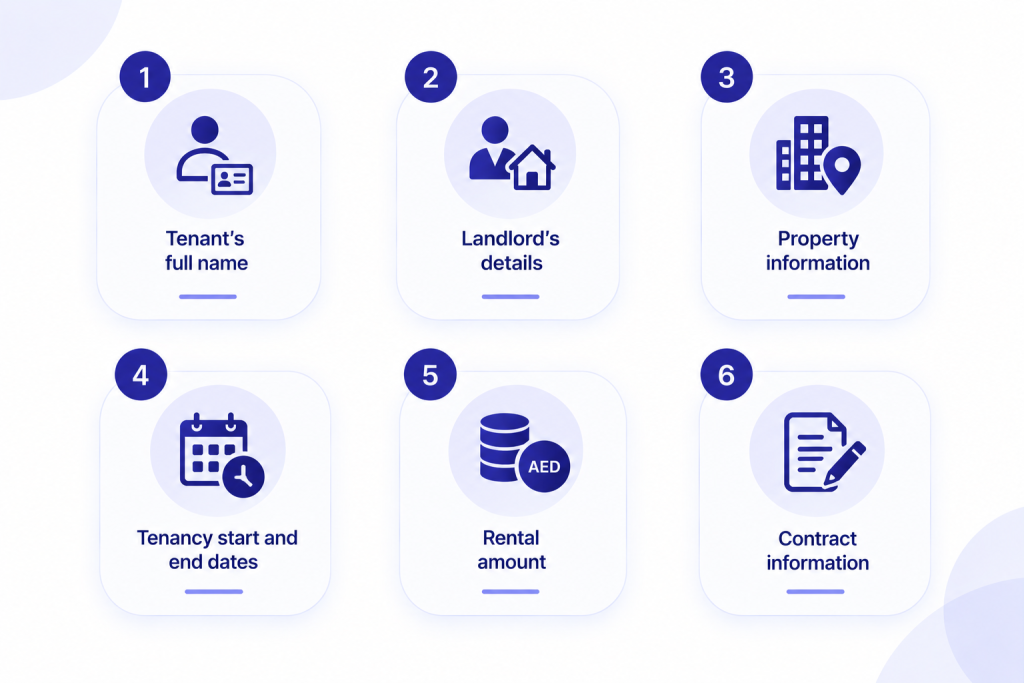
If a representative is handling the application, an official Power of Attorney may also be needed. For GCC nationals without a UAE ID, the DLD allows registration using passport details.
Ejari Documents for Landlords
Landlord requirements can depend on how the property is being managed and how the application is submitted. For individual owners, the DLD allows Ejari services through the Dubai REST app and the Ejari system. Owners need their property information to be correctly registered with the Land Department. Owner representatives may act on their behalf when they have an official Power of Attorney.
For some property-related registration processes, DLD records may also require ownership information such as the title deed. For example, DLD guidance for registering a property in the Ejari system refers to the owner’s Emirates ID, title deed and unit or villa template. Landlords should therefore ensure that their ownership and contact information is updated before starting the application.
Documents Needed for Ejari Renewal
An Ejari renewal is used when an existing tenancy is renewed. The process is similar to a new registration, although the existing tenancy and property information can already be available in the system. The DLD provides a combined service for registering and renewing tenancy contracts through the Ejari system, Dubai REST app, and trustee centres. For the online route, applicants enter the required information and upload any necessary documents.
For renewal, keep the following ready:
- Renewed tenancy contract
- Emirates ID, where required
- Existing Ejari details
- Updated tenancy information
- Power of Attorney, if a representative is applying
The main point is to ensure that the renewed contract reflects the current tenancy terms and that any changed information is correctly entered.
Documents Needed for Ejari Cancellation
The documents needed for Ejari cancellation depend on how the cancellation is submitted. For cancellation through a Real Estate Services Trustee Centre, the DLD lists the original unified tenancy contract, the applicant’s Emirates ID, and an official Power of Attorney where a representative is applying. If the contract is still active, a letter from the property owner requesting cancellation is also required. For online cancellation through the Ejari system or Dubai REST app, the applicant logs in, selects the cancellation service, and submits the request electronically.
The relevant information may therefore include:
- Existing Ejari or tenancy details
- Emirates ID
- Tenancy contract
- Owner’s cancellation request, where applicable
- Power of Attorney, if represented
- Other information requested during the application
The DLD also states that a new tenant cannot cancel the previous tenant’s Ejari. A tenant can request cancellation of their own Ejari contract.
How to Register Ejari After Preparing the Documents
Once the required documents are ready, the Ejari registration Dubai process can be completed through the available official channels.
1. Prepare and verify the documents
Check the tenancy contract, identification, and any authorisation documents before submission.
2. Check the tenancy and property details
Make sure the information in the contract matches the property and ownership records.
3. Submit the application
Applications can be submitted through the Dubai REST app, the DLD Ejari system or an authorised Real Estate Services Trustee Centre, depending on the applicant and transaction.
4. Pay the applicable fee
Complete the payment required for the selected service channel.
5. Receive the Ejari certificate
After approval, the Ejari certificate or e-Contract Registration Certificate is issued. For online applications, DLD states that the certificate is sent by email.
Common Document Issues During Ejari Registration
Even when the required documents are available, applications can face delays because of inconsistencies.
Expired or incorrect identification
Check that the applicant’s identification details are valid and entered correctly.
Incorrect tenancy details
Names, dates, rental information or property details should match the tenancy contract.
Property information mismatch
The property details should correspond with the information available in the DLD system.
Missing landlord documents
Some property-related transactions may require additional ownership information or supporting documents.
Incorrect authorisation
If someone is applying on behalf of the tenant or landlord, the Power of Attorney must meet the applicable requirements.
Differences between the contract and property records
A mismatch between the tenancy contract and official property information can require correction before the registration can proceed.
Ejari Documents: Physical vs Online Registration
The document requirements can differ slightly depending on the submission channel.
| Online Registration | Trustee Centre Registration |
| Copy of the unified tenancy contract | Original unified tenancy contract |
| Documents uploaded electronically where required | Applicant’s Emirates ID must be presented |
| Application submitted through Ejari/Dubai REST | Documents checked by the service centre |
| Certificate sent electronically after approval | Certificate issued after processing |
The DLD currently lists the Dubai REST app, Ejari system and Real Estate Services Trustee Centres as channels for Ejari registration.
How Can Arnifi Help With Ejari Registration?
Arnifi can assist with preparing and checking the documents needed for Ejari, helping ensure the tenancy and supporting information are ready before submission. The service can also support tenants, landlords and businesses with Ejari registration, renewal and related documentation. This can be particularly useful when a representative is involved or when property and tenancy details need to be checked before applying.
Conclusion
Having the correct documents needed for Ejari can make the registration process much smoother. While the unified tenancy contract is central to the process, additional documents can depend on the applicant, property and submission channel. Checking the requirements in advance helps avoid document mismatches and delays when registering, renewing or cancelling an Ejari contract.
FAQs
What documents are needed for Ejari?
The main document is the unified tenancy contract. Depending on the submission channel, an Emirates ID, Power of Attorney and other supporting information may also be required.
Is Emirates ID required for Ejari?
Yes, the DLD states that UAE ID is mandatory for registering a tenant in the Ejari system. GCC nationals without a UAE ID can use passport details.
Does the landlord need to provide documents for Ejari?
The landlord or authorised representative may need to provide or verify ownership and property information, depending on the application and service channel.
Is a title deed required for Ejari?
Not every standard Ejari application requires the applicant to upload a title deed. However, DLD may require title deed information for certain property registration or ownership-related transactions.
Can Ejari be registered online?
Yes. Ejari registration is available through the DLD Ejari system and Dubai REST app, subject to the applicable service conditions.
What documents are needed for Ejari renewal?
A renewed tenancy contract and relevant identification or authorisation documents may be required. The exact requirements depend on the submission channel and transaction.
What documents are needed for Ejari cancellation?
For trustee-centre cancellation, DLD lists the original tenancy contract, applicant’s Emirates ID and Power of Attorney where applicable. Additional documents may be required if the contract is still active.
What happens if an Ejari document is missing?
The application may be delayed or returned for correction. It is better to check the applicable requirements and provide the missing document before resubmitting.
References:
Top UAE Packages
Related Articles



Top UAE Packages
Get in Touch
