
GCC Economic Recovery Gains Momentum | Increases Regional Business Confidence

Anushka
Content Writer
Anushka Basu is a business content writer specialised in global business market insights. She aims to simplify complex regulatory, financial, and business concepts into… Read more


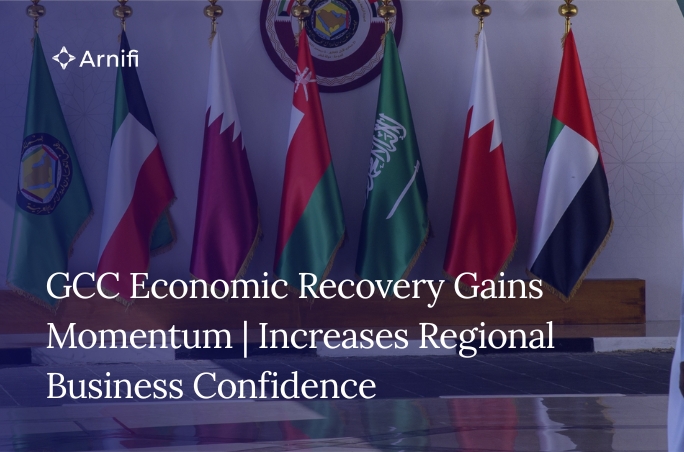
For most of 2026, a lot of businesses across the Gulf have been working in an uneasy bubble of uncertainty. Trade felt uncertain, pressure kept building on energy export expectations, and investor expectations were high, which put extra strain on economies that live off global connections. Lately, more and more economists think the hardest part is starting to pass.
Fresh forecasts are now suggesting the GCC economic recovery could pick up speed faster than many people assumed, especially over the next year. This is more positive for business teams, investors, and policymakers who previously spent all their time trying to survive disruptions. Now, they can begin planning for growth. Some projections even land GCC GDP growth at 8.1 per cent in 2027, but only under a recovery scenario that leans on trade flows improving, and business activity getting stronger.
Table of contents
Introduction
The Gulf’s economic picture over the last few years has been resilient with a few scars. Governments put heavy money into diversification, infrastructure, tourism, technology, and logistics well before these newer geopolitical tensions showed up. And now those investments, it seems, are starting to pay back.
Analysts say the GCC economic recovery is being supported by improving peace prospects, resilient non-oil industries, and the region’s ability to adjust quickly when disruption hits. Sure, a handful of sectors took temporary hits, but the main base layers under the Gulf economy still look solid.
Why is business confidence improving?
Business confidence often bounces back before the official economic numbers catch up.
Across the region, companies are noticing signals that trade routes are settling down, travel demand could return, and investment activity may strengthen in the coming quarters. This optimism shows up in forecasts that expect a notable rebound once current disruptions ease
For many organisations, the GCC economic recovery is a realistic scenario that could change how they plan in the next 12 to 18 months.
How are trade and logistics supporting recovery?
Trade is still one of the biggest engines for Gulf economies.
Even with the disruptions, the regional logistics networks have kept moving. That continuity has been helped by major investment in ports, airports, free zones, and transport infrastructure. Companies have also shown flexibility, routing shipments differently and tweaking supply chain strategies when they had to.
Once trade conditions get better, the GCC economic recovery is likely to gain momentum through stronger import-export activity, improved shipping efficiency, and more active regional commerce. For logistics providers, freight operators, and distribution businesses this could open up new angles to expand.
What role is tourism playing?
Multiple forecasts indicate visitor numbers fell during disruption periods as travellers postponed trips, and businesses delayed events. Still, the tourism framework in the region remains among the strongest worldwide. It’s supported by ongoing investment and by ambitious national tourism agendas.
As confidence returns, tourism will become a more visible driver of the GCC economic recovery. Airlines, hotels, restaurants, entertainment spots, and retail businesses will all benefit from increased visitor activity.
Are non-oil sectors driving growth?
One of the clearest shifts across the Gulf is the rising contribution from non-oil sectors. Technology, financial services, healthcare, logistics, manufacturing, and digital commerce are showing up as bigger parts of economic momentum.
Business surveys also suggest that domestic demand stayed fairly resilient in some key Gulf markets, even when the wider region faced pressure. So this diversification helps make the GCC economic recovery feel more balanced, not only dependent on energy markets.
What opportunities are emerging for investors?
Recovery periods usually bring new investment opportunities, sometimes quietly at first, then all at once. Businesses are already tracking sectors like:
- Infrastructure
- Technology
- Tourism
- Logistics
- Renewable energy
- Financial services
As confidence improves, investors may feel more comfortable committing capital to expansion projects that were paused earlier. That kind of activity could speed up the GCC economic recovery, and help with job creation across the region.
What should businesses watch next?
A few moving pieces will decide how quickly recovery progresses. Key factors include:
- Regional stability developments
- Trade route normalisation
- Tourism demand recovery
- Energy market performance
- Private-sector investment activity
Even if hurdles remain, economists generally agree that the “building blocks” of a strong GCC economic recovery are becoming easier to see. Companies that start preparing early may end up in a better position to capture benefits as conditions improve.
Also Read
How can Arnifi help?
Economic changes rarely come alone. They often bring fresh opportunities, along with new compliance expectations and operational requirements. Arnifi assists businesses in setting up entities, expanding into GCC markets, understanding regulatory obligations, and creating structures designed for longer-term growth across the region.
FAQs
What is driving the GCC economic recovery?
Improving stability, stronger trade activity, resilient non-oil sectors, and higher investor confidence.
How strong is the recovery forecast?
Some forecasts show GCC GDP growth of 8.1% in 2027 in a recovery scenario.
Which sectors could benefit most?
Tourism, logistics, technology, infrastructure, healthcare, and financial services.
Is the recovery dependent on oil prices?
Not entirely. Non-oil sectors are taking a more important role.
Why are investors optimistic?
Business conditions are improving, and longer-term diversification plans are boosting confidence, even when the outside world still feels unstable.
Conclusion
In 2026, the Gulf’s picture looks more constructive. As trade activity is expected to improve, tourism seems set for a comeback, and non-oil areas keep expanding, the GCC economic recovery looks like it’s building momentum. For businesses and investors, the conversation is gradually moving towards actual opportunity. If you want professional guidance with your business establishment in the Gulf, reach out to our experts at Arnifi today for a seamless experience from day one!
Top UAE Packages
Related Articles

Top UAE Packages
Get in Touch
