
BVI to Remove Visa Requirements for Work Permit Holders | A Major Boost for Businesses

Anushka
Content Writer
Anushka Basu is a business content writer specialised in global business market insights. She aims to simplify complex regulatory, financial, and business concepts into… Read more


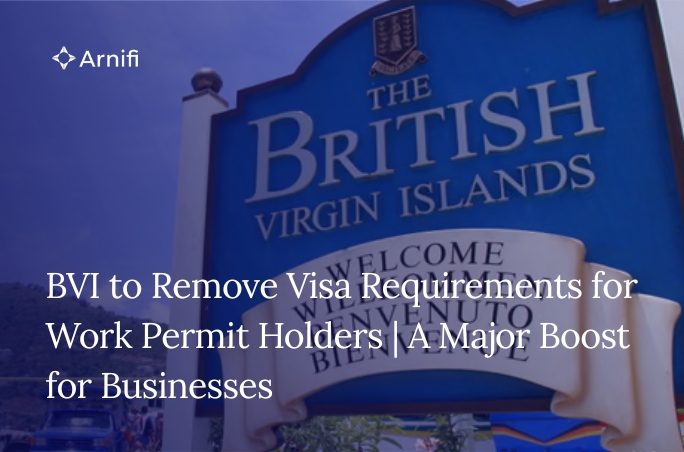
A major immigration policy shift is expected to rearrange hiring and how the workforce moves around in the British Virgin Islands (BVI). Authorities say they want to remove visa requirements for eligible work permit holders, which might help employers deal with ongoing labour shortages while also making it easier for foreign workers to come in and get started.
Table of contents
Introduction
Across the BVI, companies have run into repeated trouble when trying to fill roles in hospitality, construction, healthcare, professional services, and a few other areas. Employers often point to labour shortages, but also to immigration processes that can feel slow, complicated, and frankly, hard to manage when you’re trying to grow.
These proposed BVI visa requirement adjustments are meant to smooth the entry steps for approved foreign workers who already have valid work permits. The goal, according to reports, is to cut down on admin friction while helping businesses reach talent more efficiently, with fewer hurdles.
For businesses that are struggling to recruit, this could be a real sigh of relief, especially since demand keeps moving faster than local workforce availability.
What has changed?
Under the proposed policy, eligible people who hold approved work permits would no longer need to apply for a separate visa before travelling to the BVI.
Before this, some foreign workers were required to obtain both a work permit and a visa before entering the territory. The new idea basically tries to remove one extra layer of immigration administration, which means less back and forth, and fewer delays at each step.
The announcement has sparked a lot of attention from employers who depend on international talent to keep operations running.
Why is this important for businesses?
A lot of employers say they cannot recruit quickly enough to match day-to-day operational needs. Labour shortages have been affecting:
- Hospitality
- Tourism
- Construction
- Healthcare
- Retail
- Professional services
By easing BVI visa requirements for work permit holders, authorities are hoping to shrink hiring delays and improve workforce availability across these sectors. For companies, getting to qualified staff sooner can also support expansion plans and strengthen service delivery.
How could recruitment become easier?
Removing the additional visa step could lower processing complexity and shorten waiting periods. Employers might gain from:
- Quicker onboarding
- Simpler immigration procedures
- Lower administrative costs
- More workforce flexibility
- Better access to overseas talent
These upsides matter a lot for businesses in fields where vacancies are difficult to fill. So, overall, the reform could make BVI visa requirements feel less heavy for both employers and employees. Not only at the start but throughout the hiring process.
Will labour shortages improve?
Even if this change helps, it likely won’t fix every workforce problem on its own. Still, it can improve access to international workers.
Many businesses argue that labour shortages come from two angles: talent availability and immigration procedures that can slow recruitment down. By simplifying BVI visa requirements, authorities are aiming to tackle one meaningful part of that bottleneck.
In the end, how well the policy works will probably depend on how fast employers can actually use the revised framework once it is rolled out.
Which industries could benefit most?
Some sectors may feel the impact more than others. Expected to benefit include:
- Hotels and resorts
- Restaurants
- Construction companies
- Healthcare providers
- Logistics businesses
- Professional service firms
Many of these industries have been dealing with continuing hiring pressure, and they may welcome anything that speeds up workforce deployment. If visa steps become simpler, the effects could stretch into broader economic outcomes, not only immigration policy on paper.
What should businesses do now?
Employers who currently rely on foreign workers should keep an eye on implementation details, because timelines and practical rules can still shift. Businesses may want to:
- Recheck workforce plans
- Assess upcoming hiring needs
- Track immigration updates
- Build recruitment pipelines
- Review where talent shortages are appearing
Getting a clear view of how revised BVI visa requirements apply in real life will help employers take advantage of the new system once it’s fully operational.
How can Arnifi help?
Workforce planning often includes immigration elements, compliance duties, and wider operational strategy. Arnifi supports businesses by helping them evaluate expansion plans, understand regulatory developments, clarify hiring requirements, and manage workforce-related compliance across multiple jurisdictions.
FAQs
What has changed in the BVI?
Eligible work permit holders may no longer need a separate visa for entry.
Why were the rules changed?
To simplify hiring and help businesses respond to labour shortages.
Who benefits most from the changes?
Employers in hospitality, construction, healthcare, and other labour-intensive sectors.
Will work permits still be required?
Yes. This change is about visa requirements, not work permit requirements.
When will the changes take effect?
Companies should watch official announcements for the exact implementation timeline.
Conclusion
The proposed removal of certain BVI visa requirements for work permit holders could be a meaningful shift in workforce policy. Reducing administrative barriers, it may allow employers to recruit talent with less delay, while also supporting wider economic activity. Businesses that depend on overseas workers should keep following updates as the policy moves from announcement to actual implementation.
Top UAE Packages
Related Articles



Top UAE Packages
Get in Touch
