
BVI Regulatory Sandbox and FinTech Framework | Innovation in Offshore Regulation
by Ishika Bhandari May 22, 2026  6 MIN READ


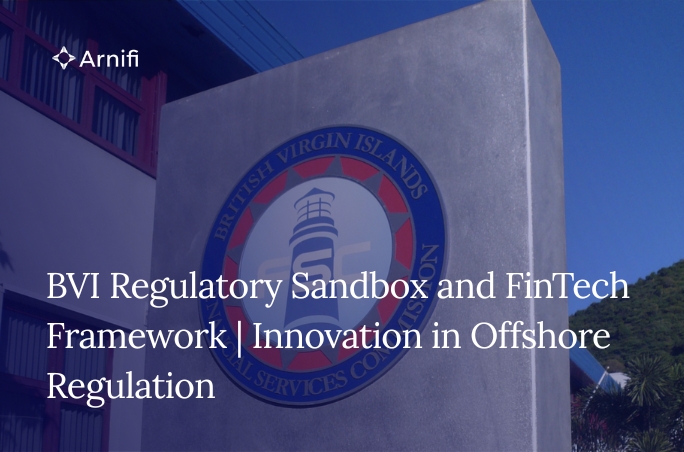
Through licensing and regulation, the British Virgin Islands has continued its path as a progressive and innovative offshore financial centre and has been a leader in the Financial Technology sector. The British Virgin Islands has successfully licensed and regulated new financial technology, digital assets, and virtual business models, remaining a leader in the Financial Technology sector and a progressive and innovative offshore financial centre.
The BVI Financial Services (Innovation) Regulations 2020 provide for a regulatory sandbox regime aimed at encouraging the development of FinTech in the BVI and providing regulatory oversight and investor protection. As digital finance and blockchain services continue to evolve globally, it is now vital that both startups, technology firms, investment firms, and virtual asset service providers become familiar with the BVI fintech regulatory sandbox 2026 regime in particular, given that it offers regulatory flexibility to companies outside the BVI, but has a clear legal framework.
Table of contents
- What Is the BVI Regulatory Sandbox?
- Why Is the Sandbox Important for FinTech Businesses?
- How Does the BVI Sandbox Application FSC Process Work?
- What Is the Relationship Between the Sandbox and Virtual Asset Regulation?
- How Is the BVI Crypto Regulation Framework Evolving?
- Why Are Offshore Jurisdictions Supporting FinTech Innovation?
- How Can Arnifi Help With FinTech Compliance?
- Conclusion
- FAQs
What Is the BVI Regulatory Sandbox?
The Financial Services Commission (FSC) launched the BVI regulatory sandbox to allow for innovative financial technology companies to experiment with products and services in a regulated and controlled environment. The framework will be introduced in the regulations known as the BVI Financial Services (Innovation) Regulations 2020 and will allow for the introduction of new financial technologies under the regulatory umbrella of the BVI, whilst allowing the BVI regulators to regulate the risks of any new business models.
The sandbox allows some companies to experiment with various aspects of their operation for a limited time, while avoiding the same regulatory requirements as “traditional” companies, with some caveats for companies participating in the “sandbox activities”. This helps the FinTech industry to launch its products first in a regulated environment, before it can extend its activities into a wider regulated space. The framework is intended to be flexible, but still compliant, and international regulatory focused, while balancing all these elements, as the BVI seeks to do.
Why Is the Sandbox Important for FinTech Businesses?
FinTech companies are creating products that don’t always fall into existing financial frameworks. The uncertainty about licensing and compliance requirements could arise from blockchain applications, digital investment platforms, tokenisation models, and automated financial systems. The sandbox, in turn, enables businesses to experiment with these innovations while directly interacting with regulators about operational risks, compliance, and legal conditions. This makes innovation more realistic than applying comprehensive financial regulation when it is being developed. The government’s strategy has helped to establish the BVI as a conducive place for financial services that are growing increasingly technology-based, while ensuring oversight.
How Does the BVI Sandbox Application FSC Process Work?
Proponents of the BVI sandbox application must establish that their proposed business model is truly innovative and offers a benefit to the financial services market, or to the outcomes of financial services consumers. A typical application will include information about:
- The proposed product or service
- Business operations
- Technology systems
- Risk management procedures
- AML compliance controls
- Consumer protection safeguards
FSC evaluates the suitability of the innovation for the sandbox and sets the boundaries of activities and regulatory conditions allowed in the sandbox. Participation is typically confined to a specific time frame, and the regulator oversees the operational performance, risk exposure, and compliance processes within this time frame. Later, on the basis of the nature and scope of the business, the business can move to full regulatory licensing.
What Is the Relationship Between the Sandbox and Virtual Asset Regulation?
The BVI has also further developed its regulatory regime to encompass digital assets and cryptocurrency-related services. VASPs are now subject to the regulation of the BVI virtual asset service provider (VASP) regime under the Virtual Assets Service Providers Act. This framework sets out licensing and compliance requirements for companies participating in the digital asset market.
The sandbox could offer an avenue for some creative, innovative projects to enter the market before moving to fully regulated VASP operations as cryptocurrency and blockchain services grow across the globe. The BVI’s approach illustrates how offshore jurisdictions are coping with the changing nature of technology and complying with international anti-money laundering and financial crime standards.
How Is the BVI Crypto Regulation Framework Evolving?
The BVI crypto regulation framework is constantly ongoing and adapts to international attention to digital assets, blockchain finance, and virtual investment products. Regulators are more concerned with:
- AML and sanctions compliance
- Cybersecurity safeguards
- Investor protection
- Custody arrangements
- Governance standards
- Cross-border operational risks
Innovation should not work without a compliance system, the FSC has said. Consequently, FinTech enterprises will likely continue to have robust governance, operational transparency, and risk management controls from an early stage. This well-balanced regulation has been effective at maintaining the BVI’s competitiveness in the global offshore FinTech industry and adapting to the changing global regulatory landscape.
Why Are Offshore Jurisdictions Supporting FinTech Innovation?
Offshore financial centres are increasingly aware of the impact of digital finance, tokenisation, and blockchain infrastructure on international financial services. Regulatory environments like those of the BVI are creating innovative climates to attract new technology companies and provide them with financial stability and oversight.
The regulatory sandbox model provides the opportunity for the regulators to promote innovation and, at the same time, adhere to compliance. Global financial markets are now becoming increasingly digital, and so too are offshore regulatory regimes, as they seek to respond to novel financial business models that feature decentralised finance, digital assets, and automated financial services.
How Can Arnifi Help With FinTech Compliance?
If your business, startup, or offshore structure is dealing with regulatory and compliance requirements in many different jurisdictions, such as the BVI, Arnifi can help you. From regulatory structuring support, compliance coordination, and operational guidance, Arnifi can help businesses navigate the ever-changing regulatory environment surrounding FinTech and digital assets and reduce governance and regulatory risk.
Conclusion
The BVI regulatory sandbox is an important step in modernising offshore financial regulation to meet the challenges of the digital economy. The BVI Financial Services (Innovation) Regulations 2020 provide a structure that allows the FinTech companies to operate in the regulated environment with minimal changes to the compliance obligations. With digital finance and virtual asset markets growing rapidly around the globe, it is imperative that businesses know the BVI fintech regulatory sandbox 2026 framework. The BVI is also positioning itself to join the exciting global FinTech environment, with its practical approach to innovation and regulation.
FAQs
What is the BVI regulatory sandbox?
It is a supervised framework allowing FinTech businesses to test innovative financial services.
What law created the BVI sandbox?
The framework was introduced under the Financial Services (Innovation) Regulations 2020.
Can crypto businesses operate in the BVI sandbox?
Certain innovative digital asset businesses may qualify for sandbox participation.
What is a VASP in the BVI?
A VASP is a Virtual Asset Service Provider regulated under BVI law.
Who regulates FinTech businesses in the BVI?
The Financial Services Commission supervises regulated FinTech activities.
Top UAE Packages


Related Articles
Top UAE Packages
Get in Touch