
Related Party Transactions Singapore | Disclosure Mistakes That Put Audit Exemption At Risk
by Anushka Basu May 16, 2026  7 MIN READ


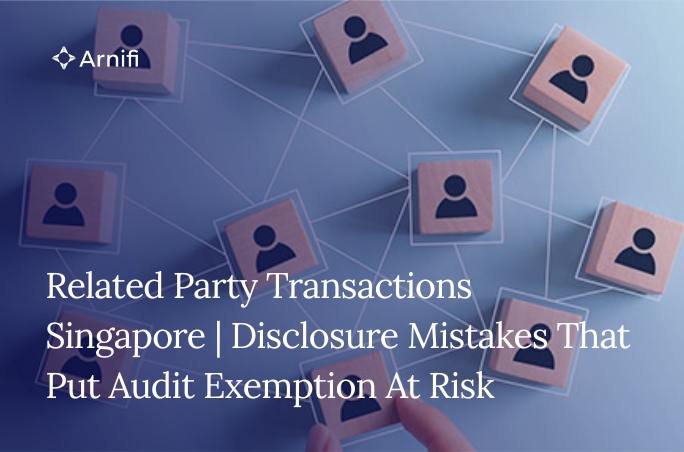
SMEs often deal with founder-linked entities and individuals, which is why related party transactions disclosure Singapore rules are important for compliance and transparency. These can include director loans, shareholder advances, group service fees, management charges, rent paid to a founder-owned property company, or purchases made through a related company.
These transactions are not automatically wrong. The problem starts when they are not disclosed, priced, approved, or recorded clearly. ACRA requires directors to ensure financial statements comply with prescribed accounting standards and give a true and fair view. This applies even when the company is audit-exempt and presents unaudited financial statements.
Table of contents
- What Are Related Party Transactions?
- SFRS 24 Related Party Singapore Rules
- Does Wrong RPT Disclosure Cancel Audit Exemption?
- Common Related Party Transactions In SMEs
- Related Party Loans Group Structure Singapore
- RPT Disclosure ACRA Singapore Mistakes
- Connected Party Transactions SME Singapore
- How Directors Can Reduce RPT Risk
- Conclusion
- FAQs
What Are Related Party Transactions?
A related party transaction is a transfer of resources, services, or obligations between a reporting entity and a related party. A price does not need to be charged for the transaction to exist. IAS 24 explains that related parties may include parents, subsidiaries, fellow subsidiaries, associates, joint ventures, key management personnel, close family members, and entities controlled or influenced by such persons.
In simple terms, the company should ask: “Is this transaction with someone who can influence the business, control it, or benefit through a close relationship?” If yes, the accounting team should review it before year-end.
SFRS 24 Related Party Singapore Rules
SFRS 24 related party Singapore requirements sit under the Singapore Financial Reporting Standards framework. The Accounting Standards Committee lists SFRS 24 as “Related Party Disclosures” for annual reporting periods beginning on 1 January 2026.
The purpose is transparency. Related party relationships can affect profit, loss, and financial position because related parties may transact on terms that independent parties would not use. IAS 24 requires disclosure of the relationship, transactions, outstanding balances, commitments, and key management personnel compensation where applicable.
For an SME, this means a director loan or group service fee should not sit quietly in the accounts without explanation. The note should help users understand who was involved, what happened, and what balance remained at year-end.
Does Wrong RPT Disclosure Cancel Audit Exemption?
Wrong RPT disclosure does not automatically cancel audit exemption by itself. Audit exemption is based on the small company test. ACRA states that a private company qualifies if it meets at least two of three criteria for the past two consecutive financial years: total annual revenue of $10 million or less, total assets of $10 million or less, and 50 or fewer employees. Group companies must also check the small group test.
Still, related party mistakes can put the exemption position under pressure. The revenue and asset tests are based on financial statements prepared in line with accounting standards. If related party balances, loans, group charges, or asset transfers are wrongly recorded, the numbers used for exemption assessment may become unreliable.
Common Related Party Transactions In SMEs
| Transaction Type | Common Example | Disclosure Risk |
| Director Loan | Founder lends money to the company or withdraws funds | Balance is left unclear or treated as expense |
| Related Party Loan | Group company provides funding | Interest and repayment terms are missing |
| Management Fee | Parent or related company charges admin support | Service basis and pricing support are weak |
| Shared Costs | Rent, staff, software, or marketing costs are shared | Allocation method is not documented |
| Founder-Owned Vendor | Company buys goods through a founder-linked supplier | Relationship is not disclosed |
| Family-Owned Entity | Company pays rent or service fees to a family entity | Terms do not look commercial |
The transaction should match the legal paperwork, bank trail, invoices, board approvals, and financial statement notes.
Related Party Loans Group Structure Singapore
Related party loans group structure Singapore issues need careful treatment because loans can affect both accounting and tax. The company should document the lender, borrower, loan amount, interest rate, repayment terms, security, and year-end balance.
If the loan sits inside a wider group, transfer pricing may also matter. IRAS expects taxpayers to keep proper transfer pricing documentation to show that related party transactions are conducted at arm’s length. It can impose a 5% surcharge on transfer pricing adjustments for YA 2019 onward.
Even if formal transfer pricing documentation is not mandatory, a simple memo can help. It should explain why the loan existed, how interest was set, and how the balance will be repaid.
RPT Disclosure ACRA Singapore Mistakes
RPT disclosure ACRA Singapore mistakes usually happen because directors think small companies have lighter reporting duties. Audit exemption removes the statutory audit requirement for eligible companies. It does not remove accounting standards, record keeping, financial statement quality, or director review duties.
Common mistakes include:
- Leaving director current account balances without explanation.
- Netting related party receivables and payables without support.
- Omitting transactions because no cash was paid.
- Calling shareholder withdrawals “expenses” instead of loans or dividends.
- Missing close family entities linked to directors or founders.
- Forgetting year-end balances and commitments in the disclosure note.
- Not reviewing group companies when assessing audit exemption.
These errors can make unaudited accounts look incomplete. They can also create problems during bank review, investor due diligence, tax filing, and future audit work.
Connected Party Transactions SME Singapore
Before the accounts are finalised, connected party transactions SME Singapore records should be reviewed. Directors should not wait for an auditor or tax agent to discover them.
A practical review should cover:
- List all directors, shareholders, key managers, close family links, and group entities.
- Identify payments, receipts, loans, guarantees, rent, service fees, asset sales, and reimbursements linked to those parties.
- Match each transaction to invoices, agreements, board minutes, and payment records.
- Confirm year-end balances and repayment terms.
- Check if the transaction affects revenue, assets, liabilities, or audit exemption thresholds.
- Add a clear disclosure note in the financial statements where required.
This makes the accounts easier to defend if ACRA, IRAS, a bank, or an investor asks questions later.
How Directors Can Reduce RPT Risk
The safest approach is to treat related party transactions as board-level items. Approve them before they happen. Keep pricing support. Avoid vague labels like “director expenses” or “group charges.” Review balances every quarter instead of only at year-end.
Directors should also challenge accounting treatments that do not match the real substance of a transaction. ACRA’s financial reporting guidance says directors should read and understand financial statements, challenge treatments that do not match the transaction substance, and make sure financial information is clear and complete.
Conclusion
Related party transactions disclosure Singapore compliance is not only about adding one note in the accounts. It protects the company’s revenue, asset values, loan balances, audit exemption position, and director credibility.
A stronger disclosure process becomes easier when related party records, board approvals, and year-end accounts work together. Thr expert team at Arnifi helps companies build that setup. With cleaner records, SMEs can stay audit-ready, reduce tax questions, and handle funding or group restructuring with more confidence.
FAQs
1. What Is A Related Party Transaction In Singapore?
A related party transaction is a transfer of resources, services, or obligations between a company and a related party. It can exist even when no price is charged.
2. Do Audit-Exempt Companies Need Related Party Disclosures?
Yes, if the applicable accounting standard requires it. Audit exemption does not remove the duty to prepare financial statements that comply with prescribed accounting standards and give a true and fair view.
3. Can Related Party Mistakes Affect Audit Exemption?
They can affect the reliability of the figures used for exemption checks. Audit exemption depends on private company status and size criteria, including revenue, assets, and employee count. Wrongly recorded related party balances can distort those numbers.
4. What Should SMEs Document For Related Party Loans?
SMEs should document the lender, borrower, loan amount, interest rate, repayment terms, approval records, year-end balance, and pricing basis. This helps with financial statement disclosure, tax review, and transfer pricing support.
Top Singapore Packages


Related Articles

Top Singapore Packages
Get in Touch