
Striking Off a Company In Singapore | ACRA Process, Tax Clearance & The Three Mistakes That Cost Founders Years
by Rifa S Laskar May 15, 2026  7 MIN READ


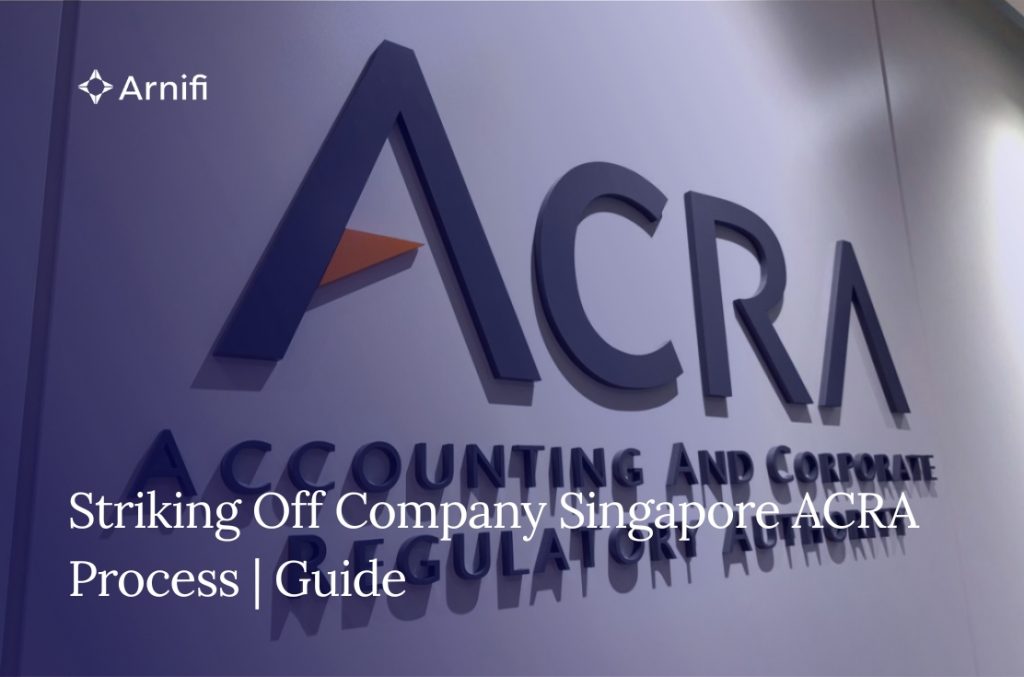
When a business has stopped operating and founders want a clean legal closure, understanding the striking off company Singapore ACRA process rules becomes important. Strike off is often simpler than liquidation, but it still needs tax closure, director consent, updated records, and no unresolved claims. ACRA may approve strike off when it believes the company is not carrying on business and meets the required criteria.
Table of contents
What Does Striking Off a Company Mean?
Striking off removes a company’s name from ACRA’s register. Once the final Gazette step is completed, the company is officially struck off, removed from the register, and no longer legally exists.
This route usually suits a company that has stopped trading, owns no assets, owes no debts, and has no unresolved disputes. It is not a way to escape creditors, tax liabilities, lawsuits, employee claims, or government dues.
When Can a Company Apply For Strike Off?
ACRA sets clear conditions before a local company applies. The company should have stopped trading. It should have no unpaid debts, no unresolved issues with government agencies, no loans in the charge register, no legal cases, no pending regulatory action, no assets, no liabilities, and director approval for the strike off.
| Requirement | What Founders Should Check |
| Business Activity | The company has stopped trading |
| Debts And Assets | The company owns nothing and owes nothing |
| Government Issues | No unresolved ACRA, IRAS, CPF, licence, or agency matter remains |
| Legal Risk | No legal case or pending regulatory action exists |
| Charge Register | No outstanding registered charge remains |
| Director Consent | All directors or a majority of directors agree |
ACRA also warns that applying without meeting the criteria can amount to a false declaration and may lead to investigation.
ACRA Strike Off Application BizFile+
The ACRA strike off application BizFile+ process is handled online. A company officer, such as a director or company secretary, can file directly. A corporate service provider can also file, but it must make sure most directors have consented before submission.
ACRA does not require supporting documents for the basic strike off application. But the company must still be ready to confirm that all criteria are met.
Before filing, companies should complete these checks:
- Confirm the company has stopped business and has no assets, liabilities, legal claims, charges, or agency issues.
- Update the registered office address and company email address so ACRA letters reach the right people.
- Resolve any court summons and check the BizFile inbox for ACRA notices.
- Prepare the company UEN and cessation date if applicable.
- Get all directors or most directors aligned before the application is submitted.
The application fee is free. ACRA approval can be immediate, or it may take 14 days when director endorsement is needed. If all directors or a majority of directors do not endorse within 14 days, the application will lapse.
What Happens After ACRA Approval?
After approval, the company remains “Live” for the time being. ACRA states that the striking off process takes at least three months after approval, depending on objections. ACRA may send a striking off letter to the registered office and company officers’ residential addresses. Officers have 30 days to object after the date of the striking off letter.
If there is no objection, ACRA publishes the company name in the First Gazette Notification within 30 days of approval. Interested parties may object during the 60-day waiting period. If an objection is accepted, the company has two months to resolve it. If the issue is not resolved within that period, the strike off application lapses.
If there are no objections after the waiting period, ACRA publishes the Final Gazette Notification, and the company is officially struck off on the stated date.
IRAS Tax Clearance Strike Off Singapore
IRAS tax clearance strike off Singapore is often misunderstood. IRAS does not issue a tax clearance letter for ACRA strike off. Instead, the company should settle all tax obligations and retrieve the latest Notice of Assessment and Statement of Accounts through mytax.iras.gov.sg to show there is no outstanding tax matter or tax liability.
IRAS requires all Corporate Income Tax Returns to be filed up to the date of business cessation. If the company files Form C, financial statements or certified accounts and tax computations for the relevant Year of Assessment must also be submitted. IRAS also requires all tax queries, assessments, taxes, penalties, and GST matters to be settled before strike off.
IRAS warns companies not to close their bank accounts until outstanding matters are settled. If a tax refund is due after the bank account is closed, IRAS cannot pay it to a director or shareholder. After dissolution, the tax credit goes to the Insolvency Office, and shareholders may need to claim it there.
Striking Off Vs Liquidation Singapore
Striking off vs liquidation Singapore decisions depend on the company’s condition. Strike off is usually suitable when the company is inactive, clean, debt-free, asset-free, and dispute-free. Liquidation is more suitable when assets, creditors, liabilities, or formal winding-up steps need to be handled.
In liquidation, a liquidator is appointed by the company or court. IRAS states that the liquidator is responsible for tax matters and must ensure outstanding tax matters are resolved before the liquidation process is completed. Liquidators must also retain company books and papers for at least five years after dissolution.
Three Mistakes That Cost Founders Years
These are the errors that turn a simple closure into a long cleanup:
- Applying while tax filings, GST matters, CPF dues, charges, bank balances, assets, creditors, or legal claims still exist.
- Closing the bank account too early, then losing direct access to tax refunds or final payments.
- Ignoring objections, wrong addresses, expired director endorsements, or ACRA letters during the Gazette period.
Founders should also remember that if strike off fails and the company remains live, it must continue meeting compliance requirements. ACRA states that companies should monitor the process until strike off is successfully completed.
How Arnifi Can Help
At Arnifi, we help founders close Singapore companies with fewer blind spots. Our team can support strike off readiness checks, corporate secretarial coordination, IRAS filing review, dormant company assessment, BizFile+ application support, and compliance closure planning. We help businesses avoid rushed filings so the company can close cleanly, without unresolved tax or record issues.
Conclusion
Striking off company Singapore ACRA process looks simple, but the preparation decides the outcome. A clean strike off needs no assets, no debts, no unresolved tax matters, no legal claims, and proper director consent. Founders should settle IRAS matters, keep the bank account open until closure work is done, and monitor ACRA notices until the Final Gazette confirms dissolution.
FAQs
1. How Long Does It Take To Strike Off A Company In Singapore?
ACRA states that the process takes at least three months after approval, depending on objections. The company remains live until the final strike off date.
2. Does IRAS Issue A Tax Clearance Letter For Strike Off?
No. IRAS does not issue a tax clearance letter for ACRA strike off. Companies can use the latest Notice of Assessment and Statement of Accounts to show no outstanding tax matter or liability.
3. Can A Company Apply For Strike Off With Outstanding Annual Returns?
ACRA says a company may apply if all striking off criteria are met, but it should monitor the process. If strike off fails and the company stays live, normal compliance duties continue.
4. How Long Must Records Be Kept After Strike Off?
IRAS states that company books and papers must be retained for at least five years after dissolution. This duty also applies to officers immediately before dissolution.
Top Singapore Packages


Related Articles

Top Singapore Packages
Get in Touch