
Why DAOs Are Choosing Cayman Foundation Companies in 2026

Anushka
Content Writer
Anushka Basu is a business content writer specialised in global business market insights. She aims to simplify complex regulatory, financial, and business concepts into… Read more


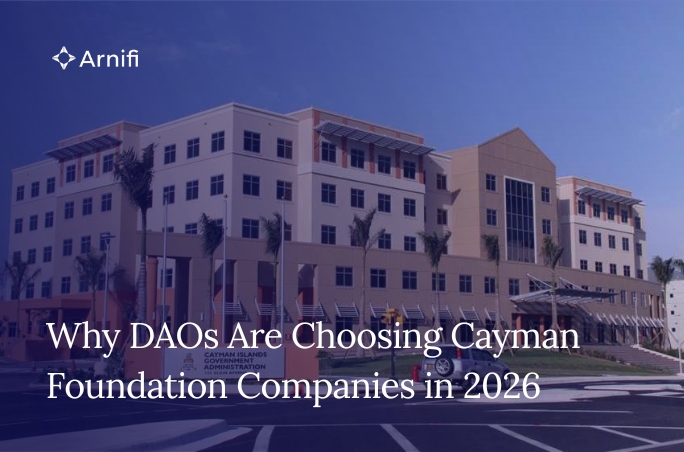
A Cayman Foundation DAO structure gives Web3 teams a recognised legal vehicle for treasury control, governance and real-world contracts. This is one reason DAOs are moving away from loose informal structures.
In 2026, builders need more than a token vote. They need a legal wrapper that banks, exchanges, advisers, grant partners and regulators can understand.
Table of contents
Why DAOs Need a Legal Wrapper
A DAO can coordinate decisions on-chain, but most real-world systems still expect a legal person. Someone must:
- Sign contracts
- Hold intellectual property
- Pay vendors
- Open accounts
- Manage grants
- Respond to legal notices.
Without an entity, contributors may face personal risk because the DAO may look like an unincorporated group.
This is where a DAO legal wrapper becomes useful. It gives the project a legal interface while allowing the community to keep governance principles in the background. Cayman foundation companies are popular because they combine corporate legal personality with foundation-style governance.
A foundation company is a separate legal entity that can be created for any lawful object and does not need to be beneficial to other persons. Its constitutional documents are the memorandum and articles of association.
What Makes a Cayman Foundation Company Different
A normal company usually has shareholders and profit distribution logic. A foundation company is different because it can be designed around objects, governance roles and purpose-driven activity. Cayman foundation companies cannot pay dividends or distribute profits or assets to members or proposed members.
Why this suits Web3 governance
That feature can suit Web3 projects because many DAOs are not built around traditional shareholder returns. They may manage a protocol treasury, support ecosystem development, issue grants or steward open-source technology.
How member-light control works
Cayman foundation companies have flexibility around governance. The constitution can give rights, powers and duties to members, directors, officers, supervisors, founders or others. A foundation company may cease to have members if its memorandum allows this and it continues to have one or more supervisors.
This is why people often describe it as an ownerless legal entity. That phrase should be used carefully, because the foundation still has directors, officers, supervisors and compliance duties. But it can avoid the usual shareholder ownership model when drafted correctly.
Cayman Foundation DAO Structure At A Glance
| Feature | Why it matters for DAOs |
| Separate legal entity | Can sign contracts, hold assets and deal with service providers |
| Lawful purpose | Can be designed around protocol support, grants or ecosystem development |
| Member-light design | May cease to have members if the memorandum allows and supervisors remain |
| Supervisor role | Supports oversight when there are no traditional shareholders |
| Constitutional flexibility | Governance rights can be assigned to directors, supervisors or other roles |
| Compliance reality | VASP, AML and beneficial ownership rules may still need review |
Why DAOs Are Choosing Cayman in 2026
Cayman is attractive because it already has a strong offshore finance reputation, a developed professional services market and clear foundation company legislation. For Web3 teams, the structure can create a bridge between decentralised governance and practical legal administration.
DAOs often choose this route for these reasons:
- Treasury management becomes easier when an entity can open accounts, appoint service providers and hold assets.
- Contributors may get clearer separation between personal activity and foundation activity.
- Grant programs and ecosystem payments can be handled with better records.
- Protocol governance can be reflected through constitutional design and internal policies.
- External partners may feel more comfortable dealing with a recognised Cayman entity.
This does not mean every DAO should choose Cayman. A Web3 entity must match the project’s activities, token design, treasury model and community governance. Some projects may need other jurisdictions, and some may need more than one entity.
VASP Rules Still Matter
Cayman foundation companies are not automatically outside regulation just because they support a DAO. If the foundation provides virtual asset services, VASP analysis is essential.
The Cayman Virtual Asset Service Providers Law provides a framework for virtual asset business and for the registration or licensing of persons providing virtual asset services.
Virtual asset service includes virtual asset issuance. It also includes services such as exchange between virtual assets and fiat currencies, when carried out for or on behalf of another person or legal arrangement.
Cayman treats virtual asset activity as a regulated area, not a casual tech category. VASP registration requirements, FAQs, forms and regulatory measures should be reviewed before launch.
So, a DAO foundation should review token issuance, treasury operations, exchange activity, custody, grants and protocol services before launch.
Compliance and Transparency
A foundation company still sits inside a real legal system. Cayman’s Beneficial Ownership Transparency Act 2023 consolidates and strengthens the beneficial ownership framework in the Islands.
This matters because Web3 projects should not assume that a foundation company removes transparency or due diligence duties.
Before choosing Cayman, teams should review:
- Token issuance and VASP exposure
- Treasury custody and signing controls
- Director, supervisor and officer roles
- Beneficial ownership and AML records
- Tax treatment for the foundation, contributors and token holders
- IP ownership, grants and protocol service agreements
This step is important because many DAO failures are not caused by bad technology. They happen because the legal, treasury and governance layers were never clearly connected.
Conclusion
A Cayman Foundation DAO works because it gives decentralised communities a legal body that can act in the real world. Arnifi helps Web3 founders and global teams compare entity routes with practical clarity.
We support company setup, documentation coordination, compliance planning and banking preparation. For DAO-linked structures, we help organise the early facts so legal, tax and regulatory advisers can assess the right wrapper without avoidable issues.
FAQs
1. What is a Cayman Foundation DAO?
It is a DAO structure using a Cayman Foundation Company as the legal wrapper. The foundation can support treasury activity, contracts, grants and governance administration for a Web3 project.
2. Is a Cayman Foundation Company truly ownerless?
It can be designed without members after incorporation if the memorandum permits and supervisors remain. But it still has directors, officers, governance documents and legal duties.
3. Does a DAO foundation need VASP registration?
It depends on the activity. Token issuance, exchange, custody or other virtual asset services may trigger VASP analysis under Cayman law.
4. Why not use a normal company for a DAO?
A normal company is usually shareholder-led. A foundation company can be purpose-led, member-light and better suited to protocol stewardship, grants and community governance.
Top UAE Packages


Related Articles
BVI vs Cayman Company Formation (2026) | Entity Ty...
Key Fact Both jurisdictions provide English common law frameworks for international business. BVI offers cost-efficient corporate management for private asset...
Top UAE Packages
Get in Touch