
National Risk Assessment Mauritius | AML Risk Insights for Businesses


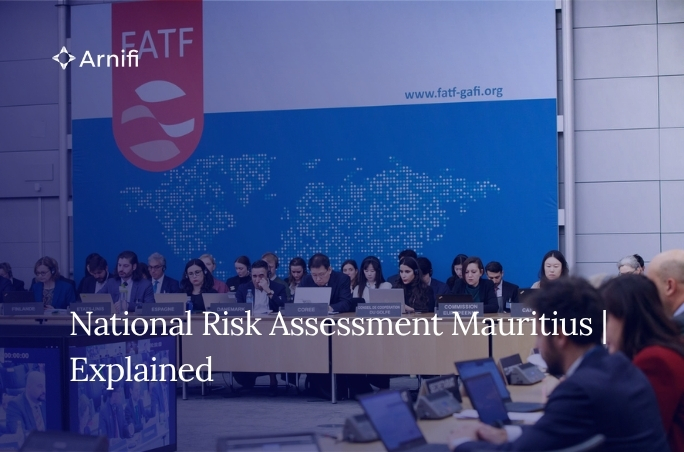
The National Risk Assessment Mauritius explains how the country identifies and manages risks that is related to money laundering and terrorism financing. It offers a structured view of vulnerable sectors, regulatory focus areas & compliance expectations for businesses. Through the NRA Mauritius AML process, authorities assess financial systems using real data and industry inputs. The ML TF risk assessment Mauritius highlights where risks are higher and where stronger controls are needed. This article breaks down what the assessment covers, how it affects businesses & what steps firms can take to stay aligned while operating within Mauritius’ regulatory environment.
Table of contents
- Introduction
- What is The National Risk Assessment Mauritius?
- How Does the NRA Mauritius AML Framework Operate?
- What Does The ML TF Risk Assessment Mauritius Actually Measure?
- Which Industries Are Most Exposed to Risk?
- How Do the Findings Impact Compliance Requirements?
- What Should Business Owners Take From The National Risk Assessment Mauritius?
- How Often Does The Risk Landscape Change?
- How Can Firms Respond To ML TF Risk Assessment Mauritius Insights?
- Is Compliance Becoming a Competitive Advantage?
- How Arnifi Supports Businesses Navigating This Framework
- Conclusion
- FAQs
Introduction
Risk rarely announces itself. It builds quietly through gaps, oversight, or outdated processes. The National Risk Assessment of Mauritius exists just to make those risks visible before they turn into real problems.
This is not just a regulatory document sitting on a shelf for the businesses that are operating in or through Mauritius. It shapes how institutions are viewed, how transactions are monitored, and how easily operations move forward. Ignoring it creates friction later. Understanding it early creates room to operate with clarity.
What is The National Risk Assessment Mauritius?
At a basic level, the National Risk Assessment of Mauritius is a country-wide study of exposure to money laundering and terrorism financing. It looks at how financial systems function, where the vulnerabilities exist, and how those vulnerabilities could be exploited.
Authorities gather data from financial institutions, enforcement cases, and international trends. The goal is to map risk in a way that is both practical and actionable.
The outcome is simple to understand. Certain sectors carry higher exposure. Others are relatively stable. That distinction drives how regulation is applied.
How Does the NRA Mauritius AML Framework Operate?
The NRA Mauritius AML framework is built on coordination. Regulators, banks, corporate service providers enforcement bodies all contribute to the process.
Each participant brings a piece of the puzzle. Banks highlight transaction patterns. regulators focus on supervision gaps. Enforcement agencies add insights from real cases. When combined, this creates a clearer picture of risk.
The important part is what happens next. Findings from the NRA Mauritius AML process directly influence how strict compliance measures become in different sectors.
What Does The ML TF Risk Assessment Mauritius Actually Measure?
The ML TF risk assessment Mauritius focuses on three things: threats, vulnerabilities, and impact.
Threats refer to the likelihood of financial crime entering the system. Vulnerabilities point to weaknesses that allow it to happen. Impact measures the potential damage if those risks are not controlled.
By looking at all three, the assessment avoids oversimplification. It does not label a sector as risky without context. Instead, it explains why the risk exists and how serious it could become.
Which Industries Are Most Exposed to Risk?
The National Risk Assessment Mauritius consistently highlights certain sectors as more exposed than others.
Financial services sit at the centre. Cross-border transactions and complex ownership structures increase the chances of misuse if controls are not strong.
Corporate service providers also carry weight. They handle company formation and structuring, which makes them a key entry point into the financial system.
Real estate is another area of focus. Property transactions can absorb large amounts of capital, making them attractive for laundering if oversight is weak.
The message is not that these sectors are unsafe. But it is that they require stronger attention.
How Do the Findings Impact Compliance Requirements?
Compliance does not operate in isolation. It follows risk.
When the National Risk Assessment Mauritius identifies higher exposure in a sector, regulators respond with tighter expectations. This can mean deeper due diligence, more frequent reporting, and closer monitoring.
This translates into operational adjustments for businesses. Documentation needs to be clear. Client verification needs to be thorough. Internal processes need to be consistent.
The link between risk and compliance is direct. Higher risk always brings higher scrutiny.
What Should Business Owners Take From The National Risk Assessment Mauritius?
The takeaway is straightforward. Preparation matters more than reaction.
The National Risk Assessment of Mauritius offers a preview of where attention will be focused. Businesses that align early tend to face fewer disruptions later.
This includes proper due diligence processes set up, maintenance of accurate records, and also the assurance of transparency in ownership structures. Small gaps often create larger problems when it is reviewed under the regulatory pressure.
A well-prepared structure moves faster, especially when dealing with banks and approvals.
How Often Does The Risk Landscape Change?
Risk is not static. It evolves with technology, market behaviour & also global influence.
The National Risk Assessment of Mauritius is updated periodically to reflect these changes. New risks emerge in areas like digital transactions and remote onboarding. Existing risks shift based on economic activity.
This creates a need for ongoing attention. A one-time compliance setup is rarely enough. Regular reviews keep systems aligned with current expectations.
How Can Firms Respond To ML TF Risk Assessment Mauritius Insights?
The ML TF risk assessment Mauritius is meant to guide action, not just inform.
Firms can start by reviewing their exposure to identified risk areas. From there, internal controls can be adjusted. This does not always require major changes. Often, better monitoring or clearer documentation improves outcomes significantly.
Training also plays a role. Teams that understand risk tend to handle compliance more effectively. This reduces the chance of errors and strengthens overall operations.
Is Compliance Becoming a Competitive Advantage?
There has been a shift in how compliance is viewed.
Earlier, it was seen as an obligation. Now, it often influences trust. Businesses that are aligned with the National Risk Assessment of Mauritius tend to face fewer barriers when they’re working with banks or international partners.
This trust translates into simpler operations. It also builds credibility, which matters in a globally connected financial environment.
How Arnifi Supports Businesses Navigating This Framework
Working through regulatory expectations can slow things down without the right structure in place.
Arnifi helps businesses align with local requirements from the start. The focus is to set up structures correctly and also to ensure that compliance processes are clear, and to reduce delays in approvals.
This approach fits naturally within frameworks that is shaped by the National Risk Assessment Mauritius. Instead of adjusting later, systems are built to meet expectations from the beginning.
Conclusion
The National Risk Assessment Mauritius is not just about identifying problems. But it is about creating clarity.
It shows where the risks exist and how they can be managed. This becomes a tool rather than a burden for businesses. With the right approach, compliance supports growth instead of slowing it down.
Arnifi plays a role in making that shift easier. With structured guidance and practical support, businesses can stay aligned, reduce uncertainty & move forward with confidence in a changing regulatory landscape.
FAQs
What is the National Risk Assessment of Mauritius?
A country-level study that evaluates money laundering and terrorism financing risks.
Who contributes to the NRA Mauritius AML process?
Regulators, financial institutions & enforcement authorities.
What does ML TF risk assessment in Mauritius focus on?
It measures threats, vulnerabilities & the impact of financial crime risks.
Which sectors face higher AML risks in Mauritius?
Financial services, corporate services & real estate.
How often is the National Risk Assessment of Mauritius updated?
It is revised periodically to reflect evolving risks and global standards.
Top UAE Packages
Related Articles
Top UAE Packages
Get in Touch
