
Cayman Asset Management Company | What Actually Matters


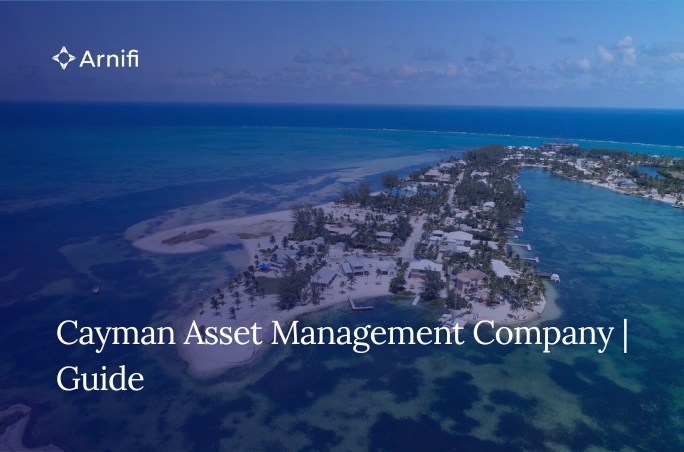
A Cayman Asset management company is not just about tax positioning. It is about credibility, flexibility, and access. Founders looking at offshore structures often start here, but the real question is whether the structure aligns with long-term strategy, not just short-term efficiency.
Table of contents
- Introduction
- Why Do Founders Choose Cayman for Asset Management?
- What Actually Makes a Cayman structure credible?
- How Do The Regulations Actually Work?
- What Costs Should be Expected Beyond Setup?
- Is Cayman Still Relevant for Global Asset Managers?
- What Are The Mistakes Founders Face at Early-Stages?
- Where does Arnifi fit into this process?
- Conclusion
- FAQs
Introduction
Start with the assumption that structure shapes outcome. That one decision, where the asset management entity sits, tends to influence everything from investor perception to operational freedom. A Cayman Asset management company often comes up early in that conversation, and not without reason. The jurisdiction has built a reputation over time, not through marketing, but through consistent use by serious fund managers.
The interest usually begins with a simple thought. If global funds use Cayman, what exactly makes it work? The answer is not a single advantage. It is a combination of regulatory clarity, neutrality, and how comfortably it fits into cross-border setups.
Why Do Founders Choose Cayman for Asset Management?
Most founders are not chasing complexity. The interest in Cayman usually comes from a need to simplify the cross-border operations while staying credible in the eyes of investors.
A Cayman Asset management company works because the jurisdiction is neutral. It does not try to impose itself on the investment strategy. That matters when capital comes from multiple regions. There is no friction in how returns are treated across jurisdictions, and that makes structuring cleaner.
Another reason is familiarity. Institutional investors already understand Cayman regulations & there are fewer explanations required, which often speeds up the onboarding conversations. That alone can shift the timelines in fundraising.
What Actually Makes a Cayman structure credible?
Credibility does not come from the location alone. It comes from how the entity is set up and managed.
A Cayman Asset management company typically operates within a regulated environment, even when the structure itself feels flexible. There is oversight, but it is not excessive. That balance is what keeps the system functional.
Directors, service providers, and administrators all play a role here. A weak setup shows quickly, especially during due diligence. Most of the founders treat this as an infrastructure & not a checkbox.
Substance is another piece that often gets overlooked. Even though Cayman offers flexibility, global expectations around economic substance have changed. Real decision-making and control still need to be demonstrated somewhere within the structure.
How Do The Regulations Actually Work?
The assumption that Cayman is unregulated is outdated. It is structured, just not restrictive in the way some onshore jurisdictions are.
A Cayman Asset management company may fall under different regulatory categories depending on its activities. This is where early clarity matters. Structuring incorrectly at the start tends to create major frictions later, especially when scaling.
The Cayman Islands Monetary Authority plays a central role here. It focuses on oversight without interfering in strategy. That is an important distinction. Regulation exists, but it does not dictate how investments are made.
Most setups also involve fund vehicles alongside the management entity. The alignment between these pieces is what creates a clean operating model.
What Costs Should be Expected Beyond Setup?
Setup costs are rarely the main concern. Ongoing costs are where the real commitment shows.
In the case of a Cayman Asset management company, there are government fees, service provider costs, and compliance-related expenses. These are predictable, but they need to be planned for properly.
What often surprises founders is the operational layer. Administration, reporting & maintaining relationships with local service providers requires consistency. Cutting corners here usually leads to complications during audits or investor reviews.
The cost should be seen in context. It is not just an expense. It is part of building a structure that investors trust.
Is Cayman Still Relevant for Global Asset Managers?
Short answer, yes. But the reason has shifted slightly over time.
Earlier, the appeal was heavily tied to tax neutrality. That still matters, but today the focus is more on ecosystem and acceptance. A Cayman Asset management company fits naturally into global fund structures, especially when dealing with institutional capital.
There is also a level of stability that founders value. The legal system is predictable, and that reduces uncertainty in long-term planning.
That said, it is not a one-size solution. Some strategies require hybrid structures involving other jurisdictions. Cayman often sits at the centre, but not always alone.
What Are The Mistakes Founders Face at Early-Stages?
Most mistakes come from rushing the setup.
One common issue is treating the structure as purely administrative. A Cayman Asset management company should reflect the investment strategy, not just exist alongside it. Misalignment here creates friction later, especially during investor discussions.
Another mistake is ignoring operational readiness. Having the entity in place is one thing. Running it properly is another. Service providers need to be chosen carefully, and roles need to be clearly defined from the start.
There is also a tendency to overcomplicate. Simplicity usually works better, especially in the early stages.
Where does Arnifi fit into this process?
Setting up a structure like this involves more than filing documents. It requires coordination across jurisdictions, clarity on regulatory positioning, and ongoing support.
Arnifi works closely with founders and fund managers to simplify that process. From structuring the entity to aligning it with operational needs, the focus stays on making the setup practical, not theoretical.
The idea is not just to establish a Cayman presence, but to make sure it actually works in real scenarios. That includes handling compliance, coordinating with service providers, and keeping the structure aligned as the business evolves.
Conclusion
A Cayman Asset management company works when it fits the strategy, not just the narrative. It should hold up under investor scrutiny and run without unnecessary friction. Setup is only the starting point. What matters is how the structure performs over time. That is where clarity and consistency come in. Arnifi supports that process quietly, helping ensure the structure is built right and continues to function as the business grows without adding avoidable complexity.
FAQs
Is Cayman only for large funds?
No, even emerging managers use it when targeting international investors.
Does Cayman mean zero regulation?
No, it is regulated, just not overly restrictive.
How long does setup take?
Typically a few weeks, depending on structure complexity.
Is local presence required?
Not always, but substance requirements must still be considered.
Can the structure evolve later?
Yes, but starting right reduces the need for changes.
Top UAE Packages


Related Articles
BVI vs Cayman Company Formation (2026) | Entity Ty...
Key Fact Both jurisdictions provide English common law frameworks for international business. BVI offers cost-efficient corporate management for private asset...
Top UAE Packages
Get in Touch