
Understanding Offshore Corporate Governance

Anushka
Content Writer
Anushka Basu is a business content writer specialised in global business market insights. She aims to simplify complex regulatory, financial, and business concepts into… Read more


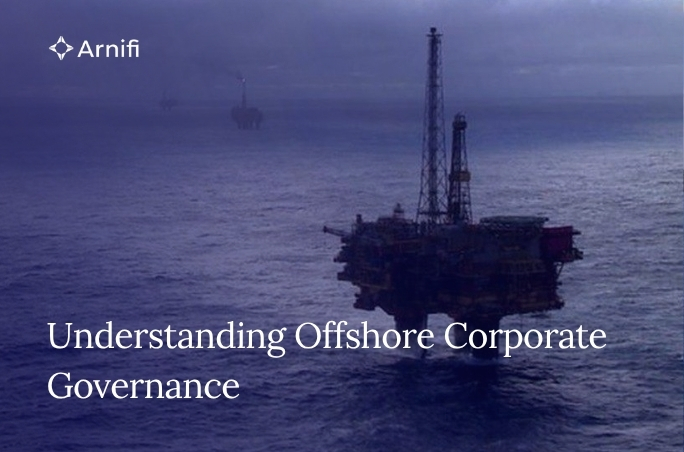
Strong offshore governance is what makes an offshore company usable, credible and manageable over time. It is not just a legal formality added after incorporation. For founders, investors and cross-border business owners, governance shapes control, decision-making and ownership clarity.
A well-governed company is easier to explain to banks, partners and investors. A weak one may stay active on paper but become difficult to use when real business decisions start carrying weight.
Time to know more about Offshore Corporate Governance.
Table of contents
- The Core Elements Of A Good Offshore Governance Framework
- A Practical Governance Table For Offshore Companies
- Why Governance Affects Banking, Investors And Group Stability
- Common Governance Mistakes In Offshore Companies
- Building A Governance Rhythm That Actually Works
- How Arnifi Can Help With Offshore Corporate Company Formation
- Conclusion
- FAQs
The Core Elements Of A Good Offshore Governance Framework
A useful governance model usually rests on a few core building blocks:
- Clear ownership records, including shareholders, directors and beneficial control details
- Documented decision-making through resolutions, minutes and approval trails
- Defined authority so major actions are approved at the right level
- Consistency between the company’s stated purpose and actual business use
These building blocks matter because offshore entities are often reviewed during sensitive moments. A bank may request corporate records during onboarding. An investor may review governance before a deal. A buyer may assess approvals during due diligence. If the company’s internal record trail is weak, delays and doubts often follow.
That is also where offshore company governance rules become practical rather than theoretical. They are not just there to satisfy a formal requirement. They help protect the commercial usability of the structure.
A Practical Governance Table For Offshore Companies
The easiest way to understand governance is to look at it as a set of working areas rather than one broad legal concept.
| Governance area | What it covers | Why it matters |
| Ownership records | Shareholders, directors, beneficial control | Shows who owns and controls the company |
| Decision records | Resolutions, minutes, written approvals | Creates a reliable decision trail |
| Role alignment | Match between purpose and activity | Keeps the entity commercially coherent |
| Compliance upkeep | Annual obligations, filings, renewals | Helps the company remain in good standing |
| Banking readiness | Supporting documents and activity logic | Makes external review easier |
| Group integration | Position of the entity inside the wider structure | Supports cleaner control and reporting |
Why Governance Affects Banking, Investors And Group Stability
Many people think governance only matters to regulators or company secretaries. In reality, governance matters to almost every serious counterparty. Banks want to understand who owns the company and who can authorise key actions. Investors want confidence that control rights and approvals are documented properly. Business partners want comfort that the entity is real, stable and managed with discipline.
This is one reason offshore governance should be treated as a commercial issue, not only a compliance issue. A company with strong governance usually moves through reviews more smoothly. Documents are easier to produce. Authority is easier to confirm. Ownership is easier to explain.
It also improves internal stability. When governance is weak, decision-making can become personal and inconsistent. When governance is clear, the company gains continuity.
Common Governance Mistakes In Offshore Companies
A lot of business owners start with a clean offshore company setup and lose discipline later. That usually happens when the company is treated as a static registration rather than a living part of the business structure.
Common mistakes include:
- Leaving shareholder or director records outdated after ownership changes
- Approving major actions informally without written evidence
- Using the entity for activities that do not match its stated purpose
- Treating governance as year-end cleanup instead of a regular process
These issues create friction because offshore entities are often expected to show clarity at important moments. Offshore governance requirements should be understood in a realistic way. They are not just obligations to manage after something goes wrong. They are part of keeping the company ready before a problem appears.
Building A Governance Rhythm That Actually Works
The strongest governance systems are usually simple, repeatable and easy to maintain. A business does not need endless paperwork. It needs a rhythm that keeps the company aligned with reality.
A good offshore business governance framework usually includes regular checks on ownership records, documented approvals for material decisions and periodic review of how the entity fits into the wider group. If the company owns subsidiaries, that ownership should be reflected clearly and if directors change, the records should be updated quickly. If the company’s role shifts, its documentation should shift too.
Good governance also depends on internal responsibility. Someone should know who keeps the records current, who tracks renewal dates and who ensures important actions are documented properly. When no one owns that process, governance gaps become almost inevitable.
How Arnifi Can Help With Offshore Corporate Company Formation
Arnifi helps founders, investors and operators shape offshore structures with practical governance in mind. That includes ownership mapping, entity-role clarity, compliance planning and banking readiness. Our focus stays on building structures that are easy to explain, easier to manage and strong enough to support real commercial activity over time.
Conclusion
Good offshore governance keeps a company clear, controlled and commercially credible. It supports ownership visibility, better decision-making and smoother external review. For holding structures, investment vehicles and cross-border groups, that discipline often matters just as much as incorporation itself. A company that is well governed is not only compliant. It is easier to trust, easier to use and better prepared for long-term growth.
FAQs
1. Why is governance important in an offshore company?
It helps show who controls the company, how decisions are approved and how ownership is recorded. That makes the entity easier to manage, review and rely on.
2. Does a passive holding company still need strong governance?
Yes. Even passive entities may hold valuable shares or rights, so clean records and documented approvals remain important for banking, diligence and group control.
3. What is the most common offshore governance mistake?
A common mistake is letting records fall behind after ownership, director or structural changes. That often creates problems later during reviews, transactions or compliance checks.
4. How can an offshore company improve governance without becoming too complex?
A simple recurring process usually works best: keep records current, document major decisions promptly and make sure the company’s activity matches its stated role.
Top UAE Packages


Related Articles
BVI vs Cayman Company Formation (2026) | Entity Ty...
Key Fact Both jurisdictions provide English common law frameworks for international business. BVI offers cost-efficient corporate management for private asset...

Top UAE Packages
Get in Touch