
Economic Substance Rules in Cayman


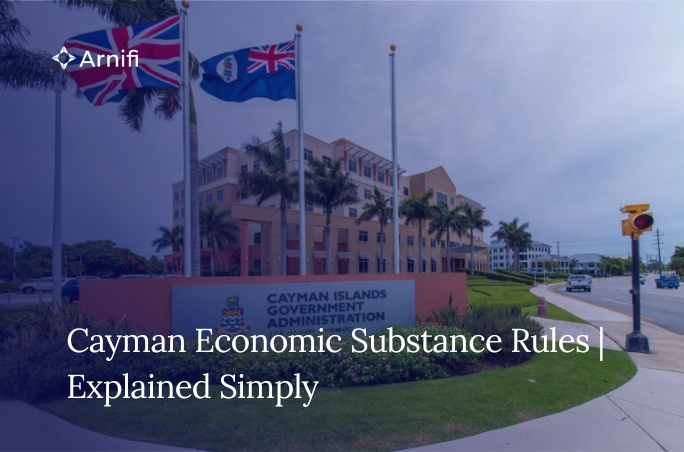
Global regulators have tightened oversight of offshore structures, and the Cayman Islands responded with clear compliance standards. Understanding Cayman economic substance rules helps companies prove real activity, maintain credibility with banks, and avoid penalties while operating legitimately in one of the world’s most trusted financial centres.
Table of contents
Introduction
Every offshore jurisdiction eventually faces the same question from global regulators: is the business actually happening there?
That question sits at the centre of Cayman economic substance rules. Governments and tax authorities across the world pushed for greater transparency in offshore jurisdictions, and the Cayman Islands responded by introducing legislation that requires certain companies to demonstrate real activity within the jurisdiction.
Founders, holding companies, and international groups often establish entities in Cayman because of its legal stability and tax neutrality. Yet structure alone is no longer enough. Regulators now expect proof that business decisions, management, and operations genuinely occur within the jurisdiction.
For founders building international structures, the smartest approach is simple: understand the rules early and design the company accordingly.
Why the Cayman Islands Introduced Economic Substance Rules
Pressure from global organizations such as the OECD and the European Union pushed offshore financial centers to demonstrate transparency and legitimate business activity.
The Cayman Islands responded by introducing a framework that ensures companies carrying out certain activities have real operations within the jurisdiction.
At its core, Cayman economic substance legislation aims to prevent companies from booking profits in offshore jurisdictions without meaningful activity taking place there.
Instead of banning offshore structures entirely, regulators created a standard: if a company benefits from the jurisdiction, it must show real presence.
That presence can take several forms:
- Local management and decision making
- Adequate employees or service providers
- Physical office space or operational infrastructure
- Demonstrable business expenditure within the jurisdiction
The idea is straightforward. Offshore entities should reflect real businesses, not just mailing addresses.
What Activities Fall Under the Rules
Not every company registered in Cayman must meet the same requirements. The legislation targets businesses involved in specific categories known as relevant activities.
These typically include:
- Banking businesses
- Insurance companies
- Fund management entities
- Financing and leasing companies
- Headquarters operations
- Intellectual property businesses
- Distribution and service centres
- Shipping businesses
- Holding company structures
Companies engaged in these activities must satisfy Cayman economic substance requirements by proving their operations are directed and managed in the jurisdiction.
Holding companies usually face lighter requirements, while intellectual property businesses face the strictest scrutiny.
What Companies Must Demonstrate
To meet compliance obligations, companies generally need to show three core elements.
1. Direction and Management in Cayman
Strategic decisions should occur within the jurisdiction. Board meetings are expected to take place locally, and directors should have the expertise to make meaningful decisions.
Meeting minutes, governance records, and decision documentation often serve as proof.
2. Adequate People and Infrastructure
Regulators look for reasonable staffing or service support. In many cases this includes:
- Local employees or professional service providers
- Registered office facilities
- Administrative support within Cayman
The level required depends on the type and scale of business activity.
3. Appropriate Operating Expenditure
A company claiming presence in the jurisdiction should incur real operating expenses there. This might include salaries, office costs, legal support, or management services.
When these elements align, the entity demonstrates genuine activity under Cayman economic substance standards.
Annual Reporting and Compliance
Compliance does not stop once a company is structured properly.
Entities conducting relevant activities must file annual notifications and reports with the Cayman Islands Department for International Tax Cooperation.
These filings typically confirm:
- Business activities conducted during the year
- Income generated from those activities
- Staff and operational presence
- Management location and decision-making process
Authorities review these filings to determine whether the company satisfies Cayman economic substance obligations.
If a company fails to meet the requirements, penalties can escalate quickly.
Possible consequences include:
- Financial penalties
- Increased regulatory scrutiny
- Reporting to foreign tax authorities
- Potential strike-off from the register
Compliance, therefore, becomes part of responsible offshore management rather than a one-time setup step.
How Founders Typically Structure Compliance
Most founders do not build large operational teams in Cayman immediately. Instead, companies structure compliance gradually using a combination of governance practices and local service support.
Common approaches include:
- Appointing qualified local directors
- Holding board meetings within the jurisdiction
- Using professional corporate service providers
- Maintaining local registered offices and administration
When structured thoughtfully, meeting Cayman economic substance standards becomes a manageable operational process rather than a regulatory obstacle.
The key lies in aligning the company’s governance with real decision making.
How Arnifi Helps Founders Navigate Compliance
Setting up a company offshore is easy. Structuring it properly is where experience matters.
Arnifi works with founders, investors, and global businesses to establish compliant offshore structures that satisfy regulatory expectations from day one.
Support typically includes:
- Cayman company formation guidance
- Economic substance planning
- Director and governance structuring
- Annual compliance and reporting coordination
- Offshore banking and operational setup
Rather than reacting to compliance issues later, Arnifi helps businesses design structures that naturally align with Cayman economic substance requirements.
For founders building global operations, clarity at the start prevents expensive restructuring later.
Conclusion
Offshore jurisdictions are evolving. The days of passive entities with no real activity are fading, and transparency standards continue to rise.
Understanding Cayman economic substance rules allows companies to operate confidently within a respected financial jurisdiction while maintaining credibility with banks, investors, and regulators.
Businesses that structure governance properly, maintain genuine operational presence, and stay consistent with reporting obligations rarely face difficulties.
For founders exploring Cayman structures, thoughtful planning makes the difference between a compliant global entity and a regulatory headache.
Arnifi supports that journey from incorporation to long-term compliance, helping international businesses build offshore structures that stand up to scrutiny.
FAQs
What is economic substance in the Cayman Islands?
Economic substance refers to proving that certain companies carry out genuine business activity within the jurisdiction.
Do all Cayman companies need to meet substance rules?
No, only companies conducting defined relevant activities must satisfy these requirements.
What happens if a company fails substance requirements?
Authorities may impose fines, increase oversight, or report the entity to foreign regulators.
Are holding companies subject to substance rules?
Yes, but pure holding companies typically face lighter compliance requirements.
How can companies maintain compliance easily?
Proper governance, local management, and structured reporting usually ensure ongoing compliance.
Top UAE Packages
Related Articles


Top UAE Packages
Get in Touch
