
Free Zone Incubators vs Mainland Startup Programs
by Rifa S Laskar Mar 09, 2026  7 MIN READ


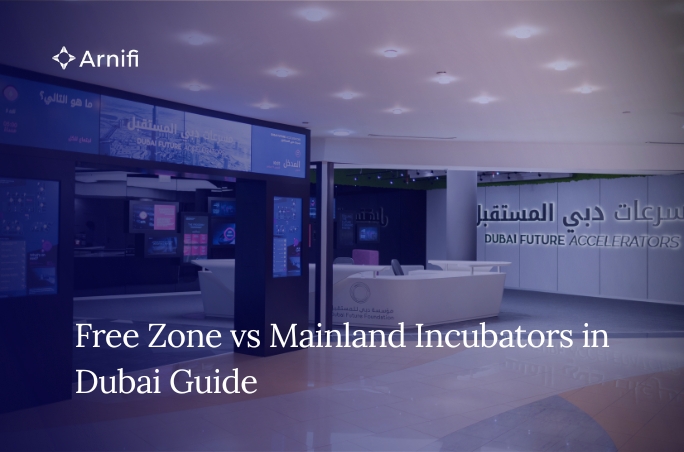
Dubai’s startup ecosystem offers two main paths for early-stage founders like free zones and mainland programs. Understanding how a Free zone startup incubator Dubai model works compared to mainland incubators can shape funding access, visa limits & long-term growth.
Table of contents
1. Introduction
Take a moment before choosing where a startup begins its journey in Dubai. Many founders rush toward the first incubator that accepts an application, but the structure behind that program matters more than the mentorship sessions or office desks. The legal setup, visa capacity, investor visibility & long-term flexibility all change depending on whether a venture enters a free zone or a mainland ecosystem.
The phrase Free zone startup incubator Dubai often appears in early research because free zones built much of the city’s startup infrastructure. They promise simplified setup, founder-friendly policies, and a supportive environment for young companies still testing ideas. Mainland programs operate differently. They sit closer to the broader UAE market and often link directly to local investors, corporates & government initiatives.
Understanding the difference is not just administrative detail. It influences hiring plans, funding strategy, and the speed at which a company can move from idea to market.
2. Why Free Zones Built Dubai’s Early Startup Ecosystem
Free zones were designed to attract global entrepreneurs. They function as specialized economic areas where foreign founders can own companies fully without local sponsors. For early startups, this structure removes a large layer of complexity.
A Free zone startup incubator Dubai program typically includes three major advantages.
First comes the setup process. Company formation inside a free zone usually moves faster than mainland registration. Licensing, workspace allocation & administrative approvals are bundled together under a single authority.
Second comes cost predictability. Early-stage founders operate with limited budgets. Free zone incubators often combine company registration, co-working space & mentorship under a structured package. This helps startups focus on building products instead of navigating multiple government departments.
Third comes ecosystem design. Many free zones were intentionally built around specific industries such as technology, media, finance, or logistics. That clustering naturally creates networks between founders, mentors & investors.
The environment feels structured, almost like a campus designed for startups.
3. How Mainland Incubators Work Differently
Mainland incubators follow a different logic. Instead of operating inside specialized economic zones, they function within the broader UAE commercial framework.
This means companies formed through mainland programs can operate anywhere in the UAE market without the geographical restrictions sometimes associated with free zones.
Mainland startup programs are often connected to government innovation initiatives, universities, or corporate accelerators. Because of that, the mentorship environment tends to focus heavily on real market integration. Startups interact directly with local industries such as retail, healthcare, construction, and logistics.
The approach is less insulated than free zone ecosystems.
For many founders this exposure becomes valuable. Instead of building in a controlled incubator environment, startups begin working with real clients earlier in their lifecycle.
That practical exposure sometimes leads to faster product validation.
4. Visa Quotas and Team Expansion
One of the most practical considerations for founders entering Dubai’s startup ecosystem is visa allocation.
Startup teams rarely stay small for long. Engineers, marketing specialists & operations staff need residency visas to work legally in the UAE. The number of visas allowed often depends on the license structure.
Inside a Free zone startup incubator Dubai environment, visa quotas are usually linked to workspace size or license tier. Incubation packages typically include a limited number of visas at the beginning, often enough for founding teams but not large operational teams.
Additional visas become available as the company upgrades office space or expands licensing packages.
Mainland companies operate under a slightly different structure. Visa allocation often depends on office space and regulatory approvals rather than incubator packages alone.
For scaling startups in planning aggressive hiring, this difference can influence early decisions about where to establish the company.
Visa flexibility becomes part of long-term operational planning.
5. Investor Access and Funding Visibility
Funding access shapes every startup ecosystem. Dubai’s investors operate across both free zones and mainland networks, but the path to meeting them can vary.
A Free zone startup incubator Dubai program usually introduces founders to investors through curated demo days, pitch sessions & accelerator events. These structured opportunities help early-stage companies gain exposure quickly, even without prior regional connections.
Many venture capital firms actively monitor these incubator pipelines.
Mainland incubators approach investor exposure differently. Their strength lies in industry partnerships and corporate relationships. Instead of relying primarily on startup events, mainland programs often connect founders with established companies that may become customers, partners, or strategic investors.
This difference matters.
Some startups benefit more from venture capital exposure, while others grow faster through corporate partnerships.
Choosing the right environment depends on the type of company being built.
6. Choosing Between Free Zone and Mainland Programs
The decision between free zone and mainland incubators rarely has a universal answer. Each structure supports different startup priorities.
A Free zone startup incubator Dubai setup often suits international founders entering the UAE market for the first time. The administrative simplicity and supportive ecosystem allow teams to focus on product development rather than legal processes.
Mainland incubators attract startups aiming for deep integration with the local economy. Companies that require direct access to government contracts, local distribution networks, or large corporate clients may find mainland programs are more aligned with their goals.
Another factor is expansion strategy.
Some startups begin in free zone incubators to validate ideas and later transition into mainland structures once the business model stabilizes.
The ecosystem allows that flexibility.
7. Where Arnifi Fits Into the Decision
Early-stage founders often spend weeks in comparing incubators, licenses, visa rules & setup costs. The challenge is that these decisions overlap. The wrong combination can slow down hiring, limit funding opportunities, or complicate expansion plans.
Arnifi helps founders analyze these choices before committing to a structure.
When evaluating a Free zone startup incubator Dubai option, Arnifi breaks down the real implications behind the headline benefits. That includes visa quotas, licensing costs, investor networks, and scalability beyond the incubation phase.
The goal is not simply registering a company. The goal is building a structure that supports growth without unnecessary regulatory friction.
Founders entering Dubai’s startup ecosystem usually have strong product ideas. What they often lack is clarity about the operational landscape.
That is where experienced guidance becomes valuable.
8. FAQs
What is a free zone startup incubator in Dubai?
A program that helps startups launch faster with simplified company setup inside a UAE free zone.
Are mainland incubators better for UAE market access?
Yes, mainland programs allow startups to operate directly across the UAE market.
Do free zone incubators offer visa quotas?
Yes, visa quotas are usually included but depend on the incubator package and license type.
Can startups raise funding through incubators in Dubai?
Many incubators connect startups with investors through demo days and mentorship networks.
How to choose between free zone and mainland incubators?
The decision depends on business goals, visa needs, and the level of access required to the UAE market.
9. Conclusion
Dubai’s startup infrastructure did not grow by accident. Free zones and mainland programs were built with different purposes, and both continue to play important roles in the ecosystem.
Free zone incubators provide structured environments where founders can launch quickly, test ideas & access curated investor networks. Mainland programs place startups closer to the broader market that encourages partnerships with established industries and government initiatives.
Choosing between them requires more than comparing incubator perks. Visa limits, investor exposure, operational flexibility, and long-term expansion plans all shape the decision.
For founders navigating these choices, Arnifi provides clarity at the earliest stage of company formation. Instead of guessing which incubator structure fits best, founders gain a clear path toward building and scaling a startup within Dubai’s evolving ecosystem.
Top UAE Packages


Related Articles

Top UAE Packages
Get in Touch